Saturday, April 30, 2011

The Old Days Of Sheriff Street: An Interview With Sidney Fermaglich

Great stuff from the Lower East Side History Project
An excerpt from a 2005 interview:
I was born here; my oldest brother was born here. If he was alive he’d be over a hundred. I’ll be ninety in December. I got a baby brother who’s going to be eighty. My oldest brother… if he were alive today… he’d be about ninety-six… ninety- seven. My mother had six children… all boys. I lived… first I lived at 51 Sheriff Street… then we moved to 65 Sheriff Street... then we moved to the fancy one on 67 Sheriff Street where we had our own toilet and bath. And November 1930, we moved into the Amalganated on Grand Street..
The first co-op that went up here was the Amalgamated. I went into the army; came back and moved back in here. My brother gave me the apartment. So that was in 1945… the end of World War II.
When I was little… the games. It was rough games. We were east side kids and we played whatever we got a hold of… tag.... stupid games children play.
When I got home from school, first I would ask my mother to cut me a slice of bread with some shmear on it. And it was a treat. Then I went downstairs and played ball or did crazy things that the kids would do. We played ball. At times we broke into a peddler and stole sweet potatoes. That was a treat. We’d put them on the fire. We made a fire out of what we called our election fire… we saved up and we got crates and boxes. And on election day we made a big bonfire. That was a big thing. Then we went down to the Forward building and watched the results come in. We made the fire but I don’t recall who was Mayor or who was Commissioner.
I used to deliver the whiskey and he gave me a half a dollar Every time.
When I got a little older there was a saloon right underneath where I lived on 67 Sheriff Street. So I used to deliver... this was the Prohibition... you couldn’t buy a drink, but he had a saloon. His name was David. I used to deliver the whiskey and he gave me a half a dollar Every time. That was big money. And when we moved out of there in 1930. we moved here…Amalgamated. my father took five rooms. The rent was $62.50 a month. There was a Depression... the heart of the Depression.
I didn’t have too many friends here anyway. I went back to my old street… Sheriff Street On Sheriff Street they had a man and a woman’s bath house... there was one on Allen Street too.
We didn’t have bath tubs where we lived. We had a sink in the kitchen..and you washed up in the kitchen. There was a bath house at 62 Sheriff Street. The name of the bath house was Gang’s. It was owned by a man whose name was Gang. That was his name. He was my neighbor. I think one of his sons is alive today. He owned the bath house.You took a bath and you slept over... they had cots. There was more than one bath house. At 65 Sheriff Street… in the basement… they put in some bath tubs and we used to go in there to bathe. For a quarter, a half a dollar… you took a bath. It was a different time. Today... you turn the faucet on you get all the water you want. Then it was different.
In those days my father used to bring home the junk… the salvage. Certain pieces of wood; we put them in the stove and we heated the apartment. I can’t even describe it.
I went to school at PS 34. It was right here on Sheriff and Broome. And then I went to PS 22 on Sheriff and Stanton; from there I went to PS 97 for junior high school; From there I went to Seward Park. And then I got out of there and I went to work.
Sidney mentions the Gang bath house. I guess this is what Manny was talking about here. Originally I thought he meant the bath house on Rivington, near Mangin

Friday, April 29, 2011

More On Hank Greenberg's LES Roots

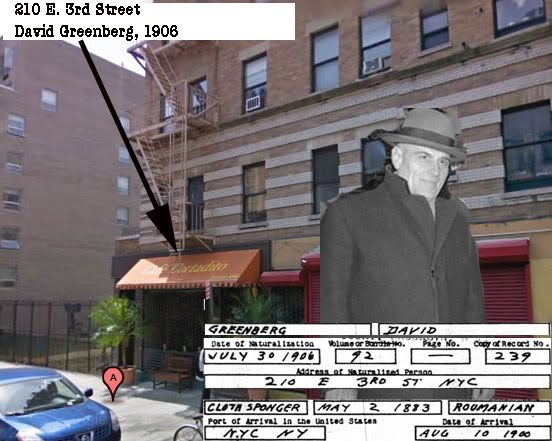
Looks like his dad may have worked at this address. The image in the inset is part of David Greenberg's naturalization application

Wednesday At The Tenement Museum, Part 2

Listen!
Kurlansky was late and I shared this song with Kevin Baker to play for the audience.
It was a big hit.
Goodbye Mr. Ball Goodbye
Written by Bill Coryn & Harold Smith
Performed by Groucho Marx, Bing Crosby & Hank Greenberg
Courtesy of the Philco Radio Show
We’ve heard about those old time dangerous pirates
of Captain Kidd and Silver John the Long
but we prefer those modern dangerous Pirates
as our victims walk the plank we sing this song
Oh, goodbye, Mr Ball, goodbye
You are going to see an awful lot of sky
don’t hang around for Richard to open up that door
when Hankus Pankus hits you where you’ve never been hit before
Oh, goodbye, Mr Ball, goodbye
You had better kiss your relatives good bye
when Hank comes to the plate, Ball,
you’re gonna to be out late so
Oh, goodbye, Mr Ball, goodbye
Say hello there to the sun up in the sky
a plate is mighty handy to eat the lean and fat
but not when Hank the Greenberg serves it up with his big bat
Oh, goodbye, Mr Ball, goodbye
Go fly ‘til the blue has met the dawn up in the sky
when Hank gets home run itch, Ball,
you’re going to drop a stitch
so goodBye Mr ball, goodBye
Oh nothing could be finer
than a partner like Ralph Kiner
in the outfield
and I am confirmin’ that I’ll work for Billy Herman
in the infield
Oh goodbye, Mr Ball, goodbye
you had better kiss your relatives goodbye
Wait a minute, when the count is 2-0 and I let that third one go,
what happens then?
You’re out
Oh Goodbye Mr Hank goodbye
And furthermore,
when I think I've got a hit and it winds up in Slaughter's mitt
How about that?
Too bad
Oh goodbye Mr. Hank Goodbye
Oh, Mr. Greenberg
Goodbye Mr. Hank Goodbye
from hungry for music

Wednesday At The Tenement Museum

One of KV's greatest punchball players, of any ethnicity , Prof. Bob Nathanson, joined me at the Tenement Museum to hear Mark Kurlansky talk about his biography of Hank Greenberg called Hank Greenberg: The Hero Who Didn't Want to Be One.
The talk was excellent, due in great part to Kevin Baker's expert facilitation, but I was somewhat disappointed in the book. Ira Berkow's bio is much better.
but I did pick up a clue from the Kurlansky book to the Greenberg's lower east side roots. David Greenberg, Hank's dad, had a job as a clothes sponger and with a little census detective work I figured out he lived at 210 E. 3rd Street in 1906. The document image in the inset is part of Greenberg's naturalization application.
about clothes' sponging
Basically, this is going be entirely dependent on how thorough the shrinkage process at the mill was. Top quality mills usually pre-shrink cloth better. However, any cotton fabric may still shrink to varying degrees. Some tailors who are particularly meticulous won't trust what cloth merchants say about their cloths being "pre-shrunk" and even "sponge" the cloth to shrink it before making it up. For those interested this is traditionally done with bed sheets that have been soaked in water. However, one tailor told me that he wets the cloth and places it in a dryer.
a previous post about Hank Greenberg

Tuesday, April 26, 2011

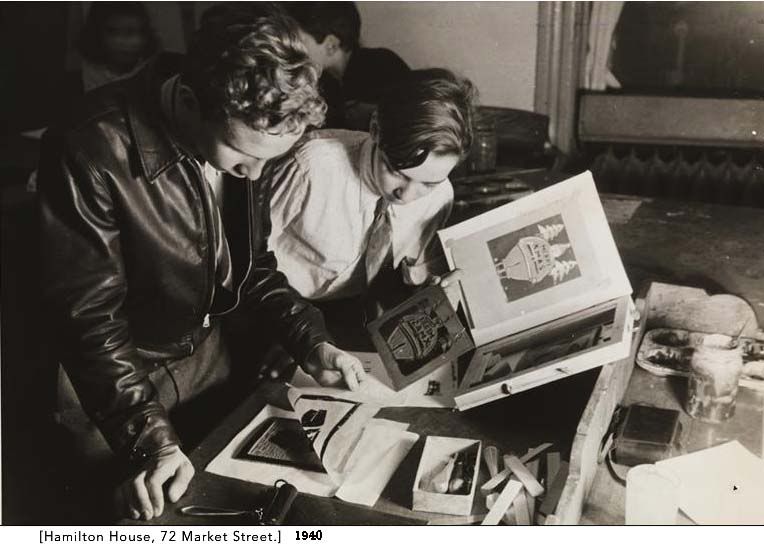
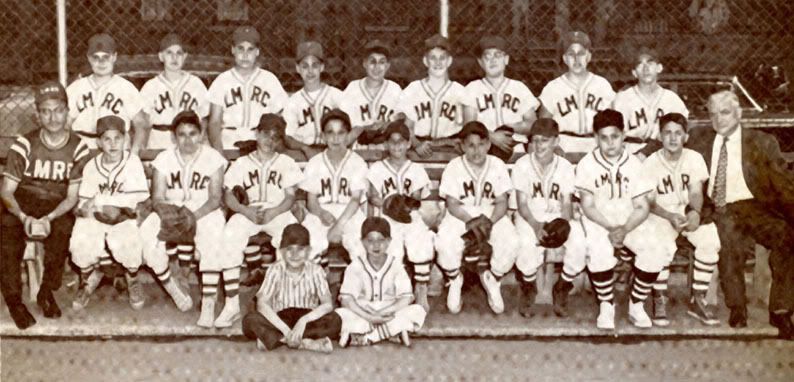
Hamilton House History: Including KV Basement Crap Games

Hamilton House History

Monday, April 25, 2011

38 Market Street History: 1888

38 Market
Note the wrong diagnosis and the subtle racism shown in portraying the Italian immigrant as the carrier of the Yellow Fever and the need to isolate him. 38 Market still looks like it once housed a doctor's office.

72 Market Street History

72 Market
I guess riding in a Tally Ho Coach was just asking for it.
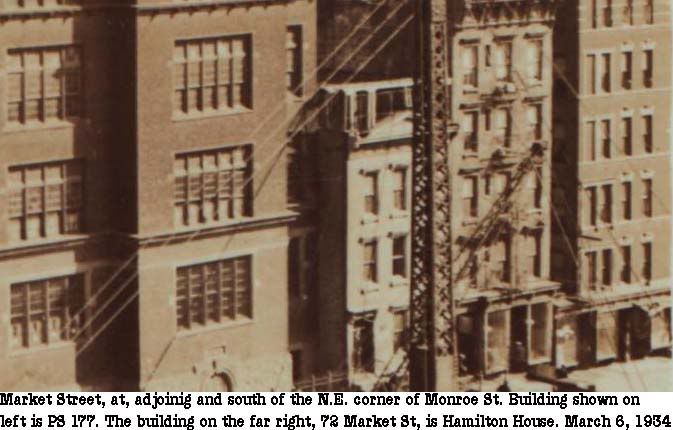
PS 177 was in the second district.
I would guess William Homan of 72 Market Street, Mrs. John Kehoe of 37 Catherine Street, Miss Jenny Montgomery of 52 Market Street, Fred J. Seelig of 13 Allen Street
and Dr. William Henry of 97 Henry Street were all citizens of some stature to be on the school board.

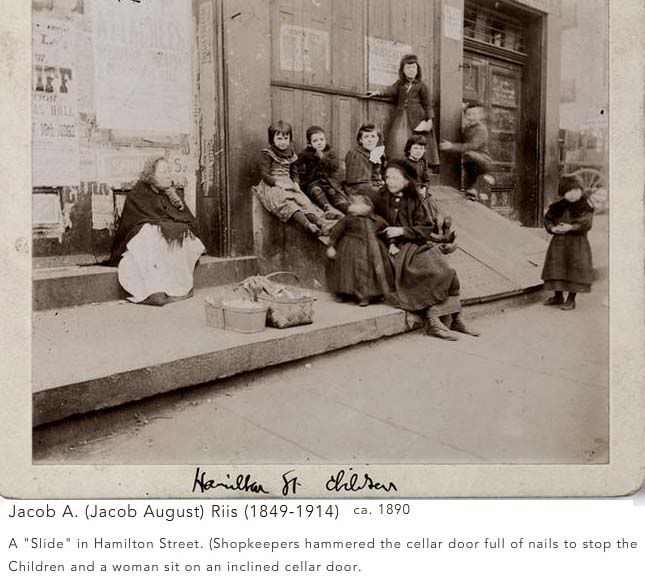
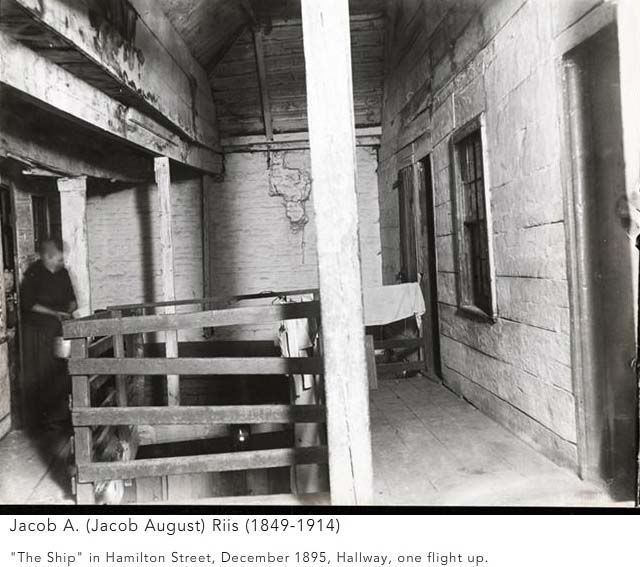
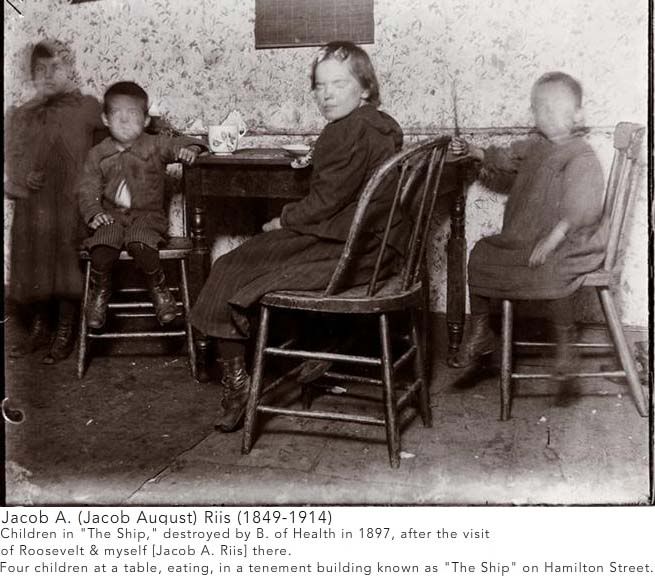
The Ship On Hamilton Street: 1890's

More proof that Hamilton Street was rough and tumble.
Also evidence of Riis' questionable views on race and ethnicity.
from How The Other Half Lives
How the Other Half Lives. 1890.
IV. The Down Town Back-Alleys
We have crossed the boundary of the Seventh Ward. Penitentiary Row, suggestive name for a block of Cherry Street tenements, is behind us. Within recent days it has become peopled wholly with Hebrews, the overflow from Jewtown adjoining, pedlars and tailors, all of them. It is odd to read this legend from other days over the door: “No pedlars allowed in this house.” These thrifty people are not only crowding into the tenements of this once exclusive district— they are buying them. The Jew runs to real estate as soon as he can save up enough for a deposit to clinch the bargain. As fast as the old houses are torn down, towering structures go up in their place, and Hebrews are found to be the builders. Here is a whole alley nicknamed after the intruder, Jews’ Alley. But abuse and ridicule are not weapons to fight the Israelite with. He pockets them quietly with the rent and bides his time. He knows from experience, both sweet and bitter, that all things come to those who wait, including the houses and lands of their Persecutors.
Here comes a pleasure party, as gay as any on the avenue, though the carry-all is an ash-cart. The father is the driver and he has taken his brown-legged boy for a ride. How proud and happy they both look up there on their perch! The queer old building they have halted in front of is “The Ship,” famous for fifty years as a ramshackle tenement filled with the oddest crowd. No one knows why it is called “The Ship,” though there is a tradition that once the river came clear up here to Hamilton Street, and boats were moored along-side it. More likely it is because it is as bewildering inside as a crazy old ship, with its ups and downs of ladders parading as stairs, and its unexpected pitfalls. But Hamilton Street, like Water Street, is not what it was. The missions drove from the latter the worst of its dives. A sailors’ mission has lately made its appearance in Hamilton Street, but there are no dives there, nothing worse than the ubiquitous saloon and tough tenements.
I thought the building shown here was the ship, but it was probably the Seaman's Mission that succeeded it

Hamilton House: Dedication Of New Site, 1953

above, Marie Embarratto is mentioned. I wonder if it's any relation to?
below from the mcny collection

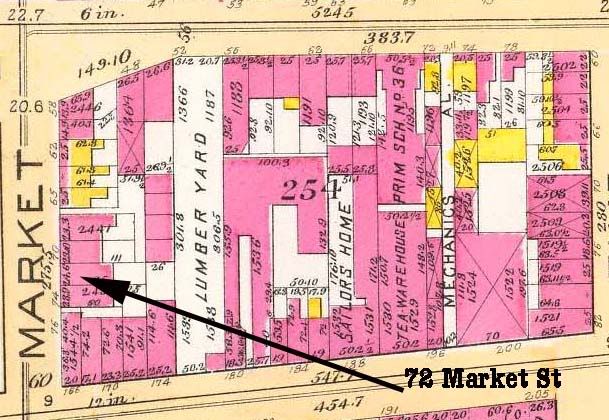
Hamilton House: 72 Market Street, 1891 site

The settlement house did not come into existence until later, this just shows the site on the map. Notice PS 177 was yet to be built. PS 36, on Monroe Street, was the local school for the area.
Some Hamilton Madison House History
Timeline
1898 In Spring, Madison House of the Downtown Ethical Society is founded at 300 Madison Street.
1900 Under the leadership of Board Member, Bella Moses, mother of Robert Moses, Madison House embarks construction of a permanent summer camp.
1902 Hamilton House is founded on Hamilton Street. On June 17th Hamilton House is incorporated.
1910 Madison House acquires a building at 216 Madison Street.
1915 In November, Hamilton House moves from Hamilton Street to 72 Market Street.
1920 In September, the summer camps are replaced by Camp Rossbach for both boys and girls at Tompkins’ Corners near Peekskill. This camp later becomes Camp Madison and later is known as Camp Madison-Felicia.
1925 In the mid-twenties, Madison House is incorporated.
1926 Dr. Algernon Black becomes Headworker at Madison House until 1930.
1929 The building at 226 Madison Street is completed
1930 During the next ten years, Madison House provides facilities for WPA workers who serve the neighborhood’s cultural, health and social needs.
1941 World War II starts. Mrs. Josiah Willard, President of Hamilton House, from 1952-1954 and Helen Greenebaum, Headworker, share the task of managing the House during the war years.
1947 The neighborhood population becomes primarily by African-Americans and Latinos. Friction between the pre-war community and the newcomers escalates. Teenage gangs present an acute problem. Geoffrey Wiener is Headworker. Helen Hall, Headworker of Henry Street Settlement and a member of the Hamilton House Board, urges Mr. Wiener on. The budget is $12,000, with a deficit carried by Henry Street Settlement House.
1950 In the 1950s the first Hamilton-Madison House Thrift Store opens on Madison Street. The thrift store moves uptown to Third Avenue and moves again on Third Avenue before locating on Second Avenue.
1951 The Golden Age Group of Chinatown is established as a group of Chinese senior citizens at Hamilton House.
1952 In February, Hamilton House offers counseling and family care work as an experimental project through an arrangement with the Family Services Division of the Community Service Society of New York
1953 When the second half of Smith Houses is completed, a community space and a 55 child pre-school Day Care Center are allocated. Hamilton House is named the sponsor. In a dedication ceremony in March 1953, Mrs. Franklin Delano Roosevelt is the principal speaker.
1954 HAMILTON HOUSE and MADISON HOUSE MERGE
1954 Mrs. Shirley Chisholm is named the Director of the Child Care Center of Hamilton-Madison House.

Hamilton House: 72 Market Street

below from the mcny collection
The 72 Market site would be torn down in the early 1950's