Samuel Dickstein (February 5, 1885 – April 22, 1954) was a Democratic Congressional Representative from New York and a New York State Supreme Court Justice. He played a key role in establishing the committee that would become the House Committee on Un-American Activities, which he used to attack fascists, including Nazi sympathizers, and suspected communists. Soviet files indicate he was paid by the NKVD. Dickstein was born into a Jewish family living near Vilnius in present-day Lithuania. He emigrated to the United States in 1887 with his parents, who settled in New York City. There he attended public and private schools in New York City, the College of the City of New York, and graduated from the New York City Law School in 1906. He was admitted to the bar in 1908 and commenced law practice in New York City. He served as special deputy attorney general of the State of New York from 1911–1914, member of the board of aldermen in 1917, member of the State Assembly 1919–1922. He served as a member of the Democratic County Committee and was elected as a Democrat to the Sixty-eighth Congress and was reelected eleven times. He resigned from Congress on December 30, 1945. He served as Chairman on the Committee on Immigration and Naturalization (Seventy-second through Seventy-ninth Congresses). During his tenure as Chairman of the Committee on Naturalization and Immigration, Dickstein became aware of the substantial number of foreigners legally and illegally entering and residing in the US, and the growing Anti-Semitism along with vast amounts of anti-Semitic literature being distributed in the country. This led him to investigate independently the activities of Nazi and other fascist groups in the U.S. This investigation proved to be of such significance that on January 3, 1934, the opening day of the second session of the 73rd Congress, Dickstein introduced a resolution calling for the formation of a special committee to probe un-American activities in the United States. The "Dickstein Resolution" (H.R. #198) was passed in March 1934, with John William McCormack named Chairman and Samuel Dickstein Vice-Chairman. Dickstein had refused the chairmanship of the Committee, feeling that his Jewish ancestry might have an adverse effect on the proceedings. Throughout the rest of 1934, the Special Committee on Un-American Activities conducted hearings, bringing before it most of the major figures in the U.S. fascist movement. Dickstein, who proclaimed as his aim the eradication of all traces of Nazism in the U.S.[2], personally questioned each witness. His flair for dramatics and sensationalism, along with his sometimes exaggerated claims, continually captured headlines across the nation and won him much public recognition. He was instrumental in establishing the temporary Select Committee on Un-American Activities (the 'Dies Committee') with Martin Dies, Jr. as chairman, in 1938 to investigate fascist and Communist groups in the United States. Later the same committee was renamed the House Committee on Un-American Activities when it shifted attention to Communist organizations and was made a standing committee in 1945. Following the 1938 Anschluss, Dickstein attempted to introduce legislation that would allow unused refugee quotas to be allocated to those fleeing Hitler. Dickstein later served as a Justice on the New York State Supreme Court until his death in New York City.
Showing posts with label politics. Show all posts
Thursday, October 13, 2011
Samuel Dickstein: Lower East Side Congressmen
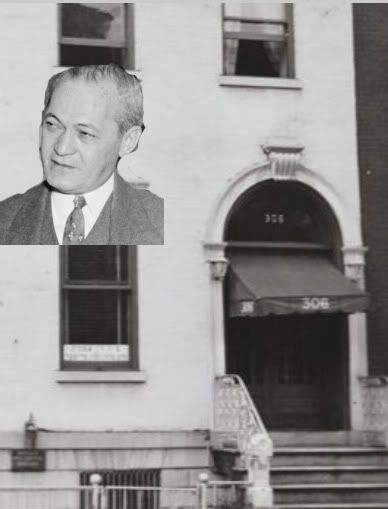
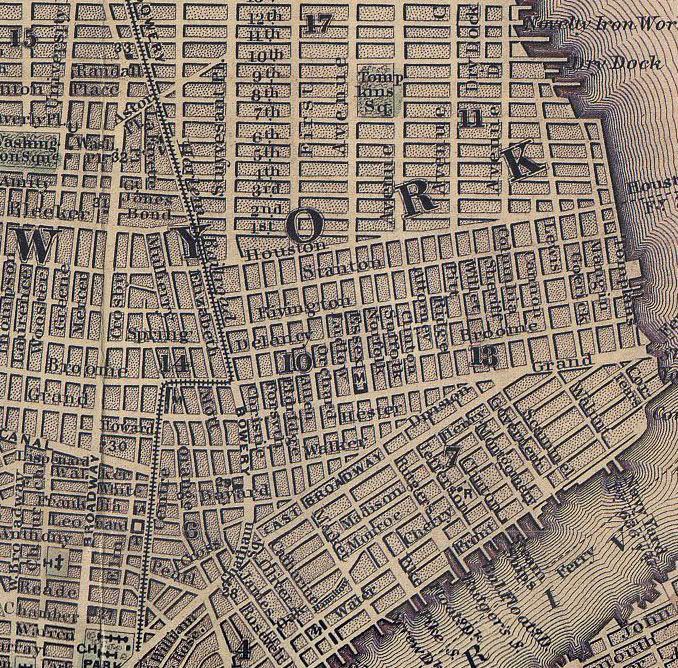
Dickstein lived much of his adult life at 304 East Broadway. The building is no longer there. It was located where PS 134 is now, near the intersection of East Broadway with Grand. In 1900 Dickstein was living at 22 Suffolk Street.
About Dickstein, including the startling info that he was a paid NKVD (Soviet) agent!
Friday, August 28, 2009
A Ted Kennedy Tribute
An Irish lullaby suggested by one KVer in his honor. JFK was mentioned on the KV blog back in October 2008, in regard to his visit to the LES back in 1960 Also John Jr.'s softball playing in Coleman Oval in the late 1980's and early 90's, was mentioned in November of 2008.
As a personal aside from an early baby boomer, I never could understand the appeal of Patti Page. Also not all KVers agree on the legacy of Ted Kennedy. For some pros and cons I'll direct you here
Over in Killarney,
Many years ago,
Me mother sang a song to me
In tones so sweet and low.
Just a simple little ditty,
In her good old Irish way,
And I'd give the world if she could sing
That song to me this day.
Too-ra-loo-ra-loo-ral,
Too-ra-loo-ra-li,
Too-ra-loo-ra-loo-ral,
Hush, now don't you cry!
Too-ra-loo-ra-loo-ral,
Too-ra-loo-ra-li,
Too-ra-loo-ra-loo-ral,
That's an Irish lullaby.
Tuesday, February 17, 2009
LES Pol Makes "Good"
great article in this weeks village voice by Wayne Barrett
an excerpt:
Jonathan Lippman and Shelly Silver grew up together on the Lower East Side in the 1950s, living next door in the insular Grand Street projects and sitting near each other's family in the neighborhood's Orthodox shul. After both graduated from law school in 1968 and drifted into low-level courthouse gigs in Manhattan in their early careers, one went on to become the longest-serving Democratic legislative leader in modern New York history, master of an unprecedented 107 to 43 majority in the State Assembly. The other remained largely unknown, except inside the state's vast court system.
Last month, the two old friends reunited in the Red Room in the State Capitol to celebrate their emergence as the most powerful duo in state government.
Below the political radar, the black-hatted, still religious, and gravel-toned Silver, who is celebrating his 65th birthday and 15th year as speaker this month, has been quietly boosting the more secular Lippman for years. Last month, he finally pushed Lippman from the series of back-office management posts where he had labored for years to the job of top gavel in the State Judiciary.
Appointed Chief Judge of the Court of Appeals in mid-January by the accidental governor, David Paterson, whose troubled tenure continues to erode his own ranking among the state's power elite, Lippman is awaiting virtually certain confirmation in the next few days from the new and narrow Senate Democratic majority. He will take over a court system that spends $2.3 billion a year, employs 21,000, and is likely to deal with issues like gay marriage, the housing foreclosure crisis, Wall Street criminality, and the still anti–city school aid formula during the six years he will reign until his mandatory retirement at 70.
A year younger than his boyhood friend, Lippman awaits State Senate confirmation before becoming the first chief judge since 1898 to lead the state's highest court without ever serving as one of the court's nine members
My understanding is that Silver, although hailing from Grand Street, made his way up the political ladder through KV's local democratic club headed by Duke Vigiano.
Tuesday, February 3, 2009
Tammany Hall 1
from on the spot videos
A series of one minute documentaries on the history of New York City. Written, directed and narrated by Dr. J. Ward Regan; photographed and edited by Josh Wick. Presented by INRECO & imperfectfilms
Sunday, February 1, 2009
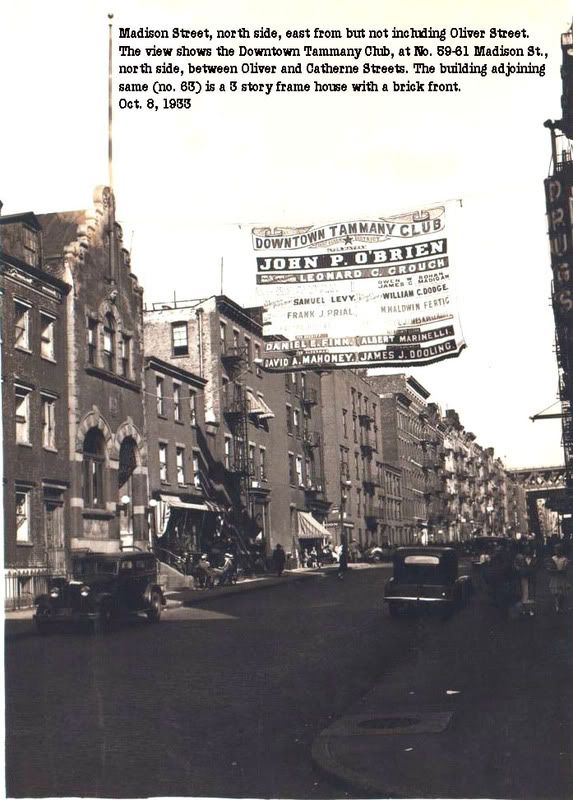
Tammany On Madison Street: 1933

from the nypl digital collection.
I didn't know that there were tenements on the spot of where the PS 1 playground is located. More to come on the candidates on the banner. The right side is now where the Smith Projects are and where Hamilton Madison House has their site.
Monday, December 1, 2008
Old Anarchist Song
Writers from the Forward would often lunch at the nearby Garden Cafeteria and argue politics with representatives of every spectrum of the left. This was previously mentioned back on December 5 of 2007. There was also a then and now post about the Garden Cafeteria on that same day
Tuesday, November 18, 2008
KV Chatter: The Obama Bandwagon Meets The LES

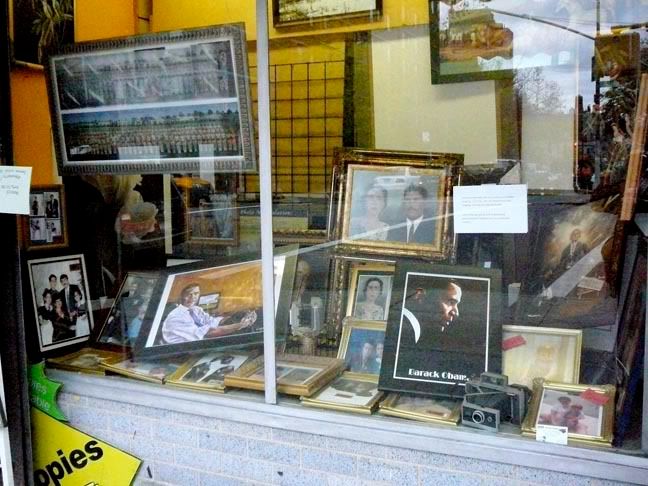
above the store window from the framing store on Grand Street near Essex. It also sells shoes.
Just like you might say that there are a lot of people now jumping on the Barack Obama bandwagon—naming their children, ‘Barack’, sometimes even when the toddler is a girl, they call her ‘Baracka’—and in many other ways people, in my opinion, are overdoing the ways in which they seek to identify themselves with the President-Elect. I myself have been accused of fitting into such a category but regard such accusations as, not only wholly ill-founded, but entirely the result of a competitive, envious tendency that has gripped the nation. Everyone is trying to one-up their neighbor with Barackier than thou declarations. I am not going to say I am like him in this way or that because such statements would be self-serving but because some of the similarities are so pointed and particular I do wish to articulate them clearly so that for those amongst us who feel they are the lost twin of the new President-Elect they may hold up these facts and profit by allowing objective cross-comparisons to sober up their otherwise overly optimistic views of such connectedness.
For starters, Barack and I both have spent a preponderance of our adult lives in large American cities. In or around them. Both of us, in a free association exercise when asked to state the word we think of first when we are offered the word, “court,” have responded, “basketball,” whereas 73% of the adult male American population has reputedly come back with “King Arthur’s” and a cool 26% responded, ‘yard”. So it seems that Barack and I, on this measure alone, rank in a one-percent cordon. Not the kind of thing that often occurs by chance, wouldn’t you agree? There’s been a lot of comments and no small bit of consternation about the season tix similarities as well. The both of us, Barack and I, choose to subscribe to professional sports franchises for whom we root. Exclusively. And only in sports which we follow and whose rules we understand implicitly. So, for example, were either of us to be asked whether we had on-going passes to the Lancaster PA jousting events—this is not an actual example, it’s more of a hypothetical for instance—the both of us would, if we had heard the question, respond, “Not at all.” Because, and it all boils down to this one simple but important point, neither of us follows professional jousting or is even certain about the rules or schedule of the games. “Games” is what they usually call jousting events. Like when Nero used to say, “Let the games begin,” usually that would mean he’d start unpacking a picnic lunch and watching the jousters go at it. Now these points are not even the main points, it’s just that they are so darn interesting that I figured I’d mention them first. We both have certain habits that mirror each other exactly when it comes to dress. By the way, neither of us wears one—a dress that is. But that’s not the main point here. We both enjoy lining our feet with socks before slipping those limb-endings into shoes. And neither of us uses a hand liner when donning the other limb coverings-be they leather, wool or goretex. As far as gardening goes. We both don’t. Strong coffee is enjoyed most mornings—by both. Often with some sort of pastry or bread item. The consumption of cream cheese on an average workday would neither be surprising or out of character for himself or myself. To say that the list billows on and on would be an understatement. So let’s say, billows geometrically. Look at travel habits. In the event that either of us needs to go from here to there we each manage in ways that are either identical or exactly parallel. When Barack needs to move northward, for example, he will be sure to have the vehicle of transport in which he embarks point in that particular direction and, should he need or wish to be momentarily diverted, for example in order to stay with the flow of traffic, he will then—as I do too—make the appropriate turns so that he will recover the northward direction from which he had been momentarily diverted. I can’t tell you how many times I’ve done the same thing. I occasionally do it without even thinking. When on a train, both of us are so confident of our sense of direction that we have each been known to doze and then, not simply as if on schedule—but actually on-schedule—have managed to wake and exit the train at the appropriate stop. There’s the use of the napkin that also distinguishes us as a pair. And the behavior is markedly similar whether we speak of linen, paper or ordinary cotton cloth. During meals, but especially at meal’s end, we gently brush our lips with the napkin and then look up cautiously anticipating dessert choices. Then we redo a similar action after dessert in the hopes that a second dessert might be offered. And so forth. A lot of his speeches by the way are exactly what I would have said had I been in his place and I have a feeling that a lot of what I’ve said to people, had he been with me at that time, describes exactly what he would have said, thought, felt and done. Do you need further proof or have I made my point? Thank you.
Thursday, November 6, 2008
The Party's Over
Above images Zina Sanders (copyright 2008) You can see more of her artistry here.. Audio from Blossom Dearie
I got an email from Zina Saunders about the publication of her new book, "The Party's Over,McCain/Palin Art Book." I promptly bought one.
I've gotten a lot of emails from people wanting to buy a collection of all my McCain/Palin campaign pictures, so I've created a book, "The Party's Over", which is 40 pages in full color: The website offers a preview of the first 15 pages of the book, and the actual book includes 25 more pages featuring 20 of my campaign paintings, all of which you can see in this gallery.
Zina's work is outstanding. I had come across her brilliant "Playing House" caricature previously and knew the illustration had a familiar look. I used one before in a November 21, 2007 posting on the Pickle Guy Alan Kaufman of Essex Street Much of her art draws inspiration from the Lower East Side, actually more in the "upper part" in the East Village.
from her bio
Zina is the daughter of pulp magazine artist Norman Saunders, who painted some of the most popular bubblegum cards from the 60's and 70's, including Mars Attacks, Batman, and Wacky Packages. As a child, she got her first taste of being a professional illustrator when she would "correct" her father's paintings, when he was away from his drawing board. Many an eyelash on Norm Saunders' damsels in distress was painted by a nine-year-old Zina. Zina lives and works in New York City, where she grew up and attended Music and Art High School and The Cooper Union. She left Manhattan in her 20’s to be a levitating lady with a traveling circus in upstate New York, but eventually returned to her senses and her beloved city.
Wednesday, November 5, 2008
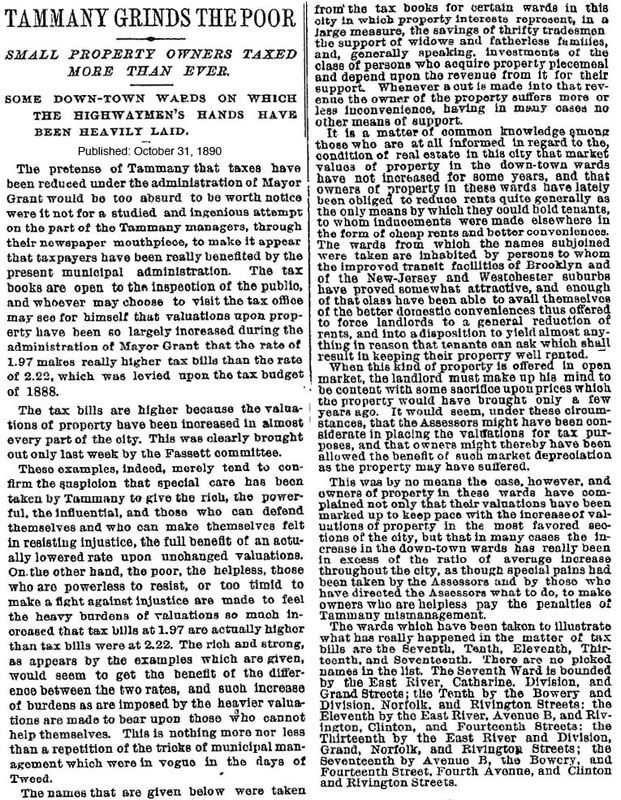
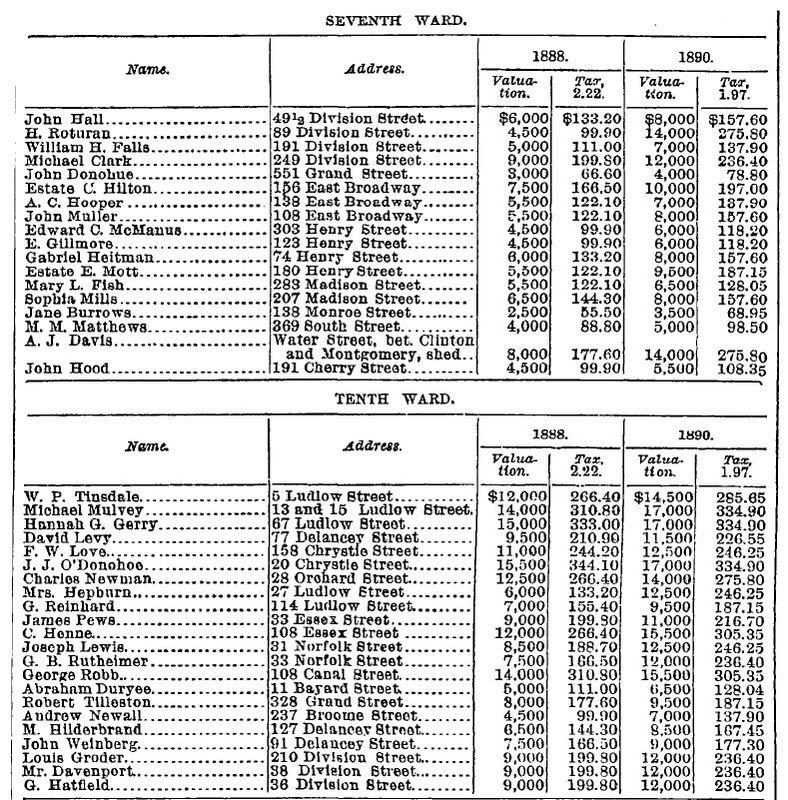
How Tammany Hall Ripped Off The LES: 1890


In another ten years or so those same landlords would be reaping the benefits of a new immigration wave
Labels:
nytimes,
politics,
primary documents,
Ward 10,
Ward 7
I Had A Dream
Voting For Obama
Not that Bellels are known to be a little wacky, she also came in for a friend's wedding, but stayed an extra week in order to vote.
Wednesday, October 22, 2008
The Lady Is A Tramp
A signature Rat Packish interpretation of this Rodgers and Hart song from the very underrated Buddy Greco circa 1962. Some say Darin stole finger popping from Greco. Over at pseudo-intellectalism there's a Sarah Palin version here and on a follow up post some original lyrics From wikipedia:
born Armando Greco, 14 August 1926, Philadelphia, Pennsylvania) is an American singer and pianist. Greco began playing piano at the age of four. His first professional work was playing with Benny Goodman's band. Most of Greco's work has been in the jazz and pop genres. He has had hits such as "Oh Look A-There, Ain't She Pretty", "The Lady is a Tramp", and "Around the World". He has recorded about 65 albums and 100 singles. He has had an active concert career playing in symphony halls, theatres, nightclubs, and Las Vegas showrooms (in the 1960s he made appearances with the Rat Pack). On screen, he had a memorable turn as the nightclub singer, Lucky, in the 1969 film, The Girl Who Knew Too Much. Greco has recorded albums for Columbia, Reprise and Pye his most popular albums were On Stage and Buddy's Back in Town both recorded on Columbia. His most successful single was "The Lady is a Tramp" His albums were regarded as being well crafted in similar vein to Sinatra. Greco recorded an album entitled Movin' On which included his version of the Marvin Gaye standard "What's Going On". Greco recorded sporadically after this album, but the live shows kept on coming and he has performed in most of the top nightclubs in the world. His last nationally charted record was "From Atlanta to Goodbye" on the Scepter label in 1969. Married four times, Greco continues to appear at his club in Cathedral City, California. In the summer of 2008, Buddy toured the UK with his wife Lezlie Anders. Together they performed dates with The BBC Big Band and played venues such as Ronnie Scotts Jazz Club in London. Buddy also made history as the first Las Vegas Headliner to star at a British Casino when he performed in cabaret on August 8th at The Circus Casino, Star City, Birmingham.
Tuesday, October 21, 2008
O'Leary, O'Reilly, O'Hare And O'Hara There's No One As Irish As Barack Obama
Knowing this perhaps Alfred E. Smith and our friends from St. James would have endorsed Barack Obama
from the daily kos
There's No One As Irish As Barack O'Bama
Written by The Corrigan Brothers and Shay Black
Chorus:
O'Leary, O'Reilly, O'Hare and O'Hara
There's no one as Irish as Barack O'Bama
From the old Blarney Stone to the green Hills of Tara
There's no one as Irish as Barack O'Bama
You don't believe me, I hear you say
But Barack's as Irish as our own JFK
His granddaddy’s granddaddy came from Moneygall
A village in Offaly, well known to you all.
His mam’s daddy’s granddaddy was one Falmuth Kearney
He’s as Irish as any from the Lakes of Killarney
His mam’s from a long line of great Irish Mamma’s
There's no one as Irish as Barack O'Bama
Our Barack’s a hero, I’ve heard them say
Fenian to Kenyan, the American Way
He’s Cuchulainn, Liongo, not Vishnu or Brahma
But there’s no one as Irish as Barack O’Bama
A name is a name and there’s no doubt about it
Barack O’Bama’s name, you can shout it
Whether apostrophe or inverted comma
There’s no one as Irish as Barack O’Bama.
Now you Hillary supporters don't you vote for McCain
And the VP needs brains, so forget about Palin
With Cheney and Bush, they are all ignorama
There’s no one as Irish as Barack O’Bama
From Kerry and Cork to old Donegal
Let’s hear it for Barack, from old Moneygall
From the Lakes of Killarney to old Connemara
There’s no one as Irish as Barack O’Bama
Last Chorus:
Tooral - U, tooral - S, tooral - A, toor a lama
There's no one as Irish as Barack O'Bama
Thanks for Listening.
Smidogg and The Starry Plough Family
Monday, October 20, 2008
Thursday, October 16, 2008
Who Is The Real Batman/Obama?
for all those KV baby boomer Batman fans. Personally, I wasn't one of them
from truthdig
as truthdig mentions, McCain's strategist's must have used this as inspiration
from wikipedia;
Batman is a 1960s American television series, based on the DC comic book character of the same name. It aired on the American Broadcasting Company (ABC) network for two and a half seasons from January 12, 1966 to March 14, 1968. Despite its short run, the series had two weekly installments for most of its tenure, giving the show a total of 120 episodes ( the equivalent of roughly four regular seasons). It currently airs on the AmericanLife TV Network [1] and on BBC Four in the UK. The Penguin (Oswald Chesterfield Cobblepot), a DC Comics supervillain, was introduced by artist Bob Kane and writer Bill Finger, making his debut in Detective Comics #58 (December 1941). The Penguin is depicted as a short, obese man and is one of Batman's greatest enemies. He is known for his love of birds and his specialized high-tech umbrellas. A mobster-type criminal, he fancies himself a "gentleman of crime"; his nightclub business provides a cover for more low-key criminal activity, which Batman tolerates as a source of criminal underworld information. Actor Burgess Meredith popularized the Penguin in the 1960s Batman television series, partially because of his signature squawking laughter.
Tuesday, October 14, 2008
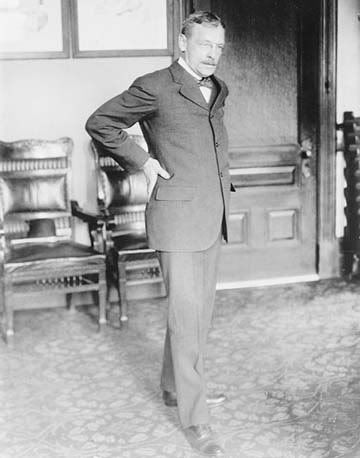
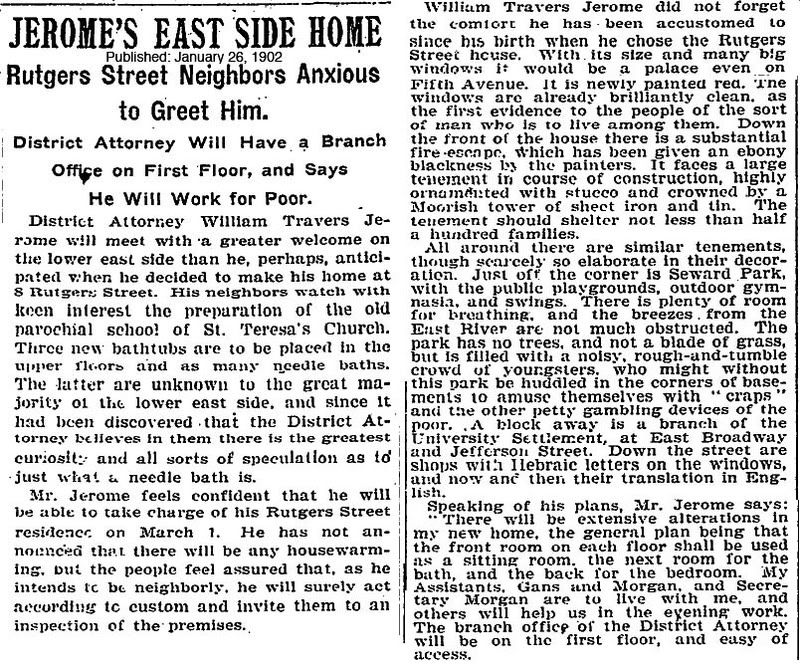
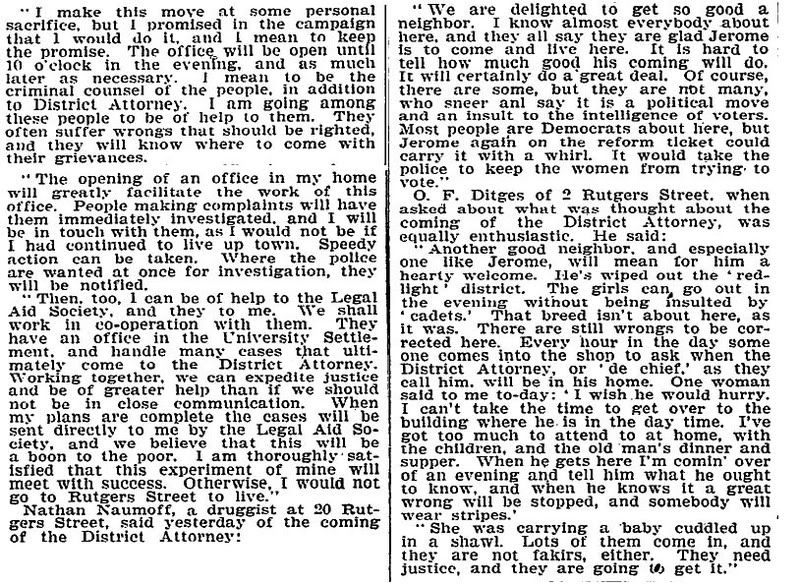
District Attorney William Travers Jerome

William Travers Jerome (1859 - 1934) was an American lawyer
Jerome was born in New York City in 1859. From 1894 to 1895, he worked in the Lexow Committee. In 1894, he managed the campaign of William L. Strong, who subsequently became mayor of New York City. The same year, he helped in the creation of a legislation that created the court of special sessions, where he himself was judge in the following year. Between 1901 and 1909, he served as district attorney of New York, where he lead a campaign against political corruption and crime, often leading raids personally, notably the one against the gambling house of Richard Canfield. He also acted as prosecutor in the trial against Harry Kendall Thaw for the murder of Stanford White. Jerome was also the the first cousin of Winston Churchill's mother Jenny
The 1904 Presidential Election: ALTON PARKER vs. THEODORE ROOSEVELT Pt 4

from the buying of the presidency 1904
President Theodore Roosevelt, who ascended to office after the assassination of William McKinley in 1901, has used his executive powers to break up monopolies such as the Northern Securities Company and to intervene in business-labor disputes, turning the White House into a “bully pulpit” from which to castigate big business for its excesses. But when Roosevelt decides to run for a term of his own, he quietly goes to the same robber barons and trusts that he’s been attacking and hits them up for campaign contributions. Although the businessmen are uneasy about Roosevelt, they decide they don’t have much choice but to support him, since they view the Democratic Party as even more dangerously radical. Of the $2,195,000 raised by Roosevelt’s campaign, nearly three-fourths comes from corporate coffers. Wall Street financiers J.P. Morgan and George Jay Gould give, respectively, $150,000 and $100,000, while railroad baron Edward H. Harriman donates $50,000 of his own and raises $200,000 from others. A trio of insurance companies provides another $150,000. Standard Oil Company gives $125,000 in an effort to keep in the trustbuster’s good graces. All told, Roosevelt rakes in more than twice as much as his Democratic challenger, Alton B. Parker, who is forced to rely on a pair of wealthy donors, industrialist Thomas Fortune Ryan and banker August Belmont, Jr., for three-fourths of his war chest. (Democratic vice-presidential candidate Henry Davis, a mining magnate, is another major contributor.) Daniel Lamont, a former aide to Democratic President Grover Cleveland, bluntly tells Parker that his candidacy is doomed because corporations “have underwritten Roosevelt’s election just as they would underwrite the construction of a railroad to San Francisco.” In October, with Parker’s back against the wall, the Democratic candidate picks up on charges originally made by Joseph Pulitzer’s New York World and tries to make an issue of Roosevelt’s corporate fundraising, accusing him of blackmailing companies into making donations to avoid government disclosure of damaging information about them. Roosevelt angrily denounces the “wicked falsehood” that his campaign has extorted contributions from companies while avoiding the subject of why he has accepted so much cash from them. Nevertheless, he feels chagrined about his apparent sellout. “Sooner or later, unless there is a readjustment, there will come a riotous, wicked, murderous day of atonement,” he tells a reporter. In November, Roosevelt wins the election handily, taking 336 electoral votes to 140 for Parker, and trouncing the Democrat in the popular vote by 56.4 percent to 37.6 percent. To his backers’ consternation, he soon reverts to attacking big business. As steel baron Henry Clay Frick, a $50,000 donor, later complains, “We bought the son of a bitch, and then he did not stay bought.”
The 1904 Presidential Election: ALTON PARKER vs. THEODORE ROOSEVELT Pt 3

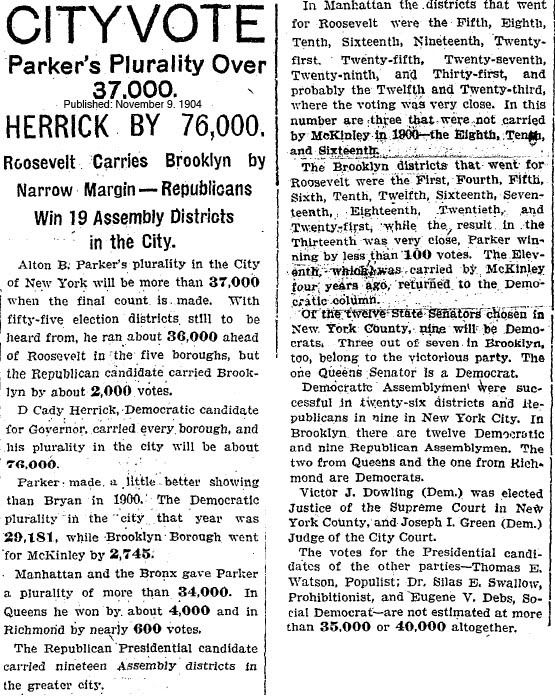
Roosevelt won New York State in 1904, but lost New York City

from the nytimes
Theodore Roosevelt was yesterday elected President of the United States for four years more, overwhelming majorities having been given to the Republican Electoral tickets in all of the States which had been classed as doubtful. The returns received up to midnight indicate that Roosevelt will have 325 votes in the Electoral College to 151 for his opponent, Alton B. Parker. The total number of votes in the Electoral College is 476, of which 239 are necessary to a choice. Mr. Roosevelt, therefore, will have a majority in the Electoral College of 174. The only State about whose Electoral vote there was any doubt at a late hour was Maryland. The returns indicated that it had gone Republican by several thousand, but the Democratic State Committee had not abandoned hope. As soon as it became certain that he had carried the country Mr. Roosevelt issued the following statement at the White House, in Washington: "Washington. Nov. 8, 1904. "I am deeply sensible of the honor done me by the American people in thus expressing their confidence in what I have done and have tried to do. I appreciate to the full the solemn responsibility this confidence imposes upon me, and I shall do all that in my power lies not to forfeit it. On the Fourth of March next I shall have served three and one-half years, and this three and one-half years constitutes my first term. The wise custom which limits the Presidency to two terms regards the substance and not the form. Under no circumstances will I be a candidate for or accept another nomination." The polls closed in New York at 5 o'clock and the people were not kept long in suspense as to the result in New York State and the Nation. As early as 7:30 o'clock August Belmont, who was at the Democratic National headquarters receiving returns, conceded the election of President Roosevelt by "an overwhelming majority." By 8 o'clock those in charge of returns at Democratic headquarters were willing to concede that Mr. Roosevelt had carried every doubtful State in the country. The figures which came in from New York, New Jersey, Connecticut, Indiana, and West Virginia were stunning to the Democratic managers. In none of the bulletins was there a single ray of hope for the Democrats, and as early as 8:30 o'clock a telegram was sent to Judge Parker informing him of his defeat. Returns from New York State up to midnight indicated that Roosevelt would have a plurality of 186,000 in the State. His indicated plurality above the Bronx line was 223,000, while Parker's indicated plurality in New York City was 37,000. Higgin's plurality for Governor will be about 85,000. The Republicans of the State of New York retained their hold on the Legislature, electing on the face of the returns as this edition for The Times went to press, 36 members of the Senate to 14 Democrats, and 104 members of Assembly to 46 Democrats. This is a clean Republican gain of 7 in the Senate and 7 in the Assembly. Districts that went Republican only when McKinley ran in 1896 were this year again turned into the Republican column. The returns for Congress show that the Republicans have elected 229 members of the House, and the Democrats 157, thus giving the Republicans 72 majority. In New Jersey the indicated plurality for Roosevelt is 80,000, and the Republican candidate for Governor, Edward C. Higgens, will have about 85,000. Connecticut has a plurality of 23,000 for Roosevelt. A. Heston Robertson, the Democratic candidate for Governor, ran ahead of the ticket, but Henry Roberts, the present Lieutenant Governor, was elected to a plurality of about 20,000.
Indiana went 50,000 for Roosevelt. The latest returns indicated 30,000 plurality for the Republicans Electoral ticket in Wisconsin. La Follette, the regular Republican candidate for Governor in Wisconsin, ran behind the Electoral ticket, but the returns indicate his election. West Virginia, the home State of Henry Gassaway Davis, the Democratic candidate for Vice President, gave 23,000 plurality for Roosevelt and Fairbanks. The latest returns from Colorado indicate that the State went for Roosevelt by a small plurality and that Peabody, the Republican candidate for Governor, won by a narrow margin. Maryland was claimed by both sides at midnight, but the latest returns indicated that the State would be Republican by a small plurality. Massachusetts furnished a surprise by electing William L. Douglas, Democrat, Governor of the State, although the plurality for Roosevelt and Fairbanks was in the neighborhood of 80,000. Joseph W. Folk is elected Governor of Missouri by a plurality estimated at 40,000, but the returns indicated that Parker was running behind. He probably will carry the State by 35,000. While complete returns were lacking at 1:30 o'clock it seemed probable that the Democrats had elected Governors in Nebraska and possibly West Virginia. In the latter State the vote is very close, but the indications are that Cornwell, the Democratic candidate, has outrun the National ticket and will pull through. Montana also reverses her Electoral vote on State issues and elects a Democratic Governor.
Subscribe to:
Posts (Atom)