Showing posts with label deep thoughts. Show all posts

Monday, November 17, 2008

Corcovado by Lisa Ono


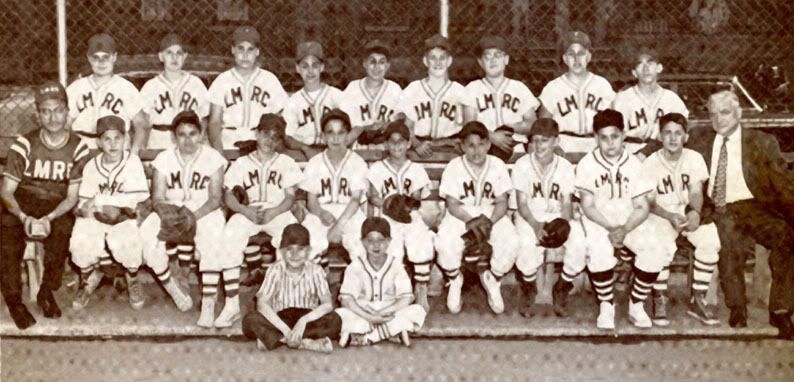
Apropos of a previous mention of the cultural vibrancy that occurs when there is confluence. The Japanese helped save many historic jazz records when they declined in popularity here in the states. They also brought new life into baseball.
Lisa Ono is one of the best Japanese interpreters of contemporary bossa nova. A singer, violonista (acoustic guitar player), and songwriter, she has had her albums released internationally. To date, she has recorded 12 albums (Catupiry, 1989; Nanã, 1990; Menina, 1991; Serenata Carioca, 1992; Namorada, 1993; Esperança, 1994; Minha Saudade, 1995; Rio Bossa, 1996; Essência, 1997; Bossa Carioca, 1998; Dream, 1999; and Pretty World, 2000) with special appearances by top artists like Tom Jobim, Sivuca, Paulo Moura, Danilo Caymmi, and Toots Thielemans. Having lived in Brazil until she was ten, she took advantage of her father's connections -- he was the owner of a concurred nightclub in the city of São Paulo and was Baden Powell's manager. Moving back to Japan, he opened the Saci Pererê nightclub, where Lisa Ono began to perform the Brazilian repertory, especially samba and bossa nova. She also founded the label Nanã, which promotes Brazilian music in Japan. ~ Alvaro Neder, All Music Guide

by Tom Jobim
Um cantinho, um violão
Esse amor, uma canção
Pra fazer feliz a quem se ama
Muita calma pra pensar
E ter tempo pra sonhar
Da janela vê-se o Corcovado
O Redentor, que lindo!
Quero a vida sempre assim
Com você perto de mim
Até o apagar da velha chama
E eu que era triste
Descrente desse mundo
Ao encontrar você eu conheci
O que é felicidade, meu amor

Quiet nights of quiet stars, quiet chords from my guitar
Floating in the silence that surrounds us
Quiet thoughts and quiet dreams, quiet walks by quiet streams, and a window
looking on the mountains and the sea.
How lovely! this is where i want to be.
Here, with you so close to me, until the final flicker of life's ember.
I who was lost and lonely, believing life was only
A bitter tragic joke, have found with you
The meaning of existence oh, my love.

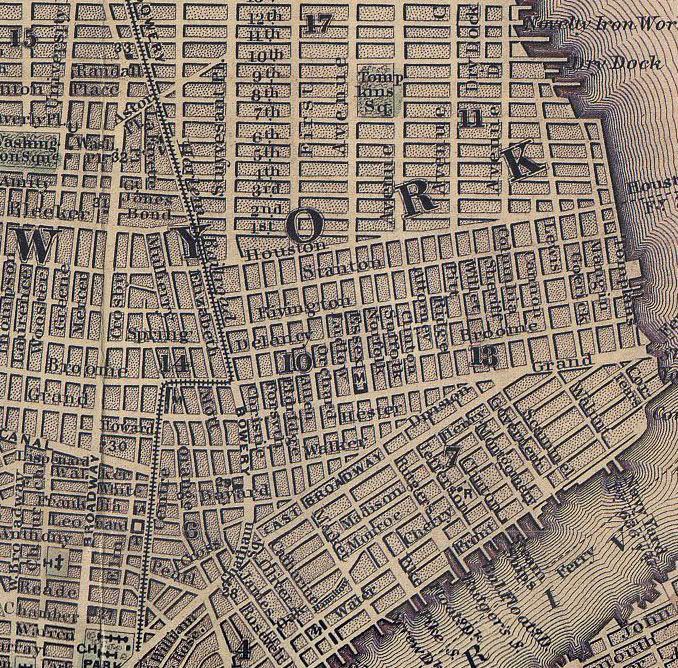
Chatham Square


Yesterday I went to hear Jack Tchen speak at the Eldridge Street Synagogue His talk was
PORTS & PASSAGES WITH DR. JACK TCHEN Dr. Jack Tchen (New York University) lectures on the unique port culture created on the Bowery and Chatham Square in the mid-nineteenth century by the intermingling of Chinese, Irish and free black co- workers and neighbors. Tchen evokes the intertwined new foodways, music, slang, jokes, songs and stories created from different cultures living amongst each other

One of the key points that he made was that the confluence (h/t to Howie Silverstein) of ethnic and racial and social class groups that intermingled in lower Manhattan in the 1800's produced a cultural vibrancy that expressed itself in various forms. This is a part of American history that has often been overlooked. Tchen even references the syncopation of sounds of the docks as an ingredient to perhaps America's greatest musical form, jazz, with its unique staging area for improvisation
Those kind of opportunities become harder to come by as New York and other metropolitan areas become more and more homogenized as economics drives working and middle class people out of historic neighborhoods. My contention, along with those who help contribute to this blog, is that Knickerbocker Village was the kind of space that allowed for that co-mingling.
On a side note, it tickled me that some people at the lecture had never heard of Chatham Square! I coupled some historic Chatham Square images, many from the East Broadway Library branch coming from the nypl's digital collection. The music, since I was in a bossa nova "groove," is Quiet Nights (Corcovado) sung by Jackie and Roy

Thursday, December 20, 2007

Deep Thoughts: A Knickerbocker Village Mother Lode

This is a great story and an example of the deepest of thoughts suggested by the last post. I make occasional trips back to nytimes archive and use differing search queries. I had started with "Knickerbocker Village", but I've exhausted that "vein." Now I try the names of surrounding streets. Now "Market Street" could lead me to Philadelphia or "Madison Street" could lead me to an old story on "Madison Street" in Bed Stuy. It's tedious, but I got the above on a "Henry Street" search. I then wondered, "Whatever happened to the Alexandra Kliatscho of 1910?" A new google search led me to the story below which was written in the Times about Alexandra Werner (Kliatscho) in 1998
The Neediest Cases; A Life of Thrift and a Generous Heart
By ADAM GERSHENSON
Fourscore and eight years ago, when Alexandra Kliatscho won The New York Times's Lincoln Essay Competition at the age of 9, she spent her winnings on a tricycle. Had the contest been held four years later, after The Times established its Neediest Cases Fund, she would probably have shared her prize with the poor and the hungry she read about in the newspaper.

Alexandra, a Russian girl whose essay praised Lincoln as ''kind, unselfish and thoughtful,'' grew up to become Alex Werner, a complicated, compassionate New Yorker who lived to give.

Mrs. Werner, a tiny woman with a quick wit, never wanted presents on her birthday. Instead, she asked friends and family members to give to the Neediest Cases Fund, which supports seven of the largest charities in New York City.

The amounts varied, but for more than 50 years, Mrs. Werner contributed faithfully to the fund. In 1993, she gave twice, explaining in a letter that she had seen ''more suffering and more destitution'' than usual. In 1994, her check arrived with a note that read, ''I am grateful just to be able to write a check, sign it and mail it in the box on my corner.'' Mrs. Werner was 94 years old.

This year, for the first time in half a century, the fund will not receive a check from Alex Werner. She died on Aug. 19, after weeks in a coma that followed a stroke.

But many of the people who knew her have rallied to contribute to the fund in her memory. Since late November, when this year's appeal began, 14 donors have sent gifts they said were inspired by Mrs. Werner.

Several expressed surprise that she had supported the Neediest Cases Fund. Doris Kaye, a distant relative who sent $100, said that Mrs. Werner had never considered herself an underdog.

''Her father was a doctor in the Czar's army,'' Mrs. Kaye said. ''I guess she gave because, after surviving pogroms in Russia and chaos in New York, she just felt fortunate.''

Mrs. Werner was 6 years old and spoke only Russian in 1906 when she, her four siblings and her mother left their hometown of Vladimir to join their father on the Lower East Side of Manhattan.

She had spoken English for just three years when she wrote her essay celebrating the 100th anniversary of Lincoln's birth. Her competitors were older students, many of whom were more familiar with the legend of Lincoln. Yet out of 10,000 submissions, hers was deemed one of the 10 best, and a contest judge wrote, ''Her achievement seems worthy of respectful attention by persons who have views on either side of the immigrant question.''

The Times praised the ''little alien's wisdom,'' gave her a medal and a $5 gold piece, and published a copy of her handwritten essay on the front page of The New York Times Magazine on Feb. 28, 1909. It began, ''I am a little foreign girl, and I have been here only a short time, but when I read about Lincoln, I thought I might grow up a great woman as Lincoln was a great man.''

Writing came easily to Mrs. Werner, who graduated from Teachers' College in 1922. But she never mastered arithmetic, the gentle art of handling appliances or ''the ability to assemble even a Fisher-Price children's puzzle,'' said her daughter, Julie Stern of Newtown, Conn. ''She had trouble thinking logically, and she never thought she was bright, but she knew so much,'' she said.

It was one of many contradictions in Mrs. Werner's life. While she gave money freely, she never squandered a dime. During the 42 years she taught art at Jane Addams Vocational School in the Bronx, she walked a mile and a half to work each day. On snowy mornings, she eschewed taxis and stuffed hot hardboiled eggs in her pockets to keep her hands warm. When the lunch bell rang, she peeled the eggs and ate them.

Mrs. Werner traveled to Russia, Asia and the capitals of Europe, yet lived 40 years with her husband, Dr. Abraham Werner, and two children in a South Bronx apartment that cost $125 a month. She loved classical music and Impressionist paintings, but her favorite artist may have been Alfred Hitchcock. She wrote serious poetry, but also enjoyed composing limericks. Just before her death, she dictated this ditty about her doctors:

Iraci and Bornstein went up to heaven

And knocked at the pearly gates,

They said to St. Peter,

Just look at the meter:

We never reduce our rates.

Mrs. Werner was passionate about books, tackling histories by Sir Martin Gilbert and novels by Trollope. But she never amassed a large library. She taught her grandson Joe Stern that ''the second half of reading a book is finding the next person to read it.''

When her grandchildren grew too old for storybooks, Mrs. Werner bought them for the children of her neighbors, maintenance men and superintendents.

This network of family and friends sustained Mrs. Werner. Twenty-five years after she visited a foreign country, she continued to correspond with people she had met there.

One companion, Lottye Johnson, became a constant presence during the second half of Mrs. Werner's life. They met in 1941, when Dr. Werner was stationed in New Orleans as a physician for the Veterans Administration. Lottye, a teen-ager from Florida, was hired to help raise Julie. Even after Julie was grown, Mrs. Johnson stayed on, and she and Mrs. Werner became ''like lichen and moss,'' said her grandson.

In 1974, Dr. Werner died, and Mrs. Werner's children grew concerned about leaving their mother in the old neighborhood, where she loved to walk alone at night. They found an apartment for her on East 86th Street. There, she threw a birthday party each December for herself and three of her four grandchildren. This would have been the 25th year in which she brought together distant branches of her family for a celebration of life.

The menu never changed. Mrs. Johnson baked a sweet potato pie. Mrs. Werner did not learn to cook until she was 70, but she took pride in her efforts and would earnestly ask everyone if the franks and beans were as good as last year's.

At one of the first parties, Mrs. Stern found herself in the kitchen with her mother. Mrs. Werner had recently opened a bank account to obtain two free gifts: a blender and an electric can opener. Mrs. Stern rifled through every cabinet and drawer, but she could not find either item. She confronted her mother.

''Well, I broke the blender,'' Mrs. Werner confessed. ''And I couldn't figure out the can opener, so I gave it away.''

Deep Thoughts: Knickerbocker Village Metaphor

A deep thinking KV birthday boy came up with this. It creates yet another blog label and will become part of our layout on the right (literally, that is)
Annie Dillard talks about her fascination with science and minerals in particular. Then she goes on to detail anecdotes concerning various Americans who became obsessed with the possibility of discovering valuable or interesting mineral deposits or rock formations within or close to their home environments. She speaks about men - almost all these scientific minded people are male - who discover veins of coal, copper, bauxite, and so on. She depicts the ordinariness of their fascination and the fact that it tapped into the extraordinary. Like nature had these incredible finds waiting to be unearthed all around. People who could see the worth of what was all around them or, in some cases, beneath them, excavated and found, just beneath the surface of their obsessive preoccupations, depths of riches and fascination. So in exploring the history of KV we go back into what had been the ordinary and find it layered in a criss-cross of historical significance. A transmutation of the lungblock, redeemed as a bold social experiment tinged with ambitions as immodest as a revolution and as commonplace as sandwiches - ordinary though it may be but still - the most delicious sandwiches of the twentieth century. Buried beneath the surface of the KV heritage are connections to so may aspects of our culture and NYC's greatness as to be not only unfathomable but irrefutable. Do you know what I'm saying here?