Showing posts with label peter paul and mary. Show all posts

Sunday, March 28, 2010

Milton Okun: Part 4


not the best quality video, but a top quality composition that Milton Okun shares credit for. Probably my second favorite Peter, Paul and Mary song.
from wikipedia
"Go Tell It on the Mountain" is an African-American spiritual compiled by John W. Work dating back to at least 1865 that has been sung and recorded by many gospel and secular performers. It is considered a Christmas carol because its original lyric celebrates the Nativity of Jesus: "Go tell it on the mountain, over the hills and everywhere; go tell it on the mountain, that Jesus Christ is born."
In 1963, Peter Yarrow, Noel "Paul" Stookey, and Mary Travers, along with their musical director, Milt Okun, adapted and rewrote "Go Tell It on the Mountain" as "Tell It on the Mountain", their lyrics referring specifically to Exodus and employing the line "Let my people go," but implicitly referring to the Civil Rights struggle of the early '60s. The song was recorded by Yarrow, Stookey and Travers on their Peter, Paul and Mary album In the Wind and was also a moderate hit single for them. (US #33 pop, 1964). Civil rights activist Fannie Lou Hamer used this rewritten version of the song as an anthem during the mid-1960s.

Milton Okun: Part 3


Traditional
Adapted and Arranged by Peter Yarrow, Paul Stookey, Mary Travers and Milton Okun
Hey Hey (Jane, Jane), my Lord and Lord (Jane, Jane)
I'm a gonna buy (Jane, Jane), three mockin' birds (Jane, Jane)
One for to whistle (Jane, Jane), one for to sing (Jane, Jane)
One for to do (Jane, Jane) most any little thing (Jane, Jane)
Chorus:
Children go where I send thee, how shall I send thee
Hey Hey, my Lord and Lord
Well I'm gonna send thee three by three
Three for the Hebrew Children
Two for the Paul and Silas
One for the little-bitty baby
That's born, born, born in Bethlehem
Hey Hey, my Lord and Lord
I'm a gonna buy three hunting dogs
One for to run, one for to shout,
One for to talk to when I go out
(Chorus)
Well I'm gonna send thee six by six,
Six for the six that never got fixed
Five for the five that stayed alive
Four for the four that stood at the door
Three for the Hebrew Children
Two for the Paul and Silas
One for the little-bitty baby
That's born, born, born in Bethlehem
Hey Hey, my Lord and Lord
I'm gonna buy three muley cows
One for to milk,
One to plow my corn
One for to pray on Christmas morn
(Chorus)
Well I'm gonna send thee nine by nine
Nine for the nine that dressed so fine
Eight for the eight that stood at the gate
Seven for the seven that came from heaven
Six for the six that never got fixed
Five for the five that stayed alive
Four for the four that stood at the door
Three for the Hebrew Children
Two for the Paul and Silas
One for the little-bitty baby
That's born, born, born in Bethlehem
Hey Hey, my Lord and Lord,
I'm a-gonna buy three little blue birds
One for to weep,
One for to mourn,
One for to pray when I am gone.

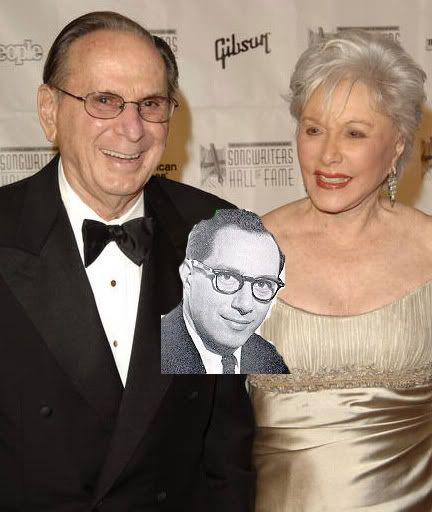
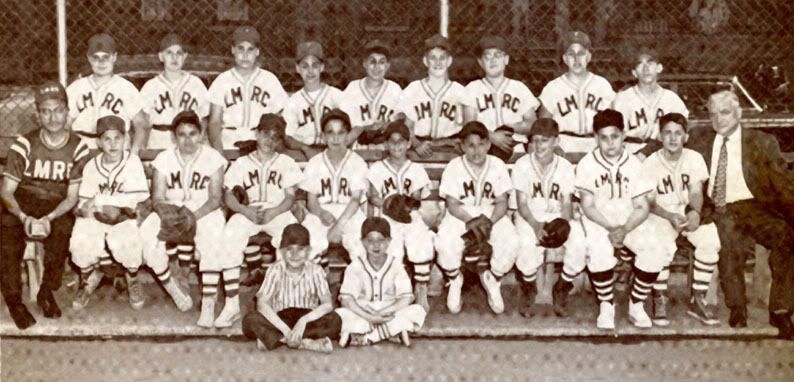
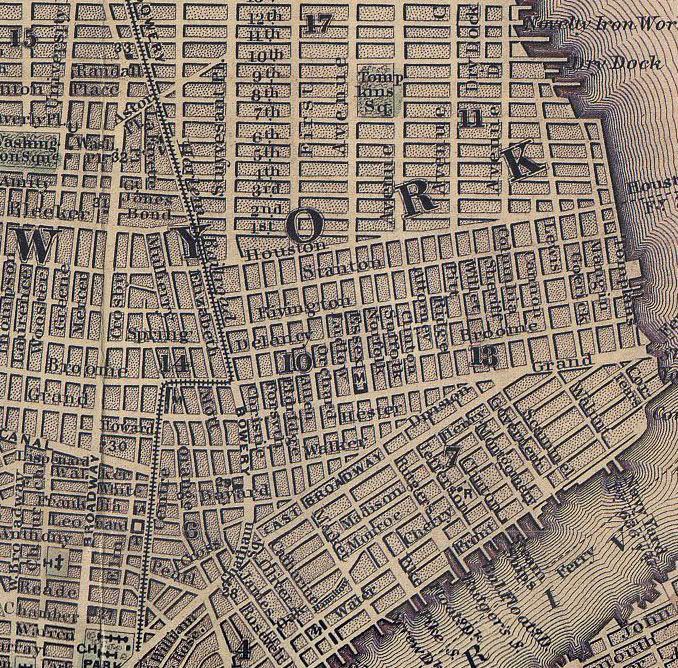
Who's Who In Knickerbocker Village History: Milton Okun


The second piece of great KV history information that Gene Reiser revealed to me was the Milt Okun once lived at Knickerbocker Village.
New York-born singer, producer, arranger, and pianist Milt Okun has been a force in popular music since the early '50s, no small achievement for a man whose first paying role in the field was as a junior high school music teacher in the New York City public schools. Born in New York in 1923, Okun grew up with a love of music that extended from traditional folk songs to opera. After World War II, he rejoined the civilian work force as music teacher in junior high school in New York. He chanced to be hired as a pianist for Harry Belafonte on a short tour during the early '50s, and was subsequently lured away from his teaching job to work full-time for Belafonte. He left the latter's employ after five years, during which time he served as an arranger and producer, in addition to leading his band.
With that experience under his belt, and the folk music revival starting to take off, Okun became active as a performer in his own right. He played clubs around New York, in which his tenor voice went over extremely well on traditional folk songs, and he cut several albums in the 1950s and early '60s, including Merry Ditties (1955) and, with Ellen Stekert, Traditional American Love Songs (1957) for the Riverside label; America's Best Loved Folk Songs (released on Warwick in 1961); and Adirondack Folk Songs and Ballads (issued on Stinson in 1963). He also worked alongside Leon Bibb and Hally Wood during the mid- to late '50s as a member of the Skifflers quartet, who recorded the album Goin' Down to Town for Epic in 1957. He turned to arranging and producing in the late '50s, and it was in the latter capacity that Okun had his greatest impact on music, working with such acts as the Brothers Four and the Chad Mitchell Trio in the early '60s.
His most widely known credit in this area, however, was as the arranger for Peter, Paul and Mary -- he played a key role in helping them develop the three-part harmony sound that made them the most successful group act of the 1960s folk boom. By that time, he had also started Cherry Lane Music, his own publishing company, which was still going strong 50 years later. With the end of the folk boom in the mid- to late '60s, he moved on to working with individual members of the groups, most notably John Denver. Later in his career, Okun worked with Plácido Domingo, which allowed him to return to his first musical love, classical music.