Showing posts with label movies. Show all posts

Thursday, April 19, 2012

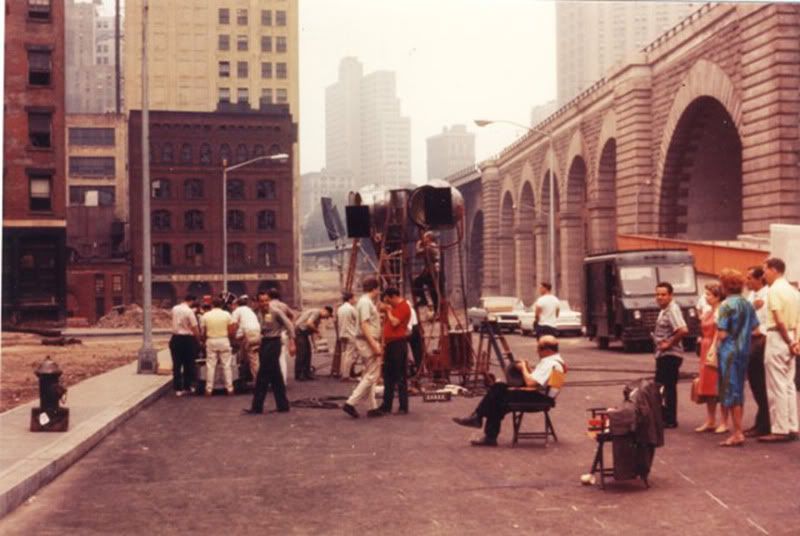
Still Photos Of The Filming Of Naked City: Summer 1947

Naked City Stills-mcny
I look at some of these photos, especially the ones near Delancey and Suffolk and Clinton, searching to possibly see my parents. They were living at 76 Suffolk at the time. They come from the mcny collection
and they were taken by Stanley Kubrick, who was working then as a still photographer
About the movie:
The Naked City (1948) Directed by Jules Dassin. Barry Fitzgerald, Howard Duff, Don Taylor (96 min.)
There are 8 million stories in The Naked City! As a hot summer night works its way towards dawn, a murder is discovered; a girl whose crime was "wanting too much--that's why she went wrong. Bright lights, theaters, furs and nightclubs. That's why she's dead now. Dear God, why wasn't she born ugly!" A narrow apartment kitchen, rush-hour subways, the Williamsburg Bridge and Lower East Side streets swarming with passers-by are among the 107 riveting locations around NYC. No other film had ever conveyed the immensity of police work in the teeming metropolis.
Feature films had not been shot on location in NYC since the silent era, when Mark Hellinger, a former columnist, screenwriter and veteran of the Army Air Force's Motion Picture Unit proposed that a fiction film made with the urgency of a documentary would be a fresh approach to the crime film. There were plenty of films set in New York, of course, in the fantasy New York of the Hollywood backlots and soundstages, created by writers and directors nostalgic for the cultural rush and urban beauty of the East Coast. Second unit crews shot background shots in the city, and newsreels were still made there. But, feature film making in NYC was only a memory. A few films had attempted something more ambitious, notably a sequence shot with hidden cameras on Third Avenue in Billy Wilder's The Lost Weekend.
The script was originally called Homicide, but was renamed The Naked City, a title purchased from the still photographer WeeGee, notorious for his unadorned, sometimes ghastly flashes of New York after dark. In the summer of 1947 a full crew commanded by director (and former New Yorker) Jules Dassin descended on the city. The onlookers created countless problems for the police assigned to protect the filmmakers. Perhaps as many as 200,000 spectators watched the filming around town at different times, and others kept up with the production schedule in the daily newspapers.

Monday, April 16, 2012

Filmed In The Fourth Ward In 1947: A Double Life


I never new about this movie being filmed in the Fourth Ward until I read Victor Colaio's book.
Note the elevated train that is shown. It was probably the 3rd Avenue El near the junction at Chatham Square. Victor said some of the street scenes shown in the clip above were on Roosevelt Street. About the movie:
A Double Life (1947) Anthony John is an actor whose life is strongly influenced by the characters he plays. When he's playing comedy, he's the most enjoyable person in the world, but when he's playing drama, it's terrible to be around him. That's the reason why his wife Brita divorced him; although she still loves him and works with him, she couldn't stand living with him anymore. So when Anthony accepts to play Othello, he devotes himself entirely to the part, but it soon overwhelms him and with each day his mind gets filled more and more with Othello's murderous jealousy.
The successful middle-aged Broadway actor Anthony "Tony" John is a dedicated lonely professional that still loves his former wife Brita. They are playing Othello for almost two years and Tony has a breakdown, beginning to lose his mind and sense of reality, confusing his identity with his characters. One night, he meets the waitress Pat Kroll in a distant bar and he spends the night with the easy woman. Then he proposes Brita, who is his best friend, but she refuses to marry him again triggering a jealousy process against their friend Bill. Tony decides to visit Pat late night and in an insanity process, he lives the situation of Othello killing Desdemona. The police arrest a suspect but Bill wants to prove that Tony is responsible for the murder. 
Ronald Coleman won an Oscar for the part of Anthony John.  So if anyone asks you to name two Oscar winning movies shot in the Fourth Ward (the other being French Connection) you will know.

Buster Keaton In The Fourth Ward: 1964

Just up the block from the location of the previous post. Southbridge Towers was soon to be built near here. For more on what Buster was doing here:
During the summer of 1964, Buster Keaton and Samuel Beckett collaborated making a black and white, avant garde, nearly silent short movie entitled Film.  Keaton, who is seen only from the rear, plays a man attempting to evade perception, eluding everyone except himself.  It was Beckett’s only screenplay, and one of Keaton’s final films.
Production began on July 20, 1964, by filming exteriors within the shadow of the Brooklyn Bridge.  Film critic Leonard Maltin, then a young teenager, had read about the planned shooting in the newspaper, and traveled from his home in New Jersey to witness Keaton at work.  Leonard brought along a handful of stills for Buster to autograph, and spent a few moments chatting with Buster between takes. 

Saturday, November 12, 2011

A Hidden 4th Ward Reference In Mr. Skeffington

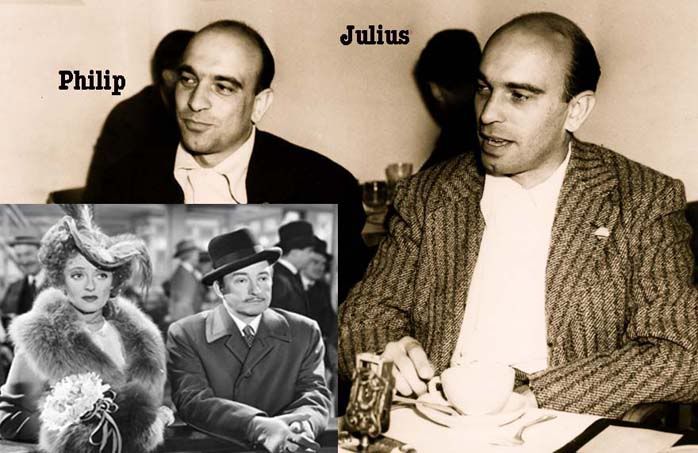
The great screenwriters, Julius and Philip Epstein, lived at Market and Cherry. Mr. Skeffington is a 1944 American drama film directed by Vincent Sherman, based on the novel of the same name by Elizabeth von Arnim. The film stars Bette Davis as a beautiful woman whose many suitors, and self-love, distract her from returning the affections of her husband, Job Skeffington. It also makes a point about Skeffington's status as a Jew in 1914 high society and, later, in relation to Nazi Germany. Dialogue from the movie with time stamps :35:00 Job, I was born right across the river there, near Grant's Tomb. :35:05 Of course, the tomb hadn't quite been built. :35:07 My governess used to take me there every day. :35:10 That's where she met her policeman. :35:12 Job, where were you born? :35:14 Right here in New York. The corner of Market and Cherry Street. :35:18 Market and Cherry? Where's that? :35:21 Foot of the East River. It's about 10 miles, I should say, from the nearest governess. :35:27 Job, do you realize I've known you only two months? :35:30 And that I practically know nothing about you at all. :35:34 Were you poor? :35:35 You have no idea how poor. :35:37 You weren't actually hungry? :35:40 My father sold chocolate bars with almond nuts on a pushcart. :35:43 When he had a good day, we ate meat. :35:46 When he had a bad day, we ate chocolate bars with almond nuts. :35:49 The bad days had a slight edge. :35:51 You remember a lot about when you were a little boy, don't you? :35:55 Especially the lack of plumbing. :35:59 Skeffington, that's a strange name for Market and Cherry. :36:03 You mean, is that my real name? :36:05 No. The immigration official on Ellis Island wasn't a good speller... :36:09 ...and "Skeffington" was the closest he could get to "Skevinzskaza." :36:13 Well, then, how did you become so successful? :36:18 I don't wanna go on with the story of my life. :36:20 It's routine, rags to riches. Of course, I sold newspapers. :36:24 I was a messenger during the day and went to school at night. :36:27 You can fill in the rest. :36:29 There's one difference. :36:31 You didn't marry the boss's daughter. :36:33 No. :36:35 But I married the woman everybody else wanted to. :36:38 That makes up for it. :36:51 Job, find out what's happening. :36:57 Attendant? :36:58 - Yes? - What's going on?

Thursday, October 27, 2011

Speaking Of Jennifer Connelly: Once Upon A Time In America, 1984

Jennifer was mentioned in a recent group KV email that referred to How To Make It In America from Alexandra
Hi David I was expecting you to post the episode that took place in KV and you did not disappoint. I actually saved it on my DVR I do not remember if I already told you that I was friends with the mother of one of the writers on that show. He is Rob Weiss and he is listed as executive producer, but I believe he writes for that show and Entourage. We were living in Brooklyn on Stratford Road. Also a friend of a friend who visited in that group was Jennifer Connelly (age 2) and her mother. Jennifer's mother and I had a mutual friend. Funny how a couple of Brooklyn kids went on to Hollywood.
about Once Upon A Time In America Below, three 2007 posts with clips from Once Upon A Time In America part 1 part 2 part 3

Thursday, September 8, 2011

An Excerpt From A 1967 Film, Last Summer Won't Happen

Lower East Side from Django's Ghost on Vimeo.

This is an excerpt from the film "Last Summer Won't Happen" directed by Peter Gessner and Tom Hurwitz. The Velvet Underground's "All Tomorrow's Parties" was not part of the original soundtrack. from the film's description
I visited the East Village in 1967 and when I moved there 10 years later not much had changed. The East Village, Tompkins Square and Alphabet City were in decay, whole areas were virtual urban wastelands. But, out of the ruins great things were rising in the arts and culture. During the mid-70s through the 1980s, the area was vibrant with a bohemian vibe. Then came gentrification and many of us were pushed out, along with the poor and elderly. The area is thriving now with fine restaurants, fashion boutiques and trendy bar after bar after bar. It’s still a wasteland – an expensive, well-maintained, cultural wasteland. Where once were bookstores, rock clubs and shops filled with hip affordable clothing there are now fast food chains, designer brand boutiques and banks popping up like a bad case of corporate herpes. Yes, I know I sound like a disgruntled ex-New Yorker. I am one.

Saturday, January 30, 2010

LES Movie Theaters

East Village Now Then 2
I've been hanging out a lot in the 11th and 17th Ward working on local history project for first and second graders. In putting together some then and now photos it's obvious how much movie theaters were so much a part of our lives back in the 1920's and 30's.

Wednesday, October 7, 2009

Don Ellis' Killer Groove Rendition Of His Theme For William Friedkin's 70's Masterpiece " The French Connection"


Don Ellis - The French Connection
Uploaded by zerokomma. - Watch feature films and entire TV shows.

27 Cherry Street: Nearby Now And Then


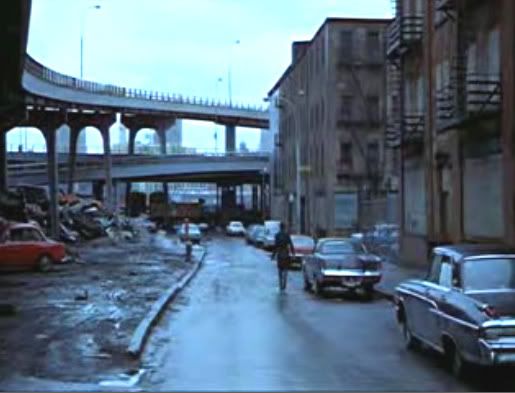
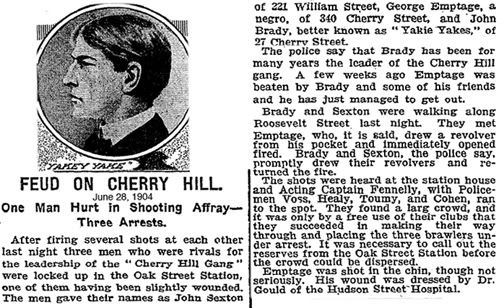
Above: Dover and Front Street in the early 1970's from a scene still of the French Connection. Below Cherry Hill Gang leader, Jake "Yakey" Brady, who lived at nearby 27 Cherry Street in the early 1900's

Saturday, May 9, 2009

Well Nobody's Perfect


The ending of Some Like It Hot

Tuesday, April 28, 2009

Sunday In New York, The Movie


A favorite of mine, with Mel Torme singing a a bonus
Jane Fonda is delightfully daffy as the uneasy doll who keeps a bevy of baffled males on edge for an entire Sunday In New York

Sunday in New York (1963) is a American comedy film directed by Peter Tewksbury and starring Cliff Robertson, Jane Fonda, and Rod Taylor. The screenplay by Norman Krasna was adapted from his play which had been produced on Broadway the previous year. It was one of Fonda's earliest films, and she was called "the loveliest and most gifted of all our new young actresses" by Newsday. The soundtrack score was composed and performed by Peter Nero.
Eileen Tyler (Fonda) is twenty-two years old and is suffering from her breakup with Russ (Robert Culp). She comes to New York City to visit her brother Adam (Robertson), who is an airline pilot. Eileen confides to her brother that she thinks she may be the only 22-year-old virgin left in the world. Adam assures her that sex is not what all men look for and insists he hasn't slept around. Of course, Adam is lying and is in hot pursuit of a tryst with his occasional girlfriend Mona. However, Adam's date with Mona has a series of job related interruptions. Meanwhile, Eileen decides to see if she can have some fun for herself in New York, and seems to find the perfect candidate in Mike (Taylor), a man she meets on the bus. But things get complicated when Russ pops in with a proposal and a mistaken assumption.

Wednesday, April 22, 2009

Breaking Away


I can imagine Cliff starring in one of my favorite films, "Breaking Away"
Give a little bit
Give a little bit of your love to me
Give a little bit
Ill give a little bit of my love to you
Theres so much that we need to share
So send a smile and show you care
Ill give a little bit
Ill give a little bit of my life for you
So give a little bit
Give a little bit of your time to me
See the man with the lonely eyes
Take his hand, youll be surprised
Give a little bit
Give a little bit of your love to me
Ill give a little bit of my life for you
Nows the time that we need to share
So find yourself, were on our way back home
Going home
Dont you need to feel at home?
Oh yeah, we gotta sing

Sunday, April 19, 2009

French Connection: Lincoln Stakeout On Dover Street


Tony LoBianco drops the car off on Dover Street between Water and Front and then Popeye and Cloudy stake it out. At the beginning the cars are seen coming from South Street and turning north on Peck Slip then east on Water Street and south on Dover.

The French Connection And The Three Degrees


A great scene of world's colliding and radiopeter provides a good explanation why
My DVR has been quietly sucking as many movies as possible from my cable connection. I suspect at some point it’s going to burst with the gigs of data that I’m insisting it hold.
One of these, a movie from 1971 called The French Connection, happens to be one of my favorites. It’s a gritty movie about NY cops trying to bust the infamous heroin connection between the states and France.
Early in the movie, Gene Hackman (who won the Oscar for his role) enters a nightclub and on stage performing are the Three Degrees, singing this insanely good song called Everybody Gets To Go To The Moon. You most likely know one of their other big hits called When Will I See You Again.
I can’t remember how old I was when I saw the movie on VHS. It was summertime and I was trying to go through as many of the films as I could find that received the Oscar for best picture. Call it a little bit of film education if you will. This was way before the internet, so I had to hit the library and dig into volumes of reference material to figure out who won. Must have taken me hours to put the list together. Today you can do it in about 30 seconds with an internet connection.
So I’m sitting in the living room watching this movie and when Gene Hackman enters the club, the music starts. These bright horns were blasting, a happy rhodes keyboard was playing, the bass line was thumping, the hi-hats were in full force, and there were these three beautiful voices singing some of the best lyrics I remember hearing as a kid.
The song was about going into space. I was a complete NASA nerd at the time. I also loved R&B girl groups a bit too much, making time to choreograph as many songs as possible in my basement.
It was like two worlds were colliding. Absolutely mesmerized, I couldn’t take my eyes off the screen. Their dresses, their hair, the music, their eyelashes, it was almost too much late 60’s goodness to be believed. I watched the nightclub scene over and over until I knew all the words and most of the choreography. The energy is infectious. It wasn’t until many years later that I’d own the whole song.
The movie is amazing. But that scene forever changed me. I recommend renting the film just for those three minutes. And look for the song on iTunes because it’s beyond worth the 99 cents. This is THE best song Jimmy Webb has ever written, and the best the Three Degrees ever recorded.

The French Connection On The Lower East Side And Little Italy


Tony LoBianco, playing Sal Boca, and his wife, Arlene Farber as Angie Boca, exit Ratner's. In the beginning you see the south side of Delancey Street still intact, including the police precinct on Clinton Street. Toward the end of this clip, in Little Italy, the 177 address that's visible might be on Mulberry. Cafe Roma is visible and it's located on Broome and Mulberry
The French Connection is a 1971 Hollywood crime film directed by William Friedkin. The film was adapted and fictionalized by Ernest Tidyman from the non-fiction book by Robin Moore. It tells the story of two New York City policemen who are trying to intercept a heroin shipment coming in from France. It is based on the actual, infamous "French Connection" trafficking scheme. It stars Gene Hackman (as pork pie hat-wearing New York City police detective Jimmy "Popeye" Doyle), Fernando Rey (as the villain French heroin smuggler Alain Charnier) and Roy Scheider (as Jimmy's partner Buddy "Cloudy" Russo). It also features Eddie Egan and Sonny "Cloudy" Grosso, the real-life police detectives on whom Hackman's and Scheider's characters were based.
It was the first R-rated movie to win the Academy Award for Best Picture since the introduction of the MPAA film rating system. It also won Academy Awards for Best Actor in a Leading Role (Gene Hackman), Best Director, Best Film Editing, and Best Writing, Screenplay Based on Material from Another Medium (Ernest Tidyman). It was nominated for Best Actor in a Supporting Role (Roy Scheider), Best Cinematography, and Best Sound. Tidyman also received a Golden Globe Award, a Writers Guild of America Award, and an Edgar Award for his screenplay.
In 2005, the film was selected for preservation in the United States National Film Registry by the Library of Congress as being "culturally, historically, or aesthetically significant".

Knickerbocker Village And The Smith Projects In The French Connection


from Joe Bruno
I SAW THE PIECE ON TONY LOBIANCO YOU POSTED RECENTLY. I DON'T KNOW IF YOU KNOW, BUT A FEW SCENES FROM THE FRENCH CONNECTION WERE SHOT IN THE 4TH WARD.
IN THE MOVIE, POPEYE DOYLE, PLAYED BY GENE HACKMAN, LIVED IN AL SMITH PROJECTS . THERE ARE A COUPLE OF SCENES SHOT IN THE HALLWAYS OF SMITH. SMITH HAD THE ONLY BUILDINGS I EVER SAW THAT HAD EVEN AND ODD FLOOR ELEVATORS.
ALSO, SEVERAL SCENES WERE SHOT IN MOOCHIES BAR, ON THE CORNER OF SOUTH AND MARKET SLIP. MOOCHIES WAS A SHOT AND A BEER BAR, FREQENTED BY EVERYONE FROM REGULAR NEIGHBORHOOD GUYS, TO ALLEGED MOBSTERS, TO ALLEGED COPS, TO ALLEGED JOURNALISTS FROM THE JOURNAL AMERICAN DOWN THE BLOCK, WHICH LATER BECAME THE NY POST.
STEVE DUNLEAVY FROM THE POST WAS A REGULAR AT MOOCHIES, AS WAS JIMMY BRESLIN IN HIS DRINKING DAYS. IN FACT, WHEN MOOCHIE DIED IN THE LATE 70'S, DUNLEAVY WROTE THE OBITUARY IN THE NY POST.
I REMEMBER MOOCHIES HAD A POOL TABLE AND HE SERVED BEERS TO GO IN BIG, WHITE STYROFOAM CONTAINERS. ALL YEAR ROUND, YOU COULD SEE SCORES OF GUYS SITTING ON THE BENCHES IN TANAHEY PARK, DRINKING BEERS IN MOOCHIE'S CONTAINERS. BEER FROM A BOTTLE OR CAN?? FORGEDDABOUDIT!
FOR A WHILE THERE WAS A SIGN AT THE BAR "BOOZE OR BEER, OR STAY THE EFF OUT OF HERE." ORDERING SOMETHING LIKE A PINA CALADA AT MOOCHES WAS A CRIMINAL OFFENSE AND MIGHT EARN YOU AN UNSCHEDULED DIVE IN THE EAST RIVER ACROSS THE STREET. IN MOOCHIES, THEY MIGHT SERVE YOU A GIN AND TONIC, OR A TOM COLLINS, BUT NOT WITHOUT A DIRTY LOOK FROM THE BARTENDER. FOR SOME REASON, RUM AND COKES WERE OKAY. AND SEVEN AND SEVENS.
I STUCK TO THE BEER TO STAY OUT OF TROUBLE. BETTER ON MY BUDGET TOO.
THERE WERE PLENTY OF FIGHTS AT MOOCHIES. NONE OF WHICH, FOR OBVIOUS REASONS,  EVER MADE THE NEWSPAPERS.
THERE ALSO WAS A RUMOR BRESLIN WAS BEAT UP AND THROWN OUT OF MOOCHIES A FEW TIMES, FOR USING SLUR TERMS AGAINST ITALIAN/AMERICANS. FUNNY THING, BRESLIN'S WIFE AT THE TIME WAS AN ITALIAN/AMERICAN.
GO FIGURE. BUT BRESLIN WAS ALWAYS A FOUL MOUTH SLOB, IRREGARDLESS OF HIS REAL, OR PERCEIVED WRITING TALENTS.
BRESLIN WAS KNOWN TO BE A BIG TIME JERK WHO WAS SAVED FROM A LIFE OF DRUNKENNESS AND DESTITUTION WHEN HE GOT THE INSPIRATION TO WRITE A MOB SPOOF CALLED THE GANG THAT COULDN'T SHOOT STRAIGHT, LOOSELY BASED ON THE LIFE OF CRAZY JOE GALLO. JERRY ORBACH PLAYED THE LEAD CHARACTER IN THE MOVIE.
THERE'S A SCENE IN THE MOVIE ABOUT A LION BEING KEPT IN A SOCIAL CLUB BASEMENT TO ENTICE TARDY GAMBLERS TO PAY UP OR BECOME LION FEED. THE SOCIAL CLUB WITH THE LION WAS RUMORED TO BE IN THE 4TH WARD, BUT I NEVER SAW THE LION MYSELF. I DIDN'T BET. PERIOD. DON'T LIKE LIONS EITHER.
THE OWNER MOOCHIE WAS A CHARACTER HIMSELF. ALWAYS GRUMBLING ABOUT SOMETHING. NEVER SMILING UNLESS THE BAR WAS CROWDED AND THE REGISTER WAS HUMMING. BUT A TRUE NEIGHBORHOOOD LEGEND.

Tuesday, March 24, 2009

Pick Up On South Street


We mentioned this movie before. At that time only the trailer was on youtube, now (above) there's a more extended clip. Maybe Mr. Golden scored a good pickup on South Street when he swapped properties.

Thursday, February 19, 2009

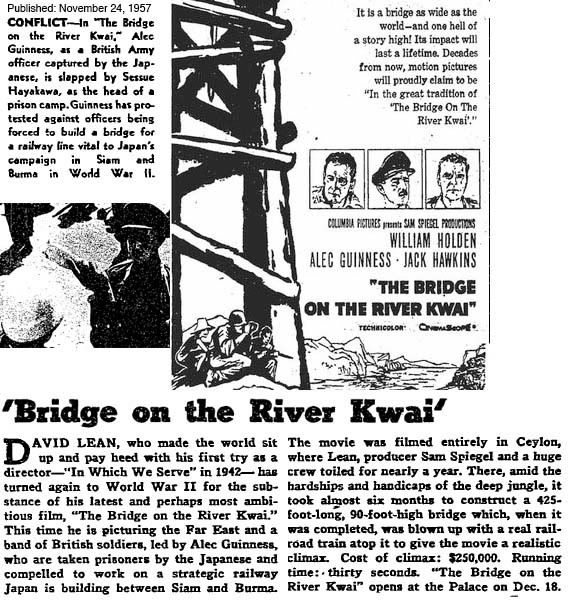
Not This Day In Knickerbocker Village History: Nov 24, 1957


While the mother's sat in Tanahey, the Bridge On The River Kwai was set to premiere at the Palace Theater on December 18th.

Tuesday, December 9, 2008

George Cukor Highlight Reel


A combined clip of two of his films. Both feature Judy Holliday in an under-appreciated Cukor film called, "It Should Happen To You" and the trailer from "Born Yesterday."
Judy Holliday (June 21, 1921–June 7, 1965) was an Academy- and Tony Award-
Born Judith Tuvim ("Tuvim" is Yiddish for "Holiday") in New York City, she was the only child of Abe and Helen Tuvim, Jewish immigrants from Russia.

Saturday, November 29, 2008

Martin Ritt: Hud


Dave Kehr in the nytimes of 11/24/08 wrote
It’s hard to deduce from either of these releases that Ritt — the director of “Hud” (1963), “The Front” (1976) and “Norma Rae” (1979) — was once considered a major Hollywood filmmaker. He isn’t mentioned on the front cover of either disc. Like so many filmmakers who racked up awards and earned sterling reviews during their careers, he seems to have been forgotten by history, perhaps because his movies were so deeply embedded in the times in which they were made. They draw on or react against contemporary events to such a degree that, once their contexts have been taken away, they no longer mean what they once did. Ritt, who died in 1990 not long after directing Robert De Niro and Jane Fonda in the sincere but maladroit working-class romance “Stanley & Iris,” might not have been the most able stylist in the world, but he deserves better than oblivion.

Ritt certainly deserves better than that. What films being made now are better than his? Hud is one of my favorites. The scene of Melvyn Douglas singing his heart out in the movie theater is great
Hud is a 1963 film which tells the story of a self-centered, modern-day cowboy. It stars Paul Newman, Melvyn Douglas, Patricia Neal, Brandon De Wilde and Whit Bissell. The movie was primarily filmed in Claude, Texas.
The movie was adapted by Harriet Frank Jr. and Irving Ravetch from the novel Horseman, Pass By by Larry McMurtry and was directed by Martin Ritt.
It won Academy Awards for Best Actor in a Supporting Role (Melvyn Douglas, who won against Bobby Darin in Captain Newman, M.D.), Best Actress in a Leading Role (Patricia Neal) and Best Cinematography, Black-and-White (James Wong Howe). It was nominated for Best Actor in a Leading Role (Paul Newman), Best Art Direction-Set Decoration, Black-and-White, Best Director and Best Writing, Screenplay Based on Material from Another Medium.
Hud Bannon (Paul Newman) is an unscrupulous, arrogant, brash, and self-centered man. He has few interests other than enjoying himself and avoiding responsibility. His life is limited to drinking, starting barroom brawls, joyriding in his sporty pink Cadillac, and sleeping with women (married or otherwise). Although his elderly rancher-father Homer (Melvyn Douglas) is a deeply principled man, none of his ethics have rubbed off on Hud. Homer uses every opportunity to remind Hud of what a disappointment he is.
Also living at the Bannon Ranch is Hud's teenage nephew Lonnie (Brandon De Wilde), the son of Hud's deceased brother who died as a result of Hud's recklessness. Hud believes that his brother's death is the primary cause of Homer's anger and resentment toward him. However, Homer reveals that his disappointment runs deeper than that, saying that Hud cares about no one but himself and is unprincipled. Hud says, "My mama loved me, but then she died." (In McMurtry's novel, Hud's mother - Homer's second wife - is still alive.)
Lonnie and Hud are both attracted to the Bannons' middle-aged housekeeper, Alma (Patricia Neal), and Hud is as crude and insulting to her as Lonnie is protective. Although Hud's fondness for her is (at first) somewhat mutual, Alma keeps her distance because she has already been "around the block" with macho womanizers like Hud. (Alma comments to Hud, at one point during the film, "I've done my time with one cold-blooded bastard, I'm not looking for another.")
Homer buys some cheap Mexican cattle which have foot-and-mouth disease and his entire herd becomes infected. Hud recommends they quickly sell them to someone else before word gets out. But Homer will not resort to such unethical tactics; he calls in a state veterinarian. The cattle are quarantined by the vet, who ultimately rules the entire herd must be destroyed so as not to spread the infection. Although this will likely bankrupt the Bannons, Homer complies rather than risk spreading the disease or passing the problem onto unsuspecting ranchers. Hud is angry that his inheritance has been eroded; he attempts to have Homer declared legally incompetent, so he can usurp control of their ranch.
In a drunken rage, Hud forces himself sexually onto Alma. Lonnie comes to Alma's aid. She abruptly flees the ranch, disgusted and demoralized at Hud's brutishness. After Lonnie drops her off at the bus station, Hud happens by as she is waiting. He apologizes for his drunken assault, but not for his attraction to her. Driving back to the ranch, Lonnie spots his grandfather at the roadside. Homer has fallen off his horse during a survey of his property. Hud pulls up behind Lonnie, and both try to help Homer, but he does not survive. At the very end, Homer accuses Hud of being eager for him to die.
Although Lonnie initially idealized Hud for his charm and liveliness, he has become disgusted at Hud's treatment of Homer and Alma. After Homer's funeral, Lonnie leaves the ranch to get away from Hud, not sure if he will ever return. Lonnie tells Hud to put his half of their inheritance in the bank, then walks off. For a moment, Hud feels the emptiness of his life, which he has created by driving everyone who loved him away. But after a swig of beer and a moment's thought, he dismisses Lonnie's departure with a deprecating wave and a smile of indifference and goes back into the Bannon house, alone.