Lemlich PDF
The shirtwaist images towards the end of the slide show were taken at the commemoration on 11/22/09. The mural with Clara's picture is called When Women Pursue Justice. It is located at 498 Greene Avenue in Brooklyn. For information go to democracy now A good source for images of the uprising and the struggle for worker rights in the early 1900's can be found at the archives at Cornell University
Monday, November 23, 2009
Commemoration Of The Centennial Of The Uprising Of the 20,000: Part 2
Joe Raico speaking at the Commemoration of the Centennial of the Uprising of the 20,000. This took place on Sunday November 22, 2009/ 1- 3:30 pm at IBT Local 237 Union Hall, 216 W 14th St, New York, New York. There was a screening of Alex Szalats Clara Lemlich: A Strike Leaders Diary. This was followed by discussion with honored guests: Rita Margules (Clara Lemlich's daughter), Richard Greenwald (Triangle Fire Historian), and Bob Lazar (former ILGWU archivist).
Organizers of the event were
The Remembering the Triangle Fire Coalition and
Organizing the Curriculum
Labels:
triangle shirtwaist factory fire
Commemoration Of The Centennial Of The Uprising Of the 20,000
Ruth Sergel speaking at the Commemoration of the Centennial of the Uprising of the 20,000. This took place on Sunday November 22, 2009/ 1- 3:30 pm at IBT Local 237 Union Hall, 216 W 14th St, New York, New York. There was a screening of Alex Szalats Clara Lemlich: A Strike Leaders Diary. This was followed by discussion with honored guests: Rita Margules (Clara Lemlich's daughter), Richard Greenwald (Triangle Fire Historian), and Bob Lazar (former ILGWU archivist).
Organizers of the event were
The Remembering the Triangle Fire Coalition and
Organizing the Curriculum
Labels:
triangle shirtwaist factory fire
KVer Joel Sosinsky At The Uprising Of The 20,000 Anniversary

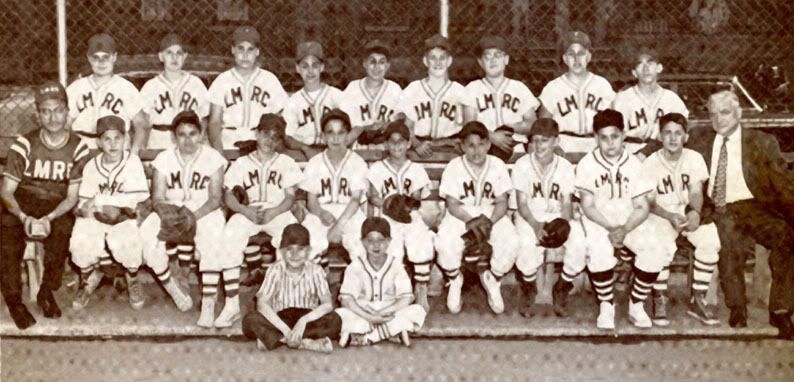
The former LMRC catcher and now an attorney for International Brotherhood of Teamster's was speaking at the Commemoration of the Centennial of the Uprising of the 20,000. This took place on Sunday November 22, 2009/ 1- 3:30 pm at IBT Local 237 Union Hall, 216 W 14th St, New York, New York. There was a screening of Alex Szalats Clara Lemlich: A Strike Leaders Diary. This was followed by discussion with honored guests: Rita Margules (Clara Lemlich's daughter), Richard Greenwald (Triangle Fire Historian), and Bob Lazar (former ILGWU archivist). Also at the event was Joel's mom, Natalie Sosinsky. Although Knickerbocker prides itself on its democractic and egalitarian traditions many consider Natalie part of "KV Royalty."
Saturday, November 21, 2009
Heaven Will Protect The Working Girl
A clip from heaven-will-protect-the-working-girl
Heaven Will Protect the Working Girl: Immigrant Women in the Turn-of-the-Century City
An unexpected friendship between two Italian and Jewish immigrant girls provides the backdrop for this story of labor organizing and women’s growing activism. While working in harsh sweatshops and factories, the young women also experienced the thrills of movies, amusement parks and dance halls. As their numbers in the workforce grew and working conditions declined they took matters into their own hands. In 1909, garment workers staged the “Uprising of the 20,000,” a massive strike that won union recognition and transformed the role of women in the union movement. (Length: 30 minutes)
The Uprising Of The 20,000
On November 22, 1909, New York City garment workers gathered in a mass meeting at Cooper Union to discuss pay cuts, unsafe working conditions and other grievances. After two hours of indecisive speeches by male union leaders, a young Jewish woman strode down the aisle and demanded the floor. Speaking in Yiddish, she passionately urged her coworkers to go out on strike. Clara Lemlich, a fledgling union organizer, thus launched the 'Uprising of the 20,000,' when, two days later, garment workers walked out of shops all over the city, effectively bringing production to a halt..
A dramatization of that incident, re-created in the Hollywood film I'm Not Rappaport, movingly introduces the documentary portrait CLARA LEMLICH, which recounts the life of the Ukrainian-born immigrant. Like thousands of other young women, Lemlich found work in a clothing factory where she worked 7 days a week, from 60 to 80 hours, for less than a living wage. In her burning desire to get an education Lemlich read widely and organized a study group to discuss women's problems. Her success as an organizer, which included numerous arrests and beatings by strikebreakers, eventually led to her election to the executive board of the International Ladies Garment Workers' Union.
Lemlich's story is movingly recounted through interviews with her daughter and grandchildren, dramatic readings from her diary, family photos and archival footage, strike songs in Yiddish, an interview with labor historian Alice Kessler-Harris, a visit to the Lower East Side Tenement Museum, and excerpts from silent films of the era.
In addition to its biographical portrait, CLARA LEMLICH also chronicles the historic ILGWU strike, which demonstrated to the male leadership that women could be good union members and strikers. The union negotiated a settlement in February 1910 that led to improvements in wages as well as working and safety conditions. One of the companies that refused to sign the agreement was the Triangle Shirtwaist Factory, where, the following year, a fire resulted in the death of 146 young women, a tragedy that galvanized public support for the union movement
Sixth Street, Between Avenues A And B
sixth-st-a-b
If you're really good you might spot some of these from the previous Godfather on 6th Street clip
The Godfather On 6th Street And Father Moffo
from famous residents of Waterbury Connecticut
Rev. Joseph Moffo, Roman Catholic priest who appeared in the Godfather Part II. Fr. Moffo was pastor of St. Joseph's Church in New York City where a portion of the movie was being filmed and was asked to play the part of a priest.
Production designer Dean Tavoularis chose East 6th Street in Manhattan, between Avenue A and Avenue B. The block was completely remade, its storefronts converted to the cigar stores, social clubs, butcher shops, and theaters Coppola’s grandparents might well have known. The pushcart-crowded block is complete to the dirt and dung on the cobbles. As Vito Corleone walks among his people on this block, first as a serf, then as a lord, we see him as he is, without apology.
A production photo exists of a smiling, relaxed Coppola standing on a roof during the shooting of the Lower East Side sequences. Below him, it is 1919; down the street, just out of camera range, it is 1974. In GODFATHER PART II, Francis Coppola lets us occupy two worlds simultaneously, as well, those of Vito Corleone and his son Michael. And we see each of those men, handsome, loving, and terrible, with utter clarity.
There is also a film made about the filming of the Godfather on 6th Street called THE GODFATHER COMES TO 6TH ST.
from the reel new york site
Mark Kitchell was a film student at N.Y.U. when he shot THE GODFATHER COMES TO 6TH ST. on the Lower East Side block he called home at the time. The piece shares the chaos, excitement, and disappointments that came along with the film crews who descended upon his neighborhood in 1974 to make THE GODFATHER, PART II. Prevailing over Paramount's attempt to ban him from filming, Kitchell highlights locals who were cast as extras and the efforts of a community group who protested the presence of the film crews and were eventually awarded additional money for use of their territory. THE GODFATHER COMES TO 6TH ST. garnered awards from the American Film Festival, the Chicago Film Festival, and the Festival of Festivals (now the Toronto Film Festival) and was nominated for an Oscar.
Q: What inspired you to make this piece?
A: I'd come to NYU film school, fallen in love with documentary, and was looking for a subject to make a film when representative of Paramount showed up on my block on the Lower East Side, saying they wanted to shoot THE GODFATHER, PART II there. I was reluctant at first, not wanting to make a film about a film; but my teacher George Stoney urged me to go ahead, certain that I'd find a story. So I set out to chronicle the filming through my neighbors' eyes. It was meant to be a portrait of the community caught up in the drama of being center stage, for THE GODFATHER no less.
Q: Do you have any interesting and/or amusing behind-the-scenes stories about the making of this particular work?
A: I had a long battle with Paramount over the making of this film, which they tried to stop. Ron Colby, the local unit production manager, was supportive; and I had no trouble until the time of filming drew near. Then the treats began and I prepared for guerrilla filmmaking. On the first day of filming, the production manager kicked me and my crew off the street; so we took to the fire escapes and I asked to talk to Coppola. The next day he gave me his blessing, and from then on we had freedom to shoot whatever we wanted. When the block called a protest meeting, the prodcution manager again tried to exclude me; but the block association insisted on admitting me since I was a member and on their side.
Finally, when the film was done and THE GODFATHER II was about to be released and I wanted to release my film, Paramount's lawyer threatened to get an injuction. I appealed to Coppola. He agreed to see me, and screened the film (at the Rizzoli, while a limo waited to take him to Cannes); but there was nothing he could do. So at last I gave up, and told Paramount's lawyer, Norman Flicker, that he'd got me -- but all I wanted to do was show it, not make money. A few months later, when NYU wanted to submit the film for the student Academy Awards, I got Flicker's okay; after it was nominated, he dropped his opposition to showing it. But not until he'd made his point. Still, I got around his ban, and got the film made.
Q: Is there a relationship between your work as a video/filmmaker and life in the New York metropolitan area?
A: My film was meant to be a portrait of the community most of all, and used the filming of THE GODFATHER II mainly as a means to reveal it going through change. I don't know that I succeeded in that intention. But at least the focus is on the people of Sixth Street. And it turns out to have captured an era on the Lower East Side that's pretty much gone forever, so it has historical interest.
Q: How did you fund this particular film/video, and what is your general experience in seeking funding for your work?
A: I funded this film by hacking, driving a taxi forty hours every weekend and then going to the lab Monday. We edited all night for a summer, while I drove days. Most of the finishing costs came from NYU. Arthur Mayer, bless his heart, gave a modest donation. But that was all. I got very good at cadging a camera here, a tape recorder there, an editing room everywhere.
Q: How do you define an independent film or video?
A: The definition of independent is pretty slippery -- and that's sometimes a good thing -- but in the documentary ghetto it's easy to tell the difference. We're the ones who beg, borrow, and steal, go thru blood, sweat and tears to make our babies; and then hope someone wants to see them.
Labels:
father moffo,
feast of san rocco
Friday, November 20, 2009
Tuesday, November 17, 2009
Fury: A Boy And His Horse
Fury, Fury
Smartest stallion anywhere
Fury, Fury
Where they need you
You're right there
Every time, I call you
I hear your call replin'
Then you gallop straight to me
With mane and tail a flyin'
from tv acres
Saturday mornings where the best time of the week when you were a kid back in the 50's. There were great shows on to watch like *Fury, Sky King, Jungle Jim, *Tugboat Annie, *Lassie, *Ramar Of The Jungle, The Lone Ranger, Roy Rogers, Cisco Kid, My Friend Flicka, Casey Jones, Adventures of Champion Hopalong Cassidy and many many more. I miss those days, and wish that programs like these could be on Television once again for the kids of today. All of these shows taught lessons on how to treat people and what was right and wrong. No one back then ever thought to talk back to his or her parents, and they treated adults with the respect they so truly deserved.
I have started this site because it seems that Fury has been lost and forgotten in time. There is not much left on the show, but what I find will be posted here. So for those who remember the show, sit back and enjoy. For those who have never heard of Fury, it will be a new experience and one I hope you will all enjoy......
Subscribe to:
Posts (Atom)