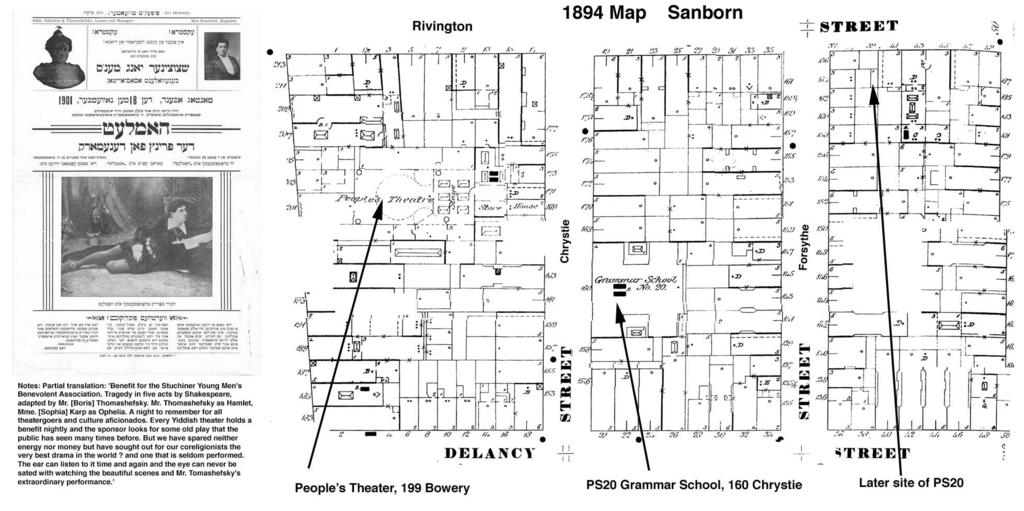
 From a 1894 real estate map created by the Sanborn Fire Insurance Company. These maps were created to help fireman locate important information in order to help minimize fire loss. Those that were in color would denote different kinds of building materials. This one in particular shows where a pre-Rivington Street PS20 existed and its proximity to the People's Theater (see what's playing there-it ain't The Wedding Crasher) The entire stretch of the rectangle between Chrystie, Forsyth, Houston and Canal is now Sara Delano Roosevelt Park, constructed in the 1930's. Some notes about the YIddish theater on the bowery of that era: Yiddish theatre collection at Dorot Jewish Division NYPL By Michael Terry "The most conspicuous artistic manifestation of the Yiddish language revival was the sudden emergence and rapid triumph of Yiddish theater. Inspired by the popularity throughout central and eastern Europe of German-language companies, and their repertoires both classical and trashy, and by the elements of a Jewish theatrical tradition comprised of the ambitious Hebrew dramas of the Italian Renaissance and Baroque and the more improvised Purim plays of Ashkenaz, Yiddish theater's official birth took place in a tavern in Jassy, Romania, in October, 1876, with paternity credited to Abraham Goldfaden. Less than six years later, in the summer of 1882, the first Yiddish production in the United States was presented on the initiative of the fourteen (or, at most, sixteen)-year-old Boris Thomashefsky. The event took place at the German-American cultural and recreational center, Turn Hall, on East Fourth Street between the Bowery and Second Avenue. It was in New York that Yiddish theater blossomed, reaching the height of its appeal and influence during the last decade of the 19th century and the first decade of the 20th, when Jewish immigration was at its peak. Major venues during those years included the Roumania Opera House, on the Bowery near Grand Street, and Adler's Grand Theatre, one block east at the corner of Grand Street and Chrystie, but the scene was dominated by the Thalia and Windsor theaters, which faced off on opposite sides of the Bowery near Canal Street. The fare was made up of European classics (especially Shakespeare, often transposed to a Jewish key) as well as an array of new works, both original and adapted, including melodramas, farces, operettas, and reenactments of historical and current events. With immigration drastically curtailed and assimilation all the rage, New York Yiddish theater between the wars lacked the authenticity of its glory days before World War I. From the vulgarity of the commercial nostalgia-peddlers to the high-minded kitsch of the modernists, it was at best a silver age. In Buenos Aires, by contrast, the story was quite the reverse. Yiddish theaters had existed there since the beginning of the 20th century, but, controlled by mobsters and patronized by the city's rollicking Jewish underworld, they had taken on something of the character of the burlesque house and, accordingly, were given a wide berth by members of the respectable, Jewish community. It was not until the end of the 1920s that the genteel element, with its aspirations toward community and cultural advancement, prevailed. With encouragement from such figures on the New York scene as Thomashefsky, who would visit for the winter while their own companies were closed for the summer, a modest golden age ensued, through the 1930s and into the 1940s, that made Buenos Aires the second city of the world history of Yiddish theater."
Showing posts with label Chrystie Street. Show all posts
Showing posts with label Chrystie Street. Show all posts
Saturday, October 29, 2011
PS 20: 1894
originally from the early days of pseudo-intellectualism
 From a 1894 real estate map created by the Sanborn Fire Insurance Company. These maps were created to help fireman locate important information in order to help minimize fire loss. Those that were in color would denote different kinds of building materials. This one in particular shows where a pre-Rivington Street PS20 existed and its proximity to the People's Theater (see what's playing there-it ain't The Wedding Crasher) The entire stretch of the rectangle between Chrystie, Forsyth, Houston and Canal is now Sara Delano Roosevelt Park, constructed in the 1930's. Some notes about the YIddish theater on the bowery of that era: Yiddish theatre collection at Dorot Jewish Division NYPL By Michael Terry "The most conspicuous artistic manifestation of the Yiddish language revival was the sudden emergence and rapid triumph of Yiddish theater. Inspired by the popularity throughout central and eastern Europe of German-language companies, and their repertoires both classical and trashy, and by the elements of a Jewish theatrical tradition comprised of the ambitious Hebrew dramas of the Italian Renaissance and Baroque and the more improvised Purim plays of Ashkenaz, Yiddish theater's official birth took place in a tavern in Jassy, Romania, in October, 1876, with paternity credited to Abraham Goldfaden. Less than six years later, in the summer of 1882, the first Yiddish production in the United States was presented on the initiative of the fourteen (or, at most, sixteen)-year-old Boris Thomashefsky. The event took place at the German-American cultural and recreational center, Turn Hall, on East Fourth Street between the Bowery and Second Avenue. It was in New York that Yiddish theater blossomed, reaching the height of its appeal and influence during the last decade of the 19th century and the first decade of the 20th, when Jewish immigration was at its peak. Major venues during those years included the Roumania Opera House, on the Bowery near Grand Street, and Adler's Grand Theatre, one block east at the corner of Grand Street and Chrystie, but the scene was dominated by the Thalia and Windsor theaters, which faced off on opposite sides of the Bowery near Canal Street. The fare was made up of European classics (especially Shakespeare, often transposed to a Jewish key) as well as an array of new works, both original and adapted, including melodramas, farces, operettas, and reenactments of historical and current events. With immigration drastically curtailed and assimilation all the rage, New York Yiddish theater between the wars lacked the authenticity of its glory days before World War I. From the vulgarity of the commercial nostalgia-peddlers to the high-minded kitsch of the modernists, it was at best a silver age. In Buenos Aires, by contrast, the story was quite the reverse. Yiddish theaters had existed there since the beginning of the 20th century, but, controlled by mobsters and patronized by the city's rollicking Jewish underworld, they had taken on something of the character of the burlesque house and, accordingly, were given a wide berth by members of the respectable, Jewish community. It was not until the end of the 1920s that the genteel element, with its aspirations toward community and cultural advancement, prevailed. With encouragement from such figures on the New York scene as Thomashefsky, who would visit for the winter while their own companies were closed for the summer, a modest golden age ensued, through the 1930s and into the 1940s, that made Buenos Aires the second city of the world history of Yiddish theater."
From a 1894 real estate map created by the Sanborn Fire Insurance Company. These maps were created to help fireman locate important information in order to help minimize fire loss. Those that were in color would denote different kinds of building materials. This one in particular shows where a pre-Rivington Street PS20 existed and its proximity to the People's Theater (see what's playing there-it ain't The Wedding Crasher) The entire stretch of the rectangle between Chrystie, Forsyth, Houston and Canal is now Sara Delano Roosevelt Park, constructed in the 1930's. Some notes about the YIddish theater on the bowery of that era: Yiddish theatre collection at Dorot Jewish Division NYPL By Michael Terry "The most conspicuous artistic manifestation of the Yiddish language revival was the sudden emergence and rapid triumph of Yiddish theater. Inspired by the popularity throughout central and eastern Europe of German-language companies, and their repertoires both classical and trashy, and by the elements of a Jewish theatrical tradition comprised of the ambitious Hebrew dramas of the Italian Renaissance and Baroque and the more improvised Purim plays of Ashkenaz, Yiddish theater's official birth took place in a tavern in Jassy, Romania, in October, 1876, with paternity credited to Abraham Goldfaden. Less than six years later, in the summer of 1882, the first Yiddish production in the United States was presented on the initiative of the fourteen (or, at most, sixteen)-year-old Boris Thomashefsky. The event took place at the German-American cultural and recreational center, Turn Hall, on East Fourth Street between the Bowery and Second Avenue. It was in New York that Yiddish theater blossomed, reaching the height of its appeal and influence during the last decade of the 19th century and the first decade of the 20th, when Jewish immigration was at its peak. Major venues during those years included the Roumania Opera House, on the Bowery near Grand Street, and Adler's Grand Theatre, one block east at the corner of Grand Street and Chrystie, but the scene was dominated by the Thalia and Windsor theaters, which faced off on opposite sides of the Bowery near Canal Street. The fare was made up of European classics (especially Shakespeare, often transposed to a Jewish key) as well as an array of new works, both original and adapted, including melodramas, farces, operettas, and reenactments of historical and current events. With immigration drastically curtailed and assimilation all the rage, New York Yiddish theater between the wars lacked the authenticity of its glory days before World War I. From the vulgarity of the commercial nostalgia-peddlers to the high-minded kitsch of the modernists, it was at best a silver age. In Buenos Aires, by contrast, the story was quite the reverse. Yiddish theaters had existed there since the beginning of the 20th century, but, controlled by mobsters and patronized by the city's rollicking Jewish underworld, they had taken on something of the character of the burlesque house and, accordingly, were given a wide berth by members of the respectable, Jewish community. It was not until the end of the 1920s that the genteel element, with its aspirations toward community and cultural advancement, prevailed. With encouragement from such figures on the New York scene as Thomashefsky, who would visit for the winter while their own companies were closed for the summer, a modest golden age ensued, through the 1930s and into the 1940s, that made Buenos Aires the second city of the world history of Yiddish theater."


Playing At The Grand
originally from the early days of pseudo-intellectualism
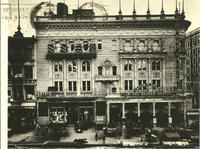 Quite a find at the NYPL! Either there is new material there, or there are nooks and crannies previously undiscovered. No date, however. The Grand was demolished in 1929 when the area was cleared for Roosevelt Park. This slide show is compromised of photos taken by Percy Loomis Speer. I would guess it was part of an effort to document the large scale clearing of buildings that was required to build the park. FDR was the Governor of the state at the time and my understanding is the Eleanor, who had worked for a time at University Settlement, was instrumental in making the case for urban renewal. Maybe he resisted and part of his concession was that he had to name it after his domineering mother.
 Quite a find at the NYPL! Either there is new material there, or there are nooks and crannies previously undiscovered. No date, however. The Grand was demolished in 1929 when the area was cleared for Roosevelt Park. This slide show is compromised of photos taken by Percy Loomis Speer. I would guess it was part of an effort to document the large scale clearing of buildings that was required to build the park. FDR was the Governor of the state at the time and my understanding is the Eleanor, who had worked for a time at University Settlement, was instrumental in making the case for urban renewal. Maybe he resisted and part of his concession was that he had to name it after his domineering mother.
Friday, October 28, 2011
1905 Map Of Grand, Forsyth, Hester, Chrystie Area
originally from the early days of pseudo-intellectualism
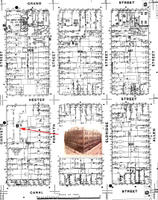 Another Sanborn Insurance gem. A shout out to my nephew Jamie, whose U of Buffalo attendance provided digital library access. Here's a math tech integration activity. "If there were x number of synagogues on these y square blocks, how many synagogues would there be on z square blocks?' The spot where I placed an image of the real PS 7 was an empty lot. The front of PS 7 faced Chrystie Street. The area is now part of Sara Delano Roosevelt Park. In the 1896 Tribune, the school was described as the dirtiest school in the city. Behind the Grand Theater there are "Bowling Alleys and a Turkish Bathouse. I'll try to see who was playing at the Grand Theater. The hook and ladder company on Canal Street is still a fire house 100 years later. The Boarding Stable on Allen Street logically became a parking garage. BTW, SD stands for steel door.
 Another Sanborn Insurance gem. A shout out to my nephew Jamie, whose U of Buffalo attendance provided digital library access. Here's a math tech integration activity. "If there were x number of synagogues on these y square blocks, how many synagogues would there be on z square blocks?' The spot where I placed an image of the real PS 7 was an empty lot. The front of PS 7 faced Chrystie Street. The area is now part of Sara Delano Roosevelt Park. In the 1896 Tribune, the school was described as the dirtiest school in the city. Behind the Grand Theater there are "Bowling Alleys and a Turkish Bathouse. I'll try to see who was playing at the Grand Theater. The hook and ladder company on Canal Street is still a fire house 100 years later. The Boarding Stable on Allen Street logically became a parking garage. BTW, SD stands for steel door.
Subscribe to:
Posts (Atom)


 Posts
Posts