Showing posts with label bronx. Show all posts

Wednesday, October 21, 2009

KV Synchronicity: The People's Choice 5


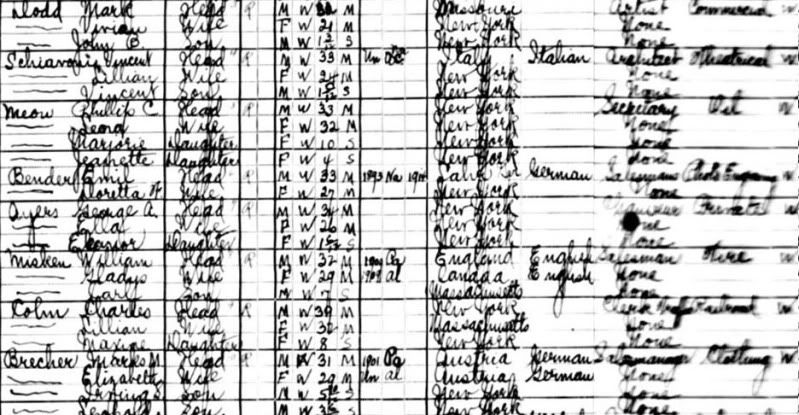
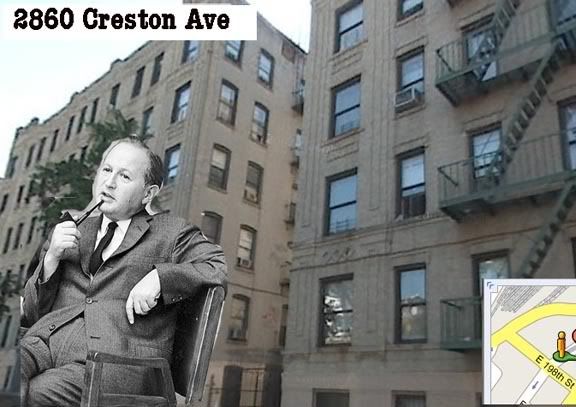
Above, a portion of the census of 2860 Creston in 1920. Below what it looks like now. It was newly built in 1920 and it looks like the tenants who had moved there made it into more stable working class lives
Part of an amazon review of a recent Brecher biography
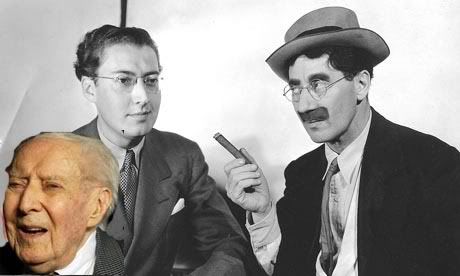
Brecher was one of those Hollywood denizens that got his start the classic way, as an usher in New York City. As a teenager he would send in gags on postcards to columnists Walter Winchell or Ed Sullivan who would credit him by name. He got a long-term assignment of writing gags for one of the most visible comedians in the business, Milton Berle, and this material brought him to the attention of Hollywood. Brecher was astonished to be working with stars he used to see in the Nickelodeon when he was a kid, including his idols, the Marx Brothers. Brecher helped punch up _The Wizard of Oz_. And then he was assigned to write the Marx picture _At the Circus_; with that and with the later _Go West_, he was the only writer to get sole credit on Marx movies. There are wonderful stories about the Marxes here, anecdotes any fan will adore. Brecher went on to write movies like _Meet Me in St. Louis_ and _Bye Bye Birdie_. While writing movies, he also wrote the radio sitcom _The Life of Riley_.

Brecher became a widower from one long-term marriage and then entered another. He does not seem to have used his wit against his wives but rather as a palliative during arguments. He remembers an argument with his first wife who was so upset she said, "That's it! I'm leaving you!" He gave her the reply, "That's OK with me. But if you go, I'm going with you." Looking back at that bit of dialogue forty years later, he remarks, "It worked." Brecher never really left show business, though he pays tribute over and over again to the comics he worked with whose funerals he had to attend. He was attending tributes through his last years and doing stand-up when just standing up was difficult. In fact, he would get to the podium with a walker; his wife called it "The Rolls". Asthma was a problem, too: "For about ten minutes I'm all right. And then I'm gasping. You can't ask the public to spend money to see an old Jew gasping. It's not nice." But his material was still good: "Yes, I did have eye surgery. I knew I needed it when the other morning, I woke up and my vision was so bad, I couldn't find my hearing aid." _The Wicked Wit of the West_ (the title comes from a designation Groucho had given him) is full of wonderful stories and laugh-out-loud jokes from a jubilant joke-maker. "OK, so maybe I don't look at the world through rose-colored implants", the elder Brecher observes, "In fact, I really like the world. It's the putzes in it! And I don't resolve to change. If I've said anything snide, I'm sorry. Unless it gets a laugh."

Tuesday, October 20, 2009

KV Synchronicity: The People's Choice 4


Winds up the guy who has the chief writer for both the Life Of Riley and the People's Choice was Irving Brecher. He died recently at 94. In the 1920 census I found him at 2860 Crestwood Avenue in the Bronx. Irving's father, Marks, came to the U.S. in 1901. More than likely he probably started off on the LES.
from the nytimes

Irving Brecher, 94, Comedy-Script Writer, Is Dead, November 19, 2008, By BRUCE WEBER
Irving Brecher, who wrote vaudeville sketches for Milton Berle, jokes for Henny Youngman, comedies for the Marx Brothers, a television series for Jackie Gleason and screenplays for movie musicals including “Meet Me in St. Louis” and “Bye Bye Birdie,” died on Monday in Los Angeles. He was 94.
His death was confirmed by Nell Scovell, a friend, who said Mr. Brecher had had a series of heart attacks last week.
Within the tribe of Hollywood gag writers, Mr. Brecher (pronounced BRECK-er) was a literary lion, a reflexive offerer of reactive jokes, a relisher of puns, a connoisseur of often topical, arch repartee. He once angered the film producer Daryl Zanuck, telling him the movie he had just made hadn’t been released; it had escaped.
“If I were any drier, I’d be drowning,” he had Groucho Marx saying, stuck in the rain in the 1939 film “At the Circus.” Always a tester of taboos, in the same film he had Groucho tease the guardians of Hollywood’s decency. In one scene, a mischievous vixen played by Eve Arden hides a billfold in her cleavage, and Groucho, wanting it back, says to the camera: “There must be some way of getting that money without getting in trouble with the Hays Office.” Groucho would later say it was the biggest laugh in the film. He and S. J. Perelman, asked to name the world’s quickest wits, listed Mr. Brecher along with George S. Kaufman and Oscar Levant.
Mr. Brecher received sole screenplay credit for two Marx Brothers films, a feat in itself. (The second was “Go West,” released in 1940.) He was nominated for an Academy Award for his screenplay for “Meet Me in St. Louis,” the Vincente Minnelli family musical set in the early 1900s, which became one of Judy Garland’s biggest hits, but only after Mr. Brecher talked her into making it by reading her the script. Garland had been afraid her co-star, Margaret O’Brien, was going to upstage her, Mr. Brecher explained to Hank Rosenfeld, his collaborator on a forthcoming autobiography.
“When I got to O’Brien’s lines, I would kind of throw them away,” he said. “Then I would emphasize what Judy’s character was doing.”
Mr. Brecher was the creator of the long-running radio series “The Life of Riley,” about an ordinary working-class schnook who causes no end of trouble for his family; it was played first by Lionel Stander and later, more famously by William Bendix. Mr. Brecher turned it into a feature film, with Bendix, in 1949, and a television series in the fall of the same year — making it arguably the first situation comedy on TV — and hired Jackie Gleason for the lead role of Chester A. Riley. The series lasted only until the following spring. But when it was reprised in 1953, with Bendix back in the title role (frequently uttering his signature line, “What a revoltin’ development this is!”), it stayed on the air until 1958.
The writer in Mr. Brecher had something of an affinity with Riley, an airplane riveter. During the writers’ strike of 2007, he made a video in which he urged the writers not to settle.
“Since 1938, when I joined what was then the Radio Writers Guild, I have been waiting for the writers to get a fair deal; I’m still waiting,” he said to the camera. He added: “As Chester A. Riley would have said, ‘What a revoltin’ development this is!’ But he only said it because I wrote it.”
Irving Brecher was born in the Bronx on Jan. 17, 1914, and he grew up in Yonkers. At 19, after a brief stint covering high school sports for a local newspaper, he took a job as an usher and ticket taker at a Manhattan movie theater, where he learned from a critic for Variety that he could earn money writing jokes for comedians. Knowing of Milton Berle’s reputation as joke-pilferer, he placed an ad in Variety, reading, in part: “Positively Berle-proof gags. So bad not even Milton will steal them.”
Berle himself hired him.
In 1937, he moved to Hollywood and began working on scripts for Mervyn LeRoy, head of production at MGM. He was an uncredited script doctor on “The Wizard of Oz,” leading Groucho Marx to call him “The Wicked Wit of the West.” (He took it as the title of his autobiography, to be published in January by Ben Yehuda Press.)
His film credits include “Shadow of the Thin Man” (1941), with William Powell and Myrna Loy; “Du Barry Was a Lady” (1942), with Lucille Ball, Gene Kelly and Red Skelton; “Yolanda and the Thief” (1945), starring Fred Astaire; and “Bye Bye Birdie” (1963).
Mr. Brecher’s first wife, Eve Bennett, died in 1981. He is survived by his wife, Norma, and three stepchildren.
In 1989, at Mr. Brecher’s 75th birthday party, Milton Berle both expressed his appreciation and extracted some revenge.
“As a writer, he really has no equals,” Berle said. “Superiors, yes.”

Wednesday, July 1, 2009

Crotona Park History

below a Bronx walking tour

Named after the Greek colony of Croton, known for its Olympic athletes, Crotona Park has served the Bronx community steadily since its purchase by the City in 1888. Among naturalists, the park is widely known for its variety of tree species (28 in all) and gorgeous 3.3-acre lake, which serves as home to turtles, ducks, and fish.
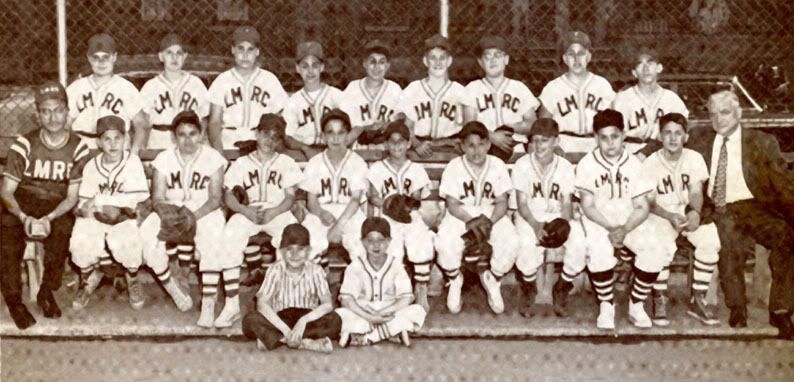
However, manmade structures within the park thrill visitors as well. Crotona Park’s pool is the largest in the borough at 300 feet. Tennis buffs happily head to the park’s 20 hard courts during the warm season, and baseball teams flock to its five diamonds. In addition, families log many hours romping in the eleven playgrounds spread throughout the park.
Young and old alike agree; Crotona Park is worth a Saturday spent exploring its wonders.
For more than one hundred years, Crotona Park has been one of the most important public parks in the Bronx, a sanctuary of rolling grass, lofty trees, baseball diamonds, a pool, and a peaceful lake. It is the largest park in the South Bronx and the sixth largest in the borough.
The City of New York acquired the property from Andrew Bathgate as part of the consolidation of the Bronx park system in 1888. Known at the time as “Bathgate Woods,” the park was already famous for its views, its trees, and its pond. From high points in the park one could see the Palisades of New Jersey to the west and the towers of Brooklyn Bridge to the south. Although the city planned to name the park for the Bathgates, a dispute with the family led a Parks Department engineer to name it after Croton, an ancient Greek colony famed for its Olympic athletes. Croton is also the name of the old New York City aqueduct.
As ice skating grew popular in the Bronx around the turn of the century, the Department of Parks paved the perimeter of Indian Pond and installed a warming hut and concession stand for skaters. In the 1930s, Works Progress Administration employees built the present boathouse on the east side of the pond and entirely rebuilt the area around the lake. Other projects in Crotona Park completed during the tenure of Parks Commissioner Robert Moses (1934-60) included the construction or renovation of five baseball diamonds, twenty tennis courts, twenty-six handball courts, nine playgrounds, four comfort stations, and picnic and sitting areas. The most spectacular addition was the creation of an enormous swimming pool and bathhouse complex, which Mayor Fiorello LaGuardia and Commissioner Moses opened on July 24, 1936. A major restoration of the pool and bathhouse was completed in 1984.
Bronxites continue to treasure Crotona Park for its natural beauty and outstanding recreational facilities. Crotona Park is home to some of the most majestic and varied trees in the city. Around Indian Lake stand native tulip, black cherry, hickory, sassafras, sweetgum, and twenty-three other species, including specimens over a century old. The 3.3-acre lake was originally a natural pond and provides a home to ducks, turtles, and numerous species of fish. In the southwest corner of the park, generations of gardeners have tended plants and flowers. The old “Farm Garden” was established in the 1930s to teach children about plant science, conservation, nutrition, and hygiene.

an interesting discovery about the Crotona Park neighborhood at about the time Lennie Hayton lived there. It echoes some of the rent strike organizing at Knickerbocker Village in the early 1930's an excerpt from tenant.net
New York City Tenant Organizations and the Post-World War Housing Crisis
Joseph A. Spencer
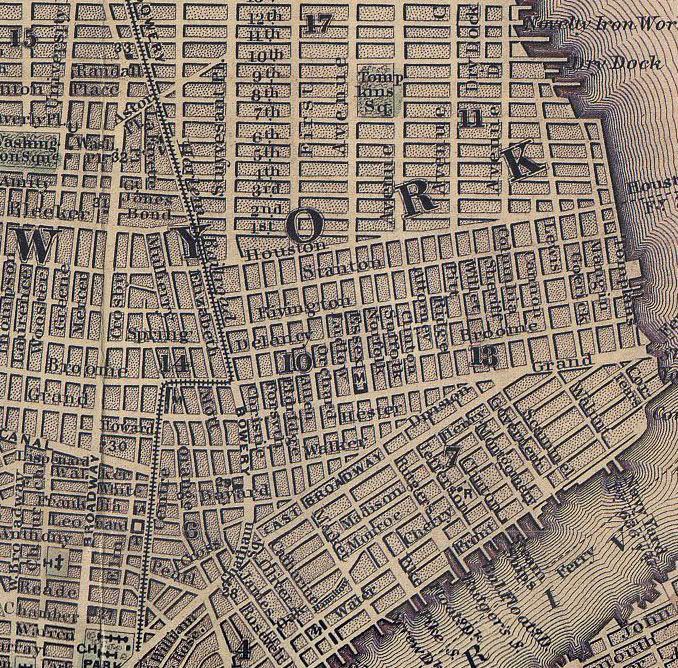
Part 2 The origins of the postwar tenant movement are somewhat obscure. The first major precursor, however, was a January 1917 rent strike in the Crotona Park section of the Bronx. This was a predominantly lower-class neighborhood with a heavy concentration of Russian Jewish families that had emigrated from the Lower East Side in search of improved living conditions. In the best of times these families had trouble paying their rent.[7] They became even more burdened, and restive, in the face of repeated rent increases and the failure of their landlords to provide heat and hot water. In late December 1916, five hundred to one thousand tenants in twenty-five buildings owned by two major real estate firms were organized by the Socialist Women's Consumers League of the Bronx. At the urging of Theresa Malkiel a Socialist Party State Committee member, the tenants rejected a rent increase demanded for January 1, 1917, and refused to pay any rent until heat and hot water were restored. They formed the Bronx Tenants League, collected a small strike fund, and organized a picket force of the "huskiest women." Leon Malakiel, a Socialist lawyer, agreed to represent the strikers and immediately filed complaints of code violations with the Health Department and the Tenement House Department.[8]
Within a week the landlords responded with a flood of eviction notices. The back of the strike was broken when the first cases came to court. Municipal court judge Michael Scanlon ruled that 296 tenants had no recourse at law because they had no written leases; they had to pay their rent or vacate.[9] Most had no choice but to give in. As one local paper commented, "It is to be presumed that if the five hundred tenants are ejected from their present quarters, that they will not be able to obtain flats elsewhere in the Bronx.[10]
The leaders of the Bronx Tenants League vowed to continue their efforts on behalf of tenants, despite the disintegration of the strike. On January 17 they held a meeting and, formally establishing their organization, enrolled 150 charter members. They also announced plans to form affiliates in all of the city's boroughs to fight for lower rents, better building maintenance, code enforcement, and legal aid for indigent tenants.[11] Despite their excellent intentions, however, a widespread following failed to develop, and. there is no evidence of organized tenant activity for the rest of 1917.
Landlord-tenant bitterness resurfaced one year later, however. The early months of 1918 were unusually harsh, with temperatures hovering around the zero mark for over a month. To make matters worse, the city faced a wartime coal shortage and many landlords failed to supply heat and hot water. By the end of January the Bronx alone had 450 heatless buildings.[12] Residents of the other boroughs endured similar hardship. A-social worker serving the East Harlem and Yorkville areas noted: "Conditions are beyond description. Gas is frozen, homes are dark, no water in the toilets, sanitary conditions unspeakable, faces blue and pinched from the bitter cold and ever so many kiddies down with pneumonia."[13]
In response to these conditions, thousands of families throughout the city refused to pay their full rent. Many had purchased their own heaters or fuel and demanded reimbursement in the form of rent reductions. Landlords reacted not only by denying their immediate responsibility, but also by asserting that the payment of rent did not entitle one to heat and hot water.[14] When they sought to evict non-paying families, however, some municipal court judges disagreed and allowed 10 percent reductions to offset tenant fuel expenditures. Yet for several reasons, appeal to the courts was not an adequate tenant remedy. Justices with sympathy for strikers usually granted reductions only to those with written leases -- a small minority in that period. Furthermore, since the laws governing such cases were vague, decisions varied from one judge to another. Thus building owners could bring a family into court month after month until the case came up before a pro-landlord judge.[15]
Sensing their vulnerability, tenants sought strength in numbers. The Bronx Tenants League emerged from a year of dormancy to capitalize on tenant discontent. Again in cooperation with the Women's Consumers League, it mounted a No Heat, No Rent campaign and organized several large rent strikes in the East Tremont, Morrisania, and Mott Haven sections. A key to the group's success was the legal assistance it offered distressed tenants. Attorneys Morris Gisnet and Alexander Kahn won temporary reductions for hundreds of families in January, February, and March 1918.[16] Socialist assemblyman Samuel Orr, who had been elected from the Fourth Assembly District the previous November, also took an active part in the league's work; at the height of the crisis he introduced several bills in the legislature which would have required landlords to maintain a minimum temperature of 68 degrees at all times and allowed rent reductions if this were not done.[17] Although these bills were throttled in the assembly, they attracted attention to the league and enhanced its reputation among tenants.
Although sporadic rent striking occurred throughout upper Manhattan, the only successful attempt to organize tenants beyond the building level took place in Washington Heights. In late February 1918, representatives of twenty-seven buildings, led by William Herman, an executive with the State Industrial Commission, met and formed the Washington Heights Tenants League. Within several weeks they claimed a membership of over three hundred and had achieved half a dozen victories, both in court and through negotiation with landlords. Their success was largely attributable to the fact that most members, many of whom were professionals, had written leases that were recognized in court and gave them leverage in bargaining with building owners.[18]
Brooklyn landlords and tenants were also involved in a series of struggles. In the Williamsburg section a young Socialist lawyer, Joseph Klein, won a succession of rent cases in the municipal courts and then, in early March, began to organize buildings and negotiate directly with the owners. By April he had established the Williamsburg Tenants League and was threatening to lead a widespread rent strike against all profiteering landlords.[19]