Showing posts with label Ward 4. Show all posts
Showing posts with label Ward 4. Show all posts
Sunday, July 15, 2012
B. Fischer & Company: Coffee Roasters


Monday, April 16, 2012
Filmed In The Fourth Ward In 1947: A Double Life
I never new about this movie being filmed in the Fourth Ward until I read Victor Colaio's book.
Note the elevated train that is shown. It was probably the 3rd Avenue El near the junction at Chatham Square. Victor said some of the street scenes shown in the clip above were on Roosevelt Street. About the movie:
A Double Life (1947) Anthony John is an actor whose life is strongly influenced by the characters he plays. When he's playing comedy, he's the most enjoyable person in the world, but when he's playing drama, it's terrible to be around him. That's the reason why his wife Brita divorced him; although she still loves him and works with him, she couldn't stand living with him anymore. So when Anthony accepts to play Othello, he devotes himself entirely to the part, but it soon overwhelms him and with each day his mind gets filled more and more with Othello's murderous jealousy.Ronald Coleman won an Oscar for the part of Anthony John. So if anyone asks you to name two Oscar winning movies shot in the Fourth Ward (the other being French Connection) you will know.
The successful middle-aged Broadway actor Anthony "Tony" John is a dedicated lonely professional that still loves his former wife Brita. They are playing Othello for almost two years and Tony has a breakdown, beginning to lose his mind and sense of reality, confusing his identity with his characters. One night, he meets the waitress Pat Kroll in a distant bar and he spends the night with the easy woman. Then he proposes Brita, who is his best friend, but she refuses to marry him again triggering a jealousy process against their friend Bill. Tony decides to visit Pat late night and in an insanity process, he lives the situation of Othello killing Desdemona. The police arrest a suspect but Bill wants to prove that Tony is responsible for the murder.
Buster Keaton In The Fourth Ward: 1964
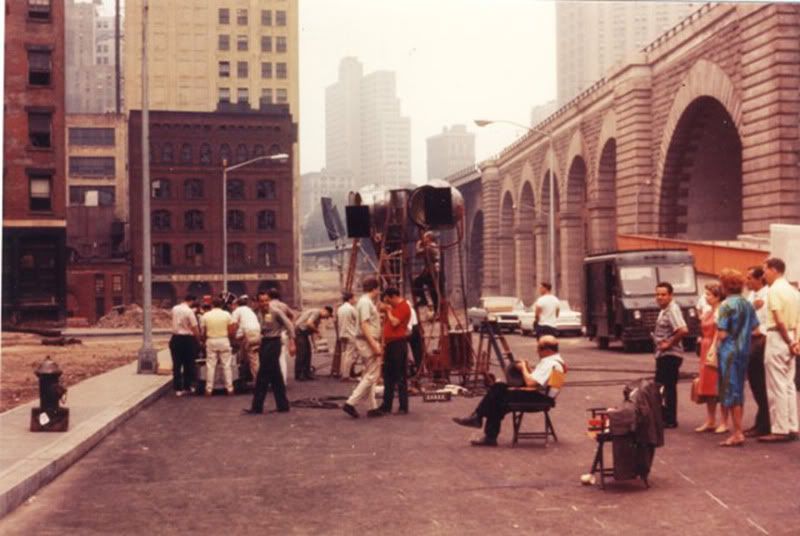
During the summer of 1964, Buster Keaton and Samuel Beckett collaborated making a black and white, avant garde, nearly silent short movie entitled Film. Keaton, who is seen only from the rear, plays a man attempting to evade perception, eluding everyone except himself. It was Beckett’s only screenplay, and one of Keaton’s final films.
Production began on July 20, 1964, by filming exteriors within the shadow of the Brooklyn Bridge. Film critic Leonard Maltin, then a young teenager, had read about the planned shooting in the newspaper, and traveled from his home in New Jersey to witness Keaton at work. Leonard brought along a handful of stills for Buster to autograph, and spent a few moments chatting with Buster between takes.
Thursday, February 2, 2012
90 Gold Street: Site Of Philip White's Pharmacy
below from NYPL Digital Gallery, The New York Public Library
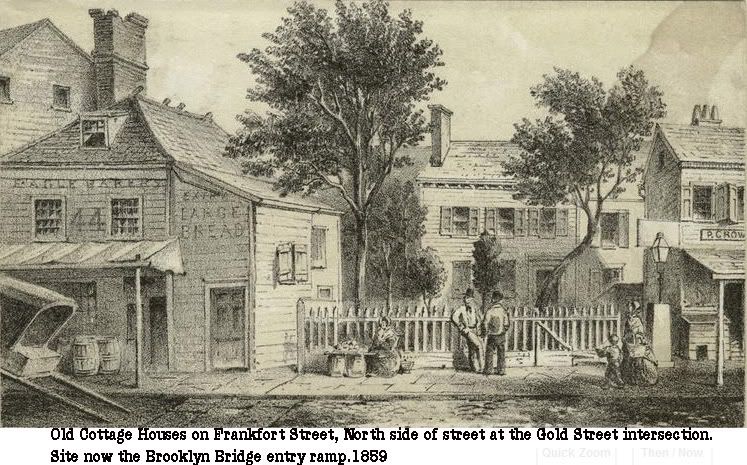 Carla Peterson talks about her ancestor Philip White in her book, Black Gotham: A Family History of African Americans in Nineteenth-Century New York City
While researching Philip White’s life in postbellum New York City, Peterson used city directories to uncover that while White had moved his residence from Lower Manhattan to Brooklyn in 1870, his pharmacy remained in its same location in Manhattan until his death in 1891. Peterson wondered why, since he moved his home, White hadn’t also moved his business, either in 1863 in the aftermath of the Draft Riots (which traumatized the black community), or in 1867, when he married Elizabeth Guignon? So she decided to walk the streets where White’s home had once been located—and found the entrance ramp for the Brooklyn Bridge. To build the unsuspended approaches and anchorages leading up to the bridge’s span on the Manhattan side, “this required clearing six blocks between Chatham and Water and Frankfort and Duane Streets…Philip’s drugstore on the corner of Frankfort and Gold was saved, but his home on Vandewater Street was demolished” (311). City directories led to city maps which led to city streets which revealed urban renewal – and a crucial piece of Peterson’s story.View a booktalk by Professor Peterson on cspan She will we speaking at the Brooklyn Museum on Saturday February 4, 2012
Saturday, October 1, 2011
1951: Mayor Impelliteri Swears In Robert Santangelo Of 9 Monroe Street
santangelo-1951
9 Monroe Street was the site of Kremo's, Judge Lupiano, a former KVer is mentioned in the article as well.
Justice Santangelo was a 4th Warder and politician of merit. From his 1984 obituary
ROBERT SANTANGELO, EX-JUDGE ON THE STATE SUPREME COURT By JOAN COOK Robert V. Santangelo, a former State Supreme Court justice and the prosecutor in the Seabury corruption investigations in New York City in the 1930's, died Wednesday at United Hospital in Port Chester, N.Y. He was 87 years old and lived in Rye, N.Y., and Highland Beach, Fla. Justice Santangelo was a jurist for more than 30 years. He was first appointed to Magistrate's Court, in 1934. Later he was elected judge of the First District Municipal Court in Manhattan in 1951 after he was appointed to fill an unexpired term. He held the post for 20 years, then served in Civil Court for 10 years. He spent his last five years as a jurist in State Supreme Court, retiring in 1967. He was an assistant district attorney in Manhattan from 1924 to 1933. But he was perhaps best known for his role in the Seabury investigations in 1931 and 1932. The inquiries led to the defeat of Tammany Hall and the election of Fiorello H. La Guardia as Mayor in 1933. Justice Santangelo had been a partner in the law firm of La Guardia, Sapinsky before joining the District Attorney's office, and remained a personal friend of Mr. La Guardia's throughout his life. He was a graduate of the College of the City of New York and Columbia Law School. He is survived by his wife, the former Juliette Petronio; two sons, Francis, of Harrison, N.Y., and Robert Jr., of Rye, N.Y.; a brother, Dr. George Santangelo of Harrison; four sisters, Jean Fabri of Manhattan, Louise Pizzutello of Fort Lauderdale, Fla.; Vera Melarano of Scarsdale, N.Y., and Eleanor Roosevelt of Staten Island; six grandchildren and two great-grandchildren. A funeral service will be held today at 10:30 A.M. at Corpus Christi Church, Port Chester, N.Y.His son Robert has this web site
81 Catherine Street History
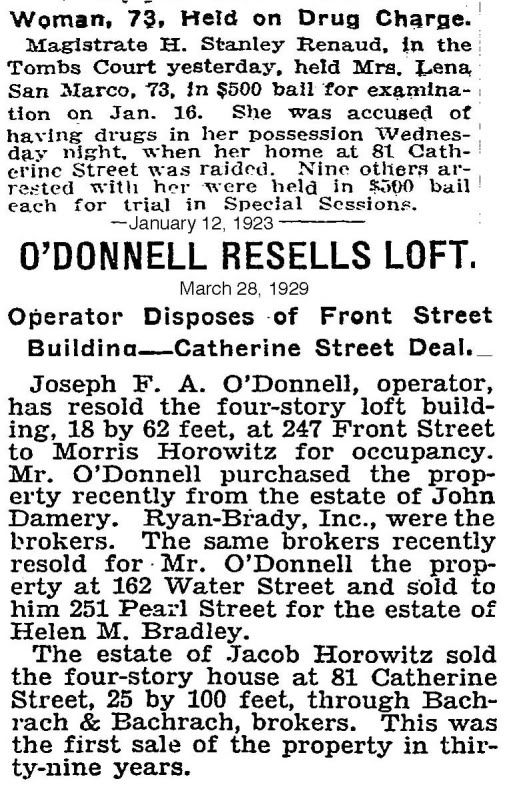
I would imagine the sale of 81 Catherine was to interests representing Fred French in anticipation of building of Knickerbocker Village.
Friday, July 29, 2011
More On Vandewater Street And Its Name Origins
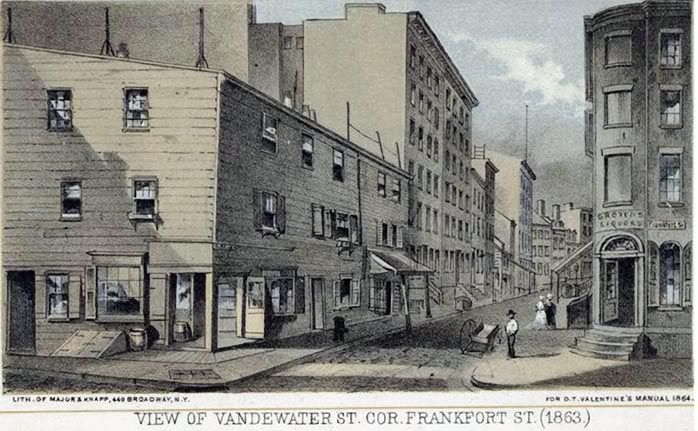
SOURCE NOTES:
PIONEERS - NY TO CANADA
Jacobus Vandewater and Rachel Van Kleek are most likely the pioneer settler family that moved from Poughkeepsie to Hay Bay around 1795 as referred to in the Pioneer Life on the Bay of Quinte.
VANDEWATER FAMILY: (as in the PLBQ)
"The many descendants of the Vandewater family to be found in Prince Edward County, Hastings and Lennox counties are of Dutch descent. The family came from Holland and settled in New York when that place first became a British possession. They removed to Boston, where they carried on a large printing business, some of the members being known as the "King's Printers." They must have been persons of considerable standing, for Vandewater street in New York City was named after the family; and for services rendered to the British Government, James Vandewater, who was afterwards the Canadian pioneer, received a grant of land on Chesepeake Bay, in the State of Maryland, to which State he removed prior to the War of Independence. When the colonies pronounced their allegiance to the crown, James threw in his lot with the revolutionists and served under George Washington. He sent his family to Poughkeepsie as he found his home unsafe for them owing to the proximity of the coast and of the indians, who were in sympathy with the British. As he did not return to Maryland until peace was declared, it is to be assumed that he remained with the army till the conclusion of war. But on his return home he found his land taken up by squatters, whom he was unable to dispossess owing to the unsettled state of the country and the law. It is narrated how that, in a fit of anger at finding his property in such a plight, he burned his deeds to the land and left the country, because he thought there was no justice to be obtained in it.
James Vandewater made his way from Poughkeepsie to Oswego, thence to Hay Bay, where he settled about 1795. He died in 1833 (sic - probably 1823); the homestead at this place being still in the possession of one of his descendants. His sons, John and Peter, made their way up the Bay as far as Sidney, where John bought lot 30, 2nd concession, and Peter, lots 29 and 30 in the 6th concession of Sidney."
Source: Pioneer Life on the Bay of Quinte (PLBQ), 1904, pp. 841/2.
Thursday, July 28, 2011
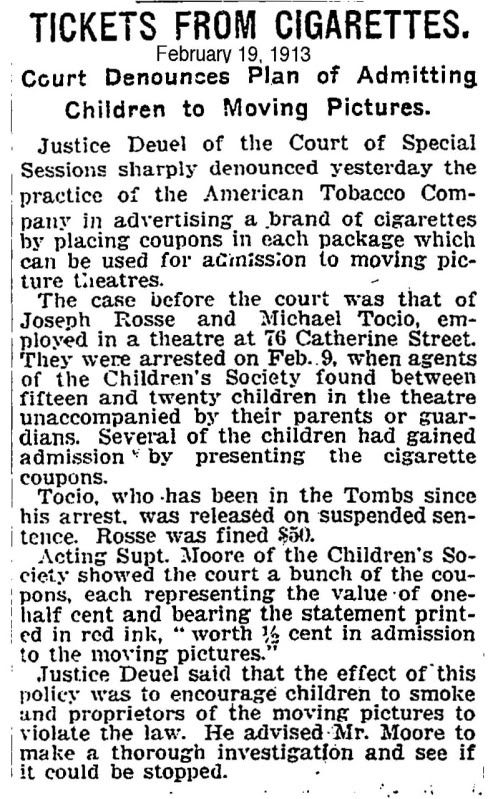
76 Catherine Street: Site Of The New Catherine Theater
Catherine Movie Fire
Seeing the mention of a movie theater on the 1921 map lead me to seek info on a theater at 76 Catherine.
Seeing the mention of a movie theater on the 1921 map lead me to seek info on a theater at 76 Catherine.
Wednesday, July 27, 2011
Fourth Ward, Before The Smith Projects: 1921
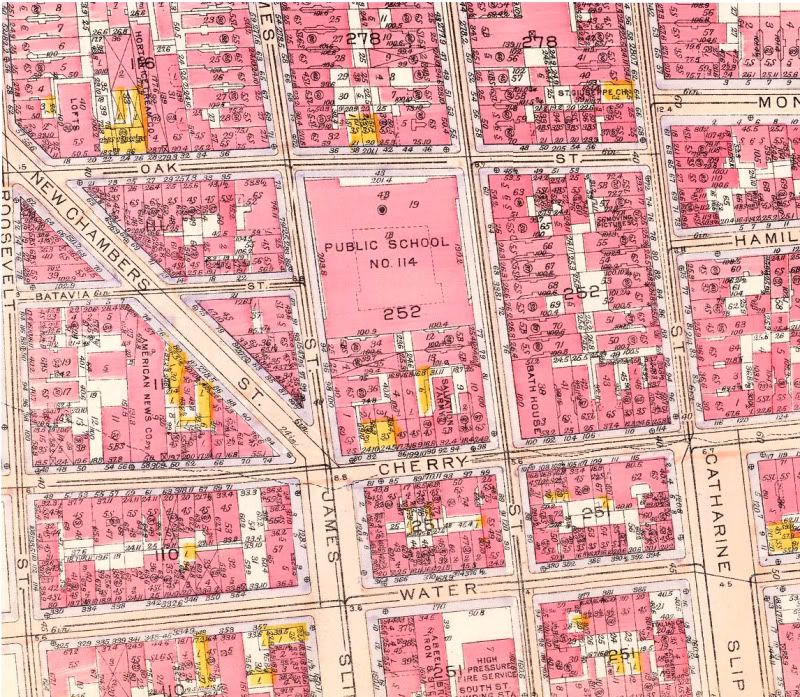
Also visible in the middle is PS 114, which would later become Metropolitan Vocational High School. There's also a moving picture studio on 76 Catherine Street, a Salvation Army at 94 Cherry Street and a Horton's Ice Cream place on 28 Oak Street.
Monday, July 25, 2011
Batavia Street And The Batavia Street Gang
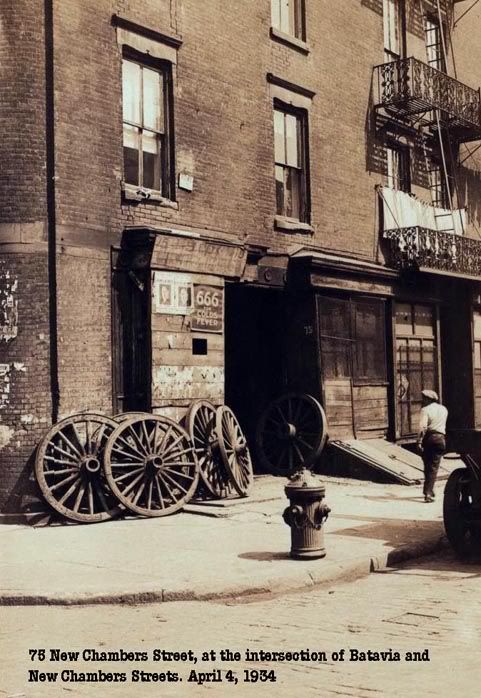
Batavia Street Gang was a New York independent street gang based in the Fourth Ward during the 1890s. Affiliated with the Eastman Gang during the turn of the century, they were rivals of the Cherry Hill Gang throughout the previous decade. During one incident, five members of the gang were arrested for breaking into Seigel's jewelry store in order to purchase costumes for the Sullivan ball at New Irving Hall in an attempt to out do their rivals, who were known to be "dandies", had announced they would be attending in extravagant evening clothes.
Stealing a gold watch from Seigel's jewelry store, Duck Reardon and Mike Walsh organized a raffle with the Sullivan Association at Coyne's saloon and, arranging it so that fellow gang member James Leary would win the watch. However, as neither the income from the raffle, nor the watch failed to raise enough money to purchase suits for the other gang members, their leader Duck Reardon, and several others, smashed in the front window of a local jewelry store and stole 44 gold rings ranging from $3-$45 in value.
After reporting the robbery to police, detectives from the Oak Street Police Station arrested several members of the Sullivan Association including Reardon, Arthur Hassett, George and Jerry Leary and Chuck Conners (not related to the ward boss of the Bowery and Chinatown), as well as tug boat hand Mike Walsh, who had purchased one of the stolen rings from Reardon (reportedly while they were trying on suits at a local Division Street tailor shop).
Held at the Center Street Police Court, the five were tried before a Magistrate Cornell who ordered Reardon, Hassett, Connors and Walsh to pay $1,000 while George Leary was charged $300 for stealing the gold watch. However, no charges were brought against Jerry Leary and he was later released.
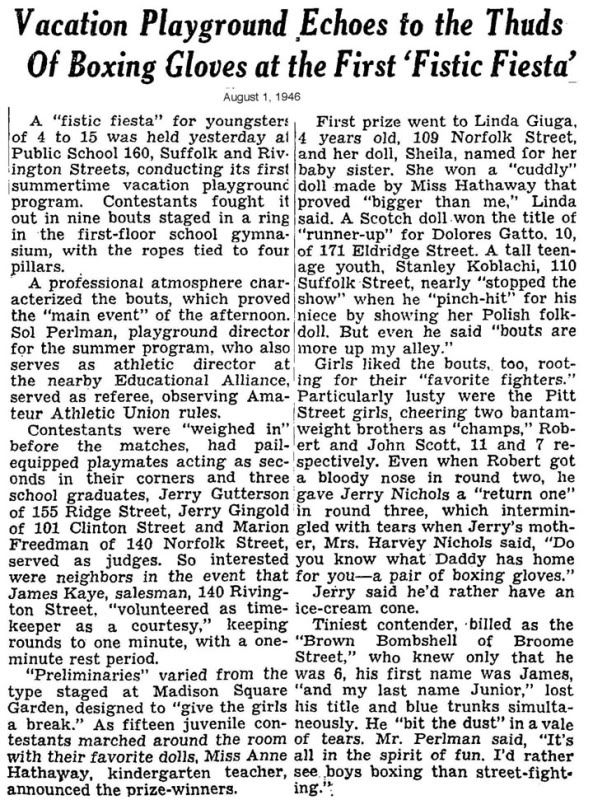
63 Years Ago: Fistic Fiesta At PS 160 On Suffolk Street
Tuesday, May 3, 2011
The First Great Jewish Ballplayer: Lipman Pike, Part 2
More on Pike from his wiki page
Lipman Emanuel "Lip" Pike (May 25, 1845 – October 10, 1893) was one of the stars of 19th century baseball in the United States. He was the first player to be revealed as a professional (meaning he was paid money to play), as well as the first Jewish ballplayer. His brother, Jay Pike, played briefly for the Hartford Dark Blues during the 1877 season.
His family was of Dutch background, and his father was a haberdasher. Pike was one of the premier players of his day. He was a great slugger and one of the best home run hitters of his day, so much so that stories about balls he hit were told for quite some time after he stopped playing.
Pike first rose to prominence playing for the Philadelphia Athletics, whom he joined in 1866. He brought an impressive blend of power and speed to the team, hitting many home runs as well as being one of the fastest players around. He was a star who in one game hit 6 home runs; the final score was 67-25.
However, it was soon brought to light that he and two other Philadelphia players were being given $20 a week to play. Since all baseball players were ostensibly amateurs (though many were, like Pike, accepting money under the table), a hearing was set up by the sport's governing body, the National Association of Base Ball Players. In the end, no one showed up to the hearing, and the matter was dropped. By 1869, the Cincinnati Red Stockings became the first openly professional team, and Pike's hearing, farcical as it seems to have been, paved the way for Harry Wright's professionalization of baseball. The Athletics were very successful, but Pike was dropped from the team in 1867, because he was from New York, and thus a 'foreigner,' calling his loyalty into question.
He moved on to the Irvington, New Jersey club and later in 1867 to the New York Mutuals, always a leading team, where he returned for 1868, having caught the eye of Boss Tweed. In 1869 he moved to the Brooklyn Atlantics, another perennial leader, where he hit .610. In 1870, the Atlantics, with Pike manning second base, finally ended Cincinnati's 93-game winning streak.
In 1871, the National Association was formed as the first professional baseball league, and Pike joined the Troy Haymakers for its inaugural season. He was their star and for 4 games was the "captain" (which meant that he managed the team), batting .377 (6th best in the league) and hitting a league-leading 4 home runs. He also led the league in extra base hits (21), and was 2nd in slugging percentage (.654) and doubles (10), 4th in RBIs (39), 5th in triples (7), 6th in on base percentage (.400), 9th in hits (49), and 10th in runs (43). The Haymakers only finished 6th, though, and the team's captaincy switched to Bill Craver.
The Haymakers revamped their roster for the 1872 season, and Pike headed for Baltimore, where he played for the Baltimore Canaries. Pike had another excellent season, leading the league in home runs again (with 6), RBIs (60), and games (56), and coming in 2nd in total bases (127) and extra base hits (26), 3rd in at bats (288), 5th in doubles (15) and triples (5), 9th in slugging percentage (.441) and stolen bases (8), and 10th in hits (84).
In 1873 Pike led the league in home runs for the 3rd consecutive season, hitting 4, and was 2nd in triples (8), 4th in total bases (132), stolen bases (8), and extra base hits (26), 7th in slugging percentage (.462), 8th in doubles (14), RBIs (50), and at bats (286), 9th in hits (90), and 10th in games (56).
Baltimore went bankrupt after the season, so Pike headed off to captain the Hartford Dark Blues for the 1874 season. The Dark Blues were a poor team, but Pike had another fine season, slugging .574 to lead the league, and coming in 2nd with an on base percentage of .368.
Pike abandoned the weak Hartford team after a single season, switching to the St. Louis Brown Stockings. For the first time in his professional career, Pike failed to hit a home run, although he stole 25 bases. He also hit 12 triples and 22 doubles (leading the league) in what was probably his finest offensive season.
In all Lip Pike has the NA career home run (15), and extra base hits (135) records
In 1876, when the National League replaced the National Association, Pike stuck with St. Louis. The Brown Stockings turned in a very good season, finishing a solid 2nd to the Chicago White Stockings. Pike continued to produce offensively, notching totals of 133 total bases (5th in the league) and 34 extra-base hits (2nd).
Seemingly never content to stay with a team very long, Pike headed to the Cincinnati Reds for the 1877 season. The Reds finished last. He hit a powerful and famous home run that year, which apparently went 360 far and 40 feet high, and hit a metal bar at that point which it still had enough force to bend. Pike was still a top-quality player, leading the league in home runs for the 4th time in the 1870s. However, age was starting to catch up with the 32-year-old Pike. He began the season as the 8th-oldest player in the league, and was the 4th oldest player of the 1878 season. The 1878 Reds played very well, though. They finished 2nd, but Pike was replaced by Buttercup Dickerson halfway through the season and forced to look elsewhere for a team. He ended up playing a few games for the Providence Grays, and spent the next 2 years playing for minor league teams.
Pike got a brief call-up in 1881 to play for the Worcester Ruby Legs, but the 36-year-old Pike could no longer play effectively, hitting .111 and not managing a single extra base hit in 18 at-bats over 5 games. His play was so poor as to arouse suspicions, and Pike found himself banned from the National League that September. He was added to the "blacklist" at a 1881 National League meeting, barring him from playing for or against any NL team. He turned to haberdashery, the vocation of his father, and spent another 6 years playing only amateur baseball. He was reinstated in 1883.
In 1887, the New York Metropolitans of the American Association gave Pike another chance. At 42, he was the oldest player in baseball. The only game he played was more of a sending off than a new start, though, and Pike headed back to his haberdashery once more.
In 1936, decades after he died, he received a vote in the elections for the Baseball Hall of Fame.
Pike was also one of the fastest players in the league. He would occasionally race any challenger for a cash prize, routinely coming out the winner. On August 16, 1873, he raced a fast trotting horse named "Clarence" in a 100-yard sprint at Baltimore's Newington Park, and won by four yards with a time of 10 seconds flat, earning $250 ($4,570 in current dollar terms).
Pike died suddenly of heart disease at the age of 48 in 1893. The Brooklyn Eagle reported that "Many wealthy Hebrews and men high in political and old time baseball circles attended the funeral service". He was interred in the Salem Fields Cemetery in Brooklyn, New York.
He was the first famous Jewish baseball player, and was inducted into the International Jewish Sports Hall of Fame.
The First Great Jewish Ballplayer: Lipman Pike
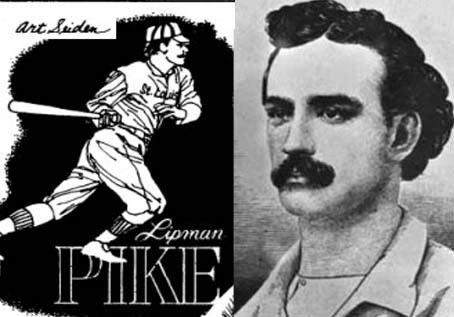
from Jewish Heroes and Heroines in America, from Colonial Times to 1900:
"Lip" Pike: Baseball's First Pro
by Seymour "Sy" Brody
Lipman E. "Lip" Pike became baseball's first professional player when the Philadelphia Athletics recognized his talent in 1866. The team gave him $20 a week to play third base. Pike was soon followed by others. The baseball players of the time were professional and amateurs.
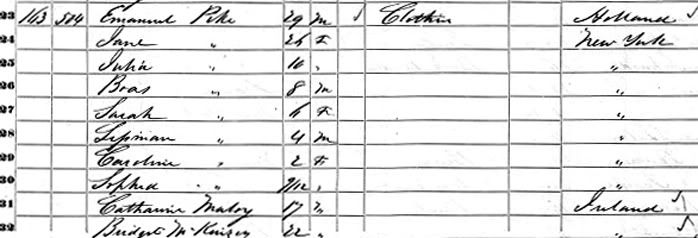
Pike was born in New York City on May 26, 1845. He was one of five children of Jane and Emanuel Pike, emigres from Holland. His older brother, Boaz, was the first in the family to play baseball on an organized team. The first time that Pike's name appeared in a box score was a week after his bar mitzvah. He had played for the Nationals at first base and his brother had played shortstop. The two brothers played for many teams from 1864 through 1865.
Pike established himself as a home run hitter for the year that he was with Philadelphia Athletics as a professional. Hitting home runs was a rarity in those days. Pike hit them in clusters. He hit six home runs in a game against the Alerts in 1886. Five were hit in a row.
Pike left the Athletics and became the playing manager of the Irvington team in 1867. However, he didn't finish the season with the team. Boss Tweed of New York City made him an offer to play for the Mutuals and he accepted it.
He stayed with the Mutes for one year and left the team to join the Brooklyn Atlantics. The Cincinnati Red Stockings came East and beat every team they played, including the Atlantics, in 1869. The following year, the team returned to Brooklyn and was undefeated in 130 games. They played the Atlantics in a game that went into extra innings. The Atlantics took the lead 8 to 7. Pike played second base and was the key figure in retiring the Reds for Atlantics victory.
The first baseball league composed of only professional players began in 1871. Pike went to Troy, New York, to become the manager of the team there. During this period, teams quickly came into being and then quickly disappeared. There wasn't a reserve clause. Many players were drifters, drunkards, and gamblers. Pike was an exception. Pike moved to Baltimore for the 1872-73 season and played in the outfield. He was a very fast runner. It is told that Pike won $200 when he defeated a horse in a race.
Pike played and managed many teams after his stay in Baltimore. He moved around the East Coast, going from one team to another. He finished the year with the Worcester, Massachusetts, team in 1881. The team had a bad season and Pike was made the scapegoat. Pike was the first to be put on baseball's blacklist.
He opened up a haberdashery store and announced his retirement from baseball. The store was a gathering place for baseball enthusiasts. Pike made an attempt to play again when he was 42 years old. He joined the original New York Mets, later announcing his retirement.
Pike became an umpire in the National League and the American Association while still operating his haberdashery. He died of a heart attack at the age of 48. "He was eulogized in many newspapers." the Sporting News said. "He was one of the baseball players in those days, who was always gentlemanly on and off the field - a species which is becoming rarer as the game grows older..." Pike will always be remembered as the first professional player in baseball.
This is one of the 150 illustrated true stories of American heroism included in Jewish Heroes and Heroines of America, © 1996, written by Seymour "Sy" Brody of Delray Beach, Florida, illustrated by Art Seiden of Woodmere, New York, and published by Lifetime Books, Inc., Hollywood, FL.
Friday, April 22, 2011
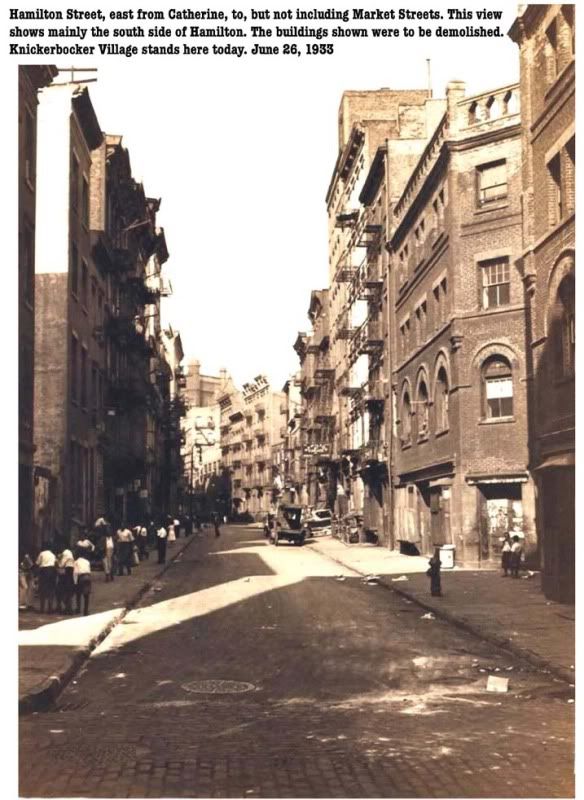
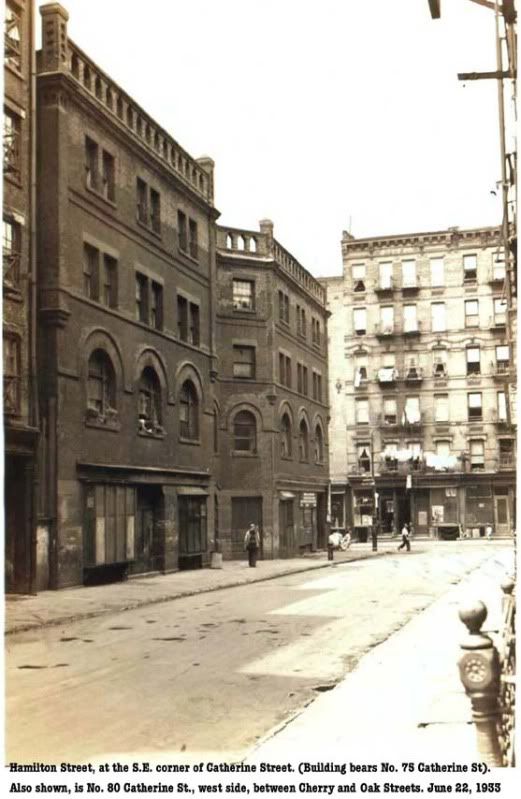
Sunday, January 30, 2011
Hutchins Hapgood: Autobiography Of A Thief, 1905

Hutchins Hapgood, journalist and author, was born on May 21, 1869 in Chicago, Illinois.The_autobiography_of_a_thief
Hutchins Hapgood received his early education in the Alton public schools. Like his father and two brothers, he attended Harvard University, receiving the B.A. degree in 1892 and the M.A. in 1897. In the interim he spent two years in study at the universities of Berlin and Freiburg, Germany, reading sociology and philosophy, and also traveled extensively. For a time he was an instructor in English composition at Harvard and the University of Chicago. After trying his hand at various jobs, Hapgood eventually decided to become a journalist like his older brother Norman.
Charles Hutchins Hapgood had a tremendous influence upon the character of his sons. Although not a religious man, he imparted to them a strong moral sense, an abhorrence of great wealth, and a basic belief in progressive socialism. This, coupled with a liberal Harvard education and appropriate connections, led Hutchins Hapgood into the thick of muckraking journalism.
His first newspaper job was with the New York Commercial Advertiser under the tutelage of Lincoln Steffens. Here he met Steffen's assistant, Neith Boyce, whom he married on June 22, 1899.
In 1904 Hapgood became the drama critic for the Chicago Evening Post.
Returning to New York, he later became an editorial writer for the Evening Post, the Press, and the Globe. While maintaining his career as a journalist, Hapgood also wrote books. During the first decade of the twentieth century, he produced the bulk of his major works, including Paul Jones (1901), The Spirit of the Ghetto (1902), The Autobiography of a Thief (1903), The Spirit of Labor (1907), An Anarchist Woman (1909), and Types from City Streets (1910). The anonymously published Story of a Lover (1919), describing the "open" marriage which he and Neith maintained, was initially suppressed as pornographic. Hapgood's last great work was his autobiography, A Victorian in the Modern World (1933).
Hutchins Hapgood was a close friend of Mabel Dodge Luhan and an habitue of her salon at 23 Fifth Avenue. Other close friends included Bernard and Mary Berenson, Jacob Epstein, Max Eastman, Anton Johanson, Walter Lippmann, Robert Morss Lovett, Gertrude and Leo Stein, Alfred Stieglitz, Maurice Sterne, and Mark Sullivan. He and Neith were founding members of the Provincetown Players.
Hapgood's career declined following the death of his eldest child, Boyce, in 1918 and the end of the muckracking era. The last several years of his life he spent with Neith in Key West, Florida, at their home in Provincetown, Massachusetts, and on a farm in Richmond, New Hampshire.
Hutchins Hapgood died on November 19, 1944, in Provincetown, and was buried in the family plot in East Cemetery, Petersham, Massachusetts
above, an interesting account of life in the fourth ward as well as neighboring ones in the late 1800's.
Sunday, January 23, 2011

Subscribe to:
Posts (Atom)


 Posts
Posts