Showing posts with label halloween. Show all posts

Saturday, October 31, 2009

Happy Halloween: The Witch Of Fourth Street

Here's an ancient slide show (2002) I just unearthed. It uses the book the "Witch of 4th Street." I narrated the first few pages of the story and added pictures to help give the story more context. Yes, I know I made a mistake in the first line, it's just too labor intensive to redo. click here to link to movie, you have to click the arrow to move it manually
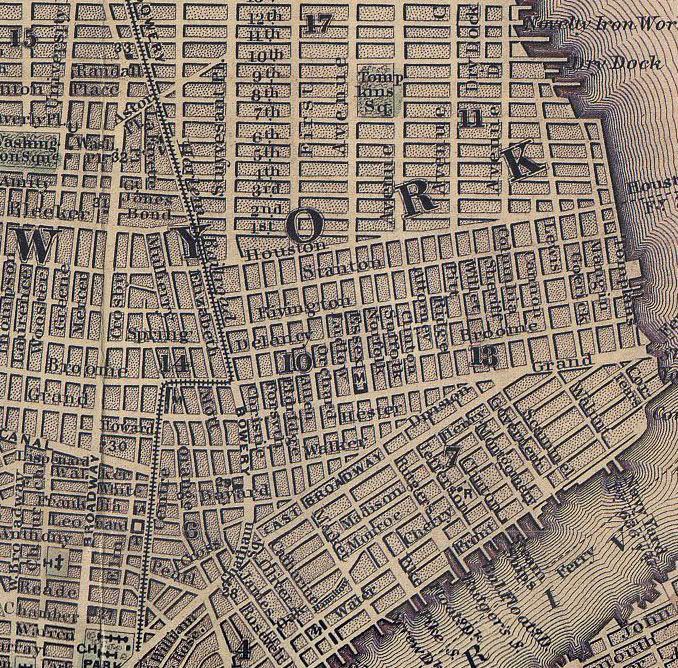
The Lower East Side History Project has a lot by lot history of the block.

Happy Halloween: Yip And Ella, Ding Dong The Witch Is Dead


Yip Harburg wrote the lyrics, but Ella changed some and had her own unique interpretation
Once there was a wicked witch
In the lovely land of Oz
And a wickeder, wickeder
Wickeder witch that never,never was
She filled the folks in munchkin land
With terror and with dread
Till one fine day from kansas way
A cyclone caught a house
That brought the wickeder, wickeder witcher dome
At she was flying on her broom
For the house fell on her head
And the coroner pronounced her: dead
And through the town the joyous news was spread
Ding Dong! The Witch is dead. Which old Witch? The Wicked Witch!
Ding Dong! The Wicked Witch is dead.
Wake up - sleepy head, rub your eyes, get out of bed.
Wake up, the Wicked Witch is dead.
She's gone where the goblins go,
Below - below - below. Yo-ho
Let's open up and sing and ring the bells out.
Ding Dong' the merry-oh, sing it high, sing it low.
Let them know
The Wicked Witch is dead!
[instrumental]
She's gone where the goblins go,
Below - below - below. Yo-ho
Let's open up and sing and ring the bells out.
Ding Dong' the merry-oh, sing it high, sing it low.
Let them know
That Wicked Witch...
That Wicked Witch is dead!

Happy Halloween: From Finian's Rainbow, That Old Devil Moon

Friday, October 30, 2009

Happy Halloween: Bossa Rio, That Old Devil Moon


Lyrics by the lower east side's Yip Harburg
I look at you and suddenly,
Something in your eyes I see
Soon begins bewitching me.
It's that old devil moon
That you stole from the skies.
It's that old devil moon
In your eyes.
You and you glance
Make this romance
Too hot to handle.
Stars in the night
Blazing their light
Can't hold a candle
To your razzle-dazzle.
You've got me flyin' high and wide
On a magic carpet ride
Full of butterflies inside.
Wanna cry, wanna croon,
Wanna laugh like a loon.
It's that old devil moon
In your eyes.
Just when I think, I'm
Free as a dove.
Old devil moon,
Deep in your eyes,
Blinds me with love.

Thursday, October 29, 2009

Witchcraft 2009: Chris Connor


From a great singer who just passed away this past August. part of her bio
Chris Connor (November 8, 1927 – August 29, 2009 [1]) was an American jazz singer.
She was born as Mary Loutsenhizer in Kansas City, Missouri to Clyde and Mabel Loutsenhizer. She studied and became proficient on the clarinet, having studied for 8 years throughout junior high and high school. Mabel Loutsenhizer died in 1940 and young Mary moved in with her older sister, who took over the responsibility of raising her. She first sang publicly in 1945, at the Jefferson City Junior College's graduation.
She moved between local bands from 1946-1947 and in 1948, she moved to New York City with the intention of having a glamorous career. Unable to find a singing job, she became an office stenographer. She spent the next seven weeks trying to secure any kind singing job. She met a man acquainted with orchestra leader Claude Thornhill's road manager, Joe Green. Thornhill was seeking a new singer to round out his vocal group, the Snowflakes. She successfully auditioned and joined Thornhill's group, touring around the United States and recording harmonies in the studio. Of her time spent with the Snowflakes, there is only evidence of her vocal contribution on two recorded songs: "There's a Small Hotel" and "I Don't Know Why", both performed in 1949. She continued to tour with the Thornhill band sporadically until March 1952, when she joined Jerry Wald's big band and recorded five songs: "You're the Cream in My Coffee", "Cherokee", "Pennies from Heaven", "Raisins and Almonds", and "Terremoto". She also reunited with Claude Thornhill in October 1952 for a radio broadcast from the Statler Hotel in New York City. She sang four songs: "Wish You Were Here", Come Rain or Come Shine", "Sorta Kinda", and "Who Are We to Say".
When Connor was singing live on a radio broadcast from the Roosevelt Hotel in February 1953, June Christy (then vocalist for Stan Kenton's band), was listening and heard her sing. By 1952, Kenton had rotated several female singers as replacements. In late 1952, Christy returned to the Kenton band for some sporadic engagements. When she informed Kenton again of her impending departure to pursue a solo career, she remembered Chris Connor and recommended her to Kenton. Connor auditioned and began touring and recording for the Stan Kenton band in February 1953. On February 11, 1953, Connor recorded her first sides with the Stan Kenton band. Her first song, "And The Bull Walked Around, Ole", peaked at #30 on the Billboard music charts. Other songs recorded with the band were "Baia", "Jeepers Creepers", "If I Should Lose You", "I Get A Kick Out Of You", "Nobody Knows The Trouble I've Seen" and the song that would forever be associated with the vocalist, "All About Ronnie". Additional songs Connor sang on the road (but never recorded with the band in studio) were "Taking A Chance On Love", "Don't Worry About Me", "I'll Remember April" and "There Will Never Be Another You".
By June 1953, Connor was finding the constant traveling and vocal demands of nightly performances with a big band exhausting. She abruptly left the Kenton band and by fall of 1953, she had relocated back to New York. Soon after, she hired Monte Kay to manage her impending solo career. He found work for her at Birdland. One night after a show, the owner of Bethlehem Records, Gus Wildi, offered her a recording contract on the spot. She signed with the label in 1953, and in 1954 released dual long play LPs, Chris Connor Sings Lullabys Of Birdland and Chris Connor Sings Lullabys For Lovers. She became a best-selling solo artist for Bethlehem Records aged 26 and the label rushed her into the studios to record additional songs. Bethlehem Records released the successful follow-up albums Chris and This Is Chris in 1955. When time came for Connor's contract to expire, she signed for an album deal with Atlantic Records (she recorded for Atlantic from 1956-1963). Connor was the first white female jazz singer to be signed by the label. Ahmet Ertegun and his brother Nesuhi Ertegun's Atlantic label was, at the time, primarily a rhythm and blues label, with artists such as Ruth Brown and Ray Charles.
Chris Connor died on August 29, 2009 from cancer, aged 81. She is survived by a nephew and her longtime partner and manager Lori Muscarelle.

Wednesday, October 28, 2009

Happy Halloween: Clifford Brown, I Don't Stand A Ghost Of A Chance With You

Happy Halloween: Joni James, I Don't Stand A Ghost Of A Chance With You


I love you oh so madly
I need your love so badly
But I don't stand a
Ghost of a chance with you
I thought at last I had found you
But other arms surround you
And I don't stand a
Ghost of a chance with you
If you'd surrender just for
A tender kiss or two
You might discover that
I'm the lover meant for you
And I'd be true
So what's the good of all my scheming?
I know I must be dreaming
For I don't stand a
Ghost of a chance with you

btw Joni is Giovanna 'Joan' Carmella Babbo

Witchcraft 2009


Above: Patrcia Barber in Paris. For last year's version by Frank
For those KV jazz lovers and all other appreciators of fine music, the son of the KV Rambo, Todd Schefflin, will be appearing in two concerts a William Patterson College. On Sunday, November 1st with Vocalist Carrie Jackson and the following week, November 8th
in a big band setting with the great Frank Wess

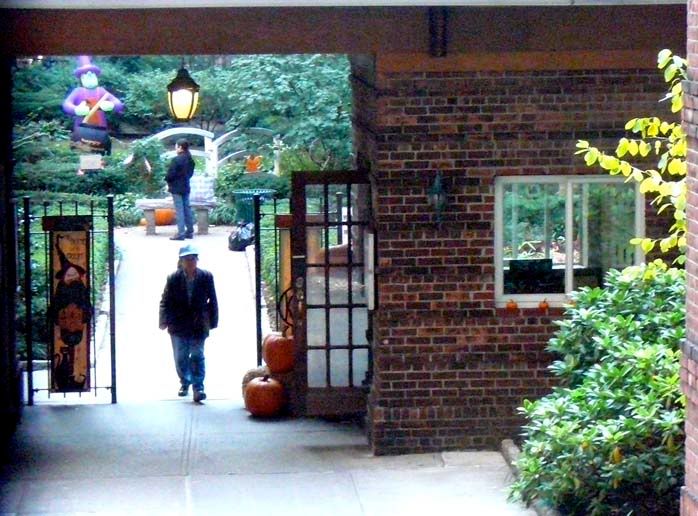
Happy Halloween From Knickerbocker Village


It's the west courtyard above.

Sunday, November 2, 2008

KV Halloween Memories


I remember starting at the PH floor, by Paul's apartment, and ringing my way down to the 1st if I could last that long. That was the era before razor blades in candy and individually wrapped candies being a necessity. Also, I do remember getting apples (not very exciting) and pennies for UNICEF. I am ashamed to relate I can't remember if I ever turned in the pennies, but I know the total each year was less than 70 Cents. One year, I actually made it to part of the E building, and I figure the sugar rush from that lasted into my adult life. Of course, I never did realize my dream of doing all six buildings in the courtyard in one night.
My mother wouldn't let me trick or treat either. She thought it was too dangerous. Not the F building in those days!!She also thought everyone was going to poison me.
I was allowed to dress up for school or girl scout Halloween parties. My sister was very talented and made costumes for me. One year I was the tin man. She put silver foil all over a cardboard box, cut out the arm and neck holes and bought me silver tights. Another year my sister made a court jester costume for me out of a pillowcase. She dyed it green and purple, hung purple and green bells from the hem and made shoes and a hat from felt. Again I wore matching tights. One leg purple and one leg green.
Now I live in the Berkshires and everyone does Halloween. It is a really big thing here. So now I go with my grandson, costume and all.
Hated it. First my parents wouldn't let me trick or treat. And we never opened the door. When I finally did make the rounds of the F building I found it unexciting.

Saturday, November 1, 2008

That Old Black Magic On Halloween 2


I saw this version endlessly as a kid to the point that I couldn't stand it. Now I have a greater appreciation for Prima and Keely, especially Keely.
"That Old Black Magic" is a popular song. The music was written by Harold Arlen, with the lyrics by Johnny Mercer. The song was published in 1942 and has become an often-recorded standard.
The Glenn Miller recording was released by RCA Victor Records as catalog number 1523. It charted in 1943, spending 14 weeks on the Billboard magazine charts, peaking at position #1.
The Margaret Whiting recording (with the Freddie Slack Orchestra, which got top billing on the label) was released by Capitol Records as catalog number 126. It charted in 1943, spending 1 week at #10 on the Billboard chart.
The Frank Sinatra recording originally appeared on the album Frank Sinatra Remembers the Movies. This album seems to have disappeared, but the recording is on several "Greatest Hits" compilations of his Capitol recordings.
A 1950 recording on Mercury Records by Billy Daniels gave him the moniker "The Old Black Magic Man" for the rest of his career.
The Sammy Davis, Jr. recording was released by Decca Records as catalog number 29541. It charted in 1955 and spent 6 weeks on the Billboard charts, peaking at position #16.
Marilyn Monroe famously sang the song in her film Bus Stop, in 1956. Her character Cheree is singing the song (somewhat out of key) to an audience who is not listening and talking loudly, until Don Murray quiets them all down.
The duet recorded by Louis Prima and Keely Smith was released as a single in 1958 on the Capitol label. It reached a peak of eighteen on the Billboard Hot 100.
Bobby Rydell had his version released as a single on Cameo in 1961. It reached number twenty-one on the Hot 100.
Johnny Mercer recorded his version in 1974 for his album My Huckleberry Friend.
The tune was featured as background music in the movie, Star Trek III: The Search for Spock.
It was featured twice on Star Trek: Voyager. It was sung by Seven of Nine during a simulation of World War II on the first part of the Episode The Killing Game. The second time it was performed by The Doctor and Harry Kim and his jazz band called 'Harry Kim and the Kimtones' in the episode Virtuoso.

Bewitched On Halloween


from wikipedia with some interesting sociological insights
Bewitched is an American situation comedy originally broadcast for eight seasons on ABC from 1964 to 1972. The show stars Elizabeth Montgomery, Dick York (1964–1969), Dick Sargent (1969–1972), Agnes Moorehead and David White. It continues to be seen throughout the world in syndication and it is the longest running supernatural themed sitcom of the 1960s–1970s.
Two of the film antecedents for this series were the 1942 film I Married a Witch (from Thorne Smith's unfinished novel The Passionate Witch), and the John Van Druten play that was eventually adapted as Bell, Book and Candle (1958).
The focus of the show (which was based on a satirical short story in Harper's Weekly Magazine, written by a young Norman Mailer and titled The Witch of Westport, according to the A&E Network Biography of Elizabeth Montgomery) is on the mixed marriage of a nose-twitching witch, Samantha Stephens (Montgomery), and her mortal husband, Darrin (originally played by Dick York and later by Dick Sargent). The series, a romantic comedy, shows how true love can endure the most vexing of situations, even between a witch and a human. The series is set in an upper middle class suburb, from which Darrin commutes to Manhattan for work.
Darrin works for advertising agency McMann and Tate. Darrin's profit-obsessed boss Larry Tate (David White) is an almost constant presence on the show, even though Tate's partner, Mr. McMann, appears only twice during the series. Tate's opinions would turn on a dime to appease a client and land a deal.
Samantha's mother Endora (Agnes Moorehead) loathes mortals, and disapproves of Darrin, as do most of Samantha's family. Endora refuses to use Darrin's name, variously calling him "Derwood," "What's-his-name," "Darwin," "Dum-Dum," etc., all much to his annoyance (she refers to him as "Darrin" only eight times during the entire series.
Many episodes revolve around Endora, or another of Darrin's in-laws, using magic to undermine the union. Although Endora casts countless spells on Darrin, she never threatens to outright destroy him, as she could easily do. Endora's ploy seems to be to provoke Darrin into leaving Samantha, but the mortal's love for his wife overcomes every obstacle. During a sequence when High Priestess Hepzibah (see below) expresses surprise that Darrin has withstood years of Endora's harassment, Endora can only shrug and admit, "He loves my daughter."
The pilot shows the two meeting and eloping. Endora is in the pilot but does not meet Darrin until early in the season. Later in the first season, Darrin meets Samantha's father, Maurice, and Samantha meets Darrin's parents, Phyllis and Frank Stephens. The second episode shows the couple buying a home in Westport Connecticut, at 1164 Morning Glory Circle, the main setting for all episodes except several at the beginning of the seventh and eighth seasons, which take place in Salem, Massachusetts and Europe respectively. The premise of the Salem episodes is they are there for a witches convention, but this was done of necessity as the set of their house had burned down and was being rebuilt.
Several episodes begin with an enraged Darrin becoming the victim of a spell. The after effects would wreak havoc with fellow mortals such as his mother, neighbors or agency clientele. By the epilogue, however, Darrin and Samantha would embrace and confound the devious elements that failed to separate them.
Some storylines take a backdoor approach to such topics as racism, as seen in the first season episode, "The Witches Are Out." Samantha objects to Darrin's demeaning ad portrayal of witches as ugly and deformed. Such stereotypical imagery, she believes, ignites biases which have often caused Endora and her to flee the country until November. One episode, "Sisters At Heart" (season 7), was written and submitted by a tenth-grade class. It involved Tabitha altering her and her black friend's skin tones with coordinating polka-dots, so that people would treat them alike. (A similar white-with-black vs. black-with-white concept had been seen earlier in Star Trek:"Let That Be Your Last Battlefield," in which Frank Gorshin had appeared versus Lou Antonio.)
Bewitched is unique for the mid-1960s in that it portrays an estranged married couple—Samantha's parents, Endora (Agnes Moorehead) and Maurice (Maurice Evans). Maurice was portrayed as an urbane thespian not unlike Elizabeth Montgomery's real father, Robert Montgomery. Maurice occasionally pops in with a young, attractive female escort. The couple's separation is implied and subtextual. In the episode "Samantha's Good News," Endora threatened to file for an "ectoplasmic interlocutory" (code for divorce), only to wrangle Maurice's affection. In another episode Endora threatens to live with Maurice, thus acknowledging a separation. Endora once introduced Maurice as "my daughter's father." Maurice often refers to Darrin as "Dustbin".

Friday, October 31, 2008

Witchcraft On Halloweeen


Any excuse to use Sinatra I'll take:
"Witchcraft" is a popular song from 1957 composed by Cy Coleman with lyrics by Carolyn Leigh. It was released as a single by Frank Sinatra with an arrangement by Nelson Riddle, and reached number twenty in the U.S., spending sixteen weeks on the charts. Composed as an instrumental piece by Coleman for the revue Take Five, lyrics were added by Leigh.

Those fingers in my hair
That sly come hither stare
That strips my conscience bare
It's witchcraft
And Ive got no defense for it
The heat is too intense for it
What good would common sense for it do
cause its witchcraft, wicked witchcraft
And although, I know, its strictly taboo
When you arouse the need in me
My heart says yes indeed in me
Proceed with what your leading me to
Its such an ancient pitch
But one I wouldn't switch
cause there's no nicer witch than you

Thursday, October 30, 2008

Abbott And Costello: The Better Horror Film Alternative 2


This clip (with better resolution) takes over where the other left off leading to the finale.
an interesting history of this picture from an informed film blogger
By the mid-40s, Universal’s Monsters were played out. It’s as if the studio was bereft of new ideas for the characters, or perhaps box office projections suggested that Frankenstein, Dracula or The Wolfman couldn’t carry a picture on their own any more. The menacing trio was still being revived, but only as a group. They came bundled together, three for the price of one, in “Monster Rally” films with template titles: House of Frankenstein and House of Dracula, in 1944 and ‘45.
It looked like the days of the great Universal Monsters had passed, and the once proud bogeymen would fade away without so much as a whimper.
Then Robert Arthur had an idea.
In late 1946, Arthur, the producer in charge of Abbott and Costello movies, was kicking ideas around and he came up with something about a mad doctor chasing the Boys, determined to stuff Lou Costello’s addled brains into the Frankenstein Monster’s cranium. Studio bosses suggested he throw Dracula and The Wolfman in, use the whole squad, and maybe it would amount to something.
A couple of script treatments were turned out and quickly discarded. One dreadful version had the Monsters defeated after being shrunk down to doll size. It was only when the project was handed over to Robert Lees and Frederic Rinaldo that it gelled.
The two writers loved the concept and attacked it with passion. They crafted a script, called The Brain of Frankenstein, that was unlike anything the Boys had done before. The story was solid and it raced to a genuine climax. It had strong supporting parts, including a female villain. The Monsters stayed in character, genuinely menacing, something to play off of, not play with. The script had new and original sight gags in it, good dialog and new jokes.
Lou hated it.
For all their talent, Bud and Lou were not innovators. The routines they mastered had been honed to perfection years earlier, in Vaudeville. The Boys had come to know what worked for them and they felt no need to experiment. Critics of the time complained about Abbott and Costello serving up “the same old corn” in picture after picture, but the public didn’t seem to mind at all.
It’s almost impossible, today, to grasp the magnitude of Abbott & Costello’s popularity. They had a huge constituency of fans, having been on radio continuously for over a decade. They played personal appearance gigs to packed houses. They made two pictures a year, but with older titles constantly re-issued, you could have 6 or 7 Abbott & Costello comedies in circulation every year. The fans just couldn’t get enough of them. The Boys were box-office gold.
Typically, an Abbott and Costello script started with a basic plot outline over which, through several drafts, gags and routines were added. Bud and Lou barely glanced at their scripts, relying on longtime friend and gagman supreme John Grant to look out for them, and fix or rewrite as needed. When the jokes got stale, the routines repetitious, the Boys could still find a way to wring an extra laugh out of them. Chubby, cheerful Lou Costello ad-libbed recklessly, and if all else failed, he’d fall back on hoots, howls and spectacular pratfalls to sell a gag. The lanky and morose Bud Abbott — the best straight man in the business — knew instinctively how much rope to give out and when to yank Lou back into the routine.
The new script was a challenge, and the Boys, at first, were uncomfortable with it. It came with all the jokes written down, all the gags and situations worked out. Only a couple of stock routines made it in, a “moving candle” gag, and a scene where Lou mistakes the real Wolfman for Bud was a variation on a bit the Boys were familiar with. It speaks to the script’s originality and cleverness that even those old stunts work in context and come off as fresh.
The Monster : Glenn Strange
Bud and Lou often complained, not without reason, of being saddled with uninspired supporting casts composed of clock-punching contract players. This time, they had no cause for worry.
Lon Chaney, Jr. reprised his signature role as the terminally anguished Larry Talbot. He’s a good guy, working with Bud and Lou to prevent Dracula from reviving the dangerous Frankenstein Monster, but he’s also a walking time bomb who can morph into The Wolfman and turn on the Boys at any moment. A nice surprise was seeing Bela Lugosi, in great form, don the Dracula cape again. The part had been essayed most recently by John Carradine, in top hat and fake mustache, while Lugosi had languished as a Poverty Row villain. Here, Lugosi was given a good, substantial role, and he handled himself with Continental aplomb, dignity intact, while the comics whirled around him. It was to be Bela’s last major film.
The cast of principals was rounded out with Jane Randolph as Lou’s sweetheart, Leonor Aubert as the evil and fatale Dr. Mornay, and the part of the Monster was assured, again, by Glenn Strange.
Strange had played the Monster in two previous outings but his screen time had been limited to being strapped on a slab until the final reel when, spurred by some mad scientist and his obligatory hunchbacked assistant, he rose, growled at the torch-carrying mob, and promptly walked into some quicksand, or a wall of fire. The End.
This time, the Monster was used throughout the picture, and he had the best, most fun scenes interacting with Bud and Lou.
Strange played the character as a stoic hulk, moving slowly and deliberately, hands out, like a blind automaton on remote control. His performance is rarely given the credit it deserves, but watch him closely in this film. This isn’t just a stuntman clomping around, it’s a real performance in pantomime. In a couple of scenes, incrementally sitting up at Dracula's command, or mechanically climbing the stairs in the gorgeous island dock set, Strange moves with such clockwork precision that it almost feels like the film has slowed down. His timing, always half a second late in reacting, is robot perfect.
Glenn Strange made a career as a character actor in Westerns. As The Monster, he was eclipsed by Karloff, Chaney and Lugosi who had all played the part in “serious” pictures. Strange was thought of as the fill-in Frankenstein, the one who got the part only after the part was discounted. But it was Glenn Strange who would give the Monster its pop culture profile. When the classic, flat-top makeup was applied to his wide, craggy face, it gave him a big, square, boxlike head, and this look became the Frankenstein trademark, better suited for toys and Halloween masks than Boris Karloff’s sensitive features.
Shooting on The Brain of Frankenstein began on February 5, 1948.
Cult Status
The Boys pulled their usual on-set antics, playing a marathon game of poker in their dressing room and refusing to come out for rehearsals. When they did made it to the stage, shooting would be regularly interrupted by the frenetic Bobby Barber, Lou's personal stooge, hired to create pandemonium and keep the company in good spirits. Universal crewmen reportedly loved working on Abbott and Costello pictures. Veteran director Charles Barton calmly steered the picture through all the chaos.
The only incident of note came when a stunt went wrong and Glenn Strange snapped his ankle. Lon Chaney, a good sport, offered to stand in as The Monster and that’s him throwing Leonor Aubert’s double through the window. Strange returned to the set a few days later, wearing a leg brace. Another incident, much happier, involved a scene where Lou backs into a chair and inadvertently sits in the Monster’s lap. His predicament dawns on him when he realizes that he has too many hands. Take after take, Glenn Strange, who was called upon to keep a straight, stone face, couldn’t help but break up. No amount of editing could salvage the scene and the two men had to be called back later on for retakes.
The film’s shooting title, The Brain of Frankenstein, sounded too much like a straight horror film. When it was released, in August ’48, it was called, simply, Abbott and Costello Meets Frankenstein. To Universal’s delight, preview audiences whooped as soon as the title appeared onscreen.
In retrospect, it was an early case of product branding. Comedians and monsters had mixed it up before, but these were not your humdrum haunted house ghosts or the escaped cheapsuit gorillas that had stalked everyone from the Ritz Brothers to the Bowery Boys. Abbott and Costello — household names to begin with — were tangling with Frankenstein! The Wolf Man! And Dracula! These were characters established over almost two decades worth of films. Their names had weight and significance.
The film was a runaway hit, the 3rd biggest box office attraction of 1948, and it gave Bud and Lou a whole new formula to exploit. Over the next few years, they would go on to “Meet” all the monsters they could scare up, from The Invisible Man to The Mummy.
Critics of the time were kind to the film, but it would take a few more years for it to be recognized as the comedy classic that it is. When horror films finally came under scholarly scrutiny, A&C Meet Frankenstein was generally regarded as an insult, the final ignominy for monsters whose potency had been slowly eroded through increasingly cheap sequels.
In an article for Sight and Sound (April-June 1952), Curtis Harrington — who had been a friend of James Whale — wrote that Abbott and Costello Meets Frankenstein was “the final death agony of James Whale’s originally marvelous creation”. Carlos Clarens, in his seminal Illustrated History of the Horror Film (1967), lumped the film along with the portmanteau House of Frankenstein and House of Dracula, stating that “unconscious parody finally gave way to deliberate spoof” and adding, “By then, Universal was flogging a dead horse”.
Boris Karloff was known to glower whenever the film was mentioned, though he had gamely accepted to pose for publicity pictures, standing in line to see the film in New York, and he had gone on to play in two pictures with the Boys, Abbott and Costello Meet The Killer, and Abbott and Costello Meet Dr. Jekyll and Mr. Hyde. Lon Chaney, Jr., who’d had a ball making the film, came to believe its pernicious influence had killed off the old monsters.
But, of course, the monsters not only survived, their reputations grew. Abbott and Costello Meet Frankenstein is an intelligent and vastly entertaining film. It was beautifully done. It has wonderful sets and a magnificent score by Frank Skinner. And it is still funny today. In the end, it was as generous, respectful and deeply-felt an homage to the classic Monsters as, say, Mel Brooks and Gene Wilder’s Young Frankenstein was.
Universal’s Frankenstein, Dracula and The Wolfman did not fade away, they went out with a bang in a fabulous film, a true and glorious Last Hurrah. More importantly, Abbott and Costello Meets Frankenstein, with its reverent use of Universal’s classic monsters, forever cemented their reputation as dominant icons of popular culture.

Abbott And Costello: The Better Horror Film Alternative


I've never been a fan of horror movies. This, and I believe for most of my KV generation contemporaries, was a better Halloween/Horror alternative
from Wikipedia:
Abbott and Costello Meet Frankenstein (onscreen title: Bud Abbott Lou Costello Meet Frankenstein) is a 1948 comedy/horror film directed by Charles Barton and starring the comedy team of Abbott and Costello.
This is the first of several films where the comedy duo meets classic characters from Universal's film stable. In the film, they encounter Dracula, Frankenstein's monster, and the Wolf Man. Subsequent films pair the duo with the Mummy, the Keystone Kops, and the Invisible Man. On a TV special in the early 1950s, the comedy duo did a sketch where they interacted with the latest original Universal Studios monster being promoted at the time, the Creature from the Black Lagoon.
The film is considered the swan song for the "Big Three" Universal horror monsters — Dracula, the Wolf Man and Frankenstein's monster — although it does not appear to fit within the loose continuity of the earlier films.
The film was re-released in 1956 along with Abbott and Costello Meet the Killer, Boris Karloff.
In 2001, the United States Library of Congress deemed this film "culturally, historically, or aesthetically significant" and selected it for preservation in the National Film Registry.
In September 2007, Reader’s Digest selected the movie as one of the top 100 funniest films of all time.

Wednesday, October 29, 2008

Zacherley


A baby boomers choice for horror movies, etc. This clip is from a 1975 Mike Douglas Show.
Zacherley is still going strong at age 90.from wikipedia:
John Zacherle (born September 26, 1918, he is sometimes credited as John Zacherley) is a U.S. television host and voice actor known for his long career as a television horror host broadcasting horror movies in Philadelphia and New York City in the 1950s and 1960s. Best known for his character "Roland/Zacherley," he also did voice work for movies, and recorded the top ten song novelty rock and roll song "Dinner With Drac" in 1958. He also edited two collections of horror stories, Zacherley's Vulture Stew and Zacherley's Midnight Snacks.
John K. Zacherle was born in Philadelphia, the youngest of four children of a bank clerk and his wife. He grew up in Philadelphia's Germantown neighborhood, where he went to high school. He received a bachelors degree in English literature from the University of Pennsylvania. In World War II he enlisted in the U.S. Army and served in North Africa and Europe. After the war, he returned to Philadelphia and joined a local repertory theatre company.
In 1954 he gained his first television role at WCAU-TV in Philadelphia, where he was hired as an actor playing several roles (one was an undertaker) in Action in the Afternoon, a Western produced by the station and aired in the New York City market. Three years later, he was hired as the host of WCAU's Shock Theater, which debuted on October 7, 1957. As the host, Zacherle appeared wearing a long black undertaker's coat as the character "Roland," who lived in a crypt with his wife "My Dear" and his lab assistant Igor. The hosting of the black-and-white show involved numerous stylized horror-comedy gags that have become standard on television. In the opening sequence, Zacherle as Roland would descend a long round staircase to the crypt. The producers erred on the side of goriness, showing fake severed heads with blood simulated with Hershey's chocolate syrup. The show sometimes featured live "cut-ins" during the movie in which the soundtrack continued to play on the air, while the visual feed switched briefly to a shot of Zacherle as Roland in the middle of a humorous stunt, such as riding a tombstone. The show ran for 92 broadcasts through 1958.
He was a close colleague of Philadelphia broadcaster Dick Clark, and sometimes filled in for Clark on road touring shows of Clark's American Bandstand in the 1960s. Clark reportedly gave Zacherle his nickname of "The Cool Ghoul." In 1958, partly with the assistance and backing of Clark, Zacherle cut "Dinner with Drac" for Cameo Records, backed by Dave Appell. At first, Clark thought the recording was too gory to play on Bandstand and made Zacherle return to the studio to cut a second tamer version. Eventually both versions were released simultaneously as backsides on the same 45, and the record broke the top ten nationally. Zacherle later related several LPs mixing horror sound effects with novelty songs.
The purchase of WCAU by CBS in 1958 prompted Zacherle to leave Philadelphia for WABC-TV in New York, where the station added a "y" to the end of his name in the credits. He continued the format of the "Shock Theater," after March 1959 titled "Zacherley at Large," with "Roland" becoming "Zacherley" and his wife "My Dear" becoming "Isobel." He also began appearing in motion pictures, including Key to Murder alongside several of his former Action in the Afternoon colleagues.
In a 1960 promotional stunt for his move to WOR-TV, Zacherley staged a Presidential campaign. His "platform" recording can be found on the album Spook Along with Zacherley, which originally included a Zacherley for President book and poster set which is highly collectible today.
In 1963 he hosted animated cartoons on WPIX-TV in New York. He also hosted the TV show Chiller Theatre in New York on WPIX. In 1964 he hosted a teenage dance show at WNJU-TV in Newark called Disc-O-Teen, hosting the show in full costume and using the teenage show participants in his skits. The show ran for three years until 1967, when he became a morning radio host for WNEW-FM. Two years later in 1969, he became the station night broadcaster (10 PM–2 AM) for a progressive rock format. The success of the show led to the use of the same format in Philadelphia. In 1971 he switched his show to WPLJ-FM, where he stayed for ten years. Recent on-air appearances include a two-hour show at WCBS-FM on Halloween, 2007.
On February 14, 1970 he appeared at Fillmore East music hall in New York City to introduce rock act the Grateful Dead. His introduction of the band can be heard on the Grateful Dead album Dick's Picks Volume 4.
In the early 1980s he played a wizard on Captain Kangaroo, appearing without his trademark Roland costume and make-up. He continued to perform in character at Halloween broadcasts in New York and Philadelphia in the 1980s and 1990s, once narrating Edgar Allan Poe's "The Raven" while backed up by the Philadelphia Orchestra.
In 1988 he struck up a friendship with b-movie horror director Frank Henenlotter, voicing the puppet "Aylmer," a slug-like drug-dealing and brain-eating parasite, one of the lead characters in Henenlotter's 1988 horror-comedy film Brain Damage, and cameo's in his 1990 comedy Frankenhooker, appropriately playing a TV weatherman who specializes in forecasts for mad scientists.
Zacherle continues to make appearances at conventions, and to this day, Zacherle collectibles are still selling, including model kits, T-shirts, and posters. The book Goodnight, Whatever You Are by Richard Scrivani, chronicling the life and times of The Cool Ghoul, debuted at the Chiller Theatre Expo in Secaucus, New Jersey, in October 2006.
A picture of Zacherley alongside fellow horror host Dr. Gangrene appeared in the October 30, 2007 issue of USA Today in an article about Horror Host entitled Halloween horror hosts rise again on radio, TV, film written by David Colton.