How Anne Baxter Changed My Religion
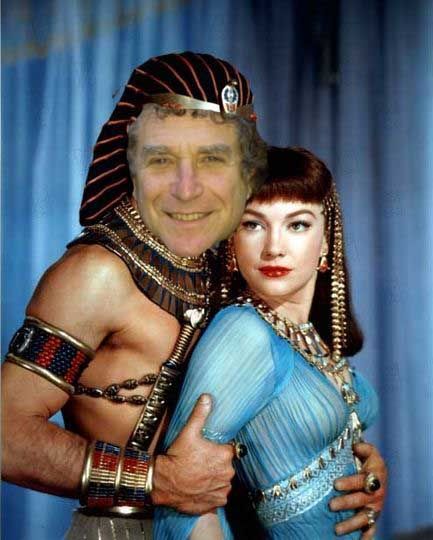
I had my first spiritual crisis at the age of eight. It was Passover 1956, our yearly ritual that was always held at my Bubbie’s apartment on Manhattan’s Lower East Side. I was turning a page of the illustrated Haggadah, a kind of a child’s guide to the Passover, when I found myself gazing straight into the face of the Angel of Death. She had long, wild hair, and she was descending from a darkened heaven and wielding a very foreboding scythe with both hands. It was on the same page as the four questions, and that’s where I came into the ritual. As the youngest child I had to read the questions. However, I was so fixated on the dark angel I could barley speak.
I knew the story well—Moses warned Pharaoh nine times before the big blow. In ascending order they were water to blood, a rain of frogs, lice, wild beasts, blight on livestock, boils, hail, locusts, and then the death of all the Egyptian firstborn. Staring at the Haggadah, all I could think was, “What kind of an angel would do that? I thought angels were sweet.”
After the plagues had been run by and the prayers had fallen silent, I piped up. My question probably came from a confluence of Seder wine and fear. I asked, “Why couldn’t God spare the Egyptian children too?”
My Uncle Samuel shook his head. “It’s part of the story, it’s always been that way.”
“Don’t take it so literally,” said uncle Max, “it’s a metaphor.”
My Aunt Esther added, “Try to view the spiritual side.
Yahweh loved the Hebrews so much He’d do anything to set them free.
My father, Solomon, commented, “God warned the Pharaoh with the previous nine plagues. He had plenty of time to think it over.”
Bubbie then spoke up. “There’s still chicken. Nobody’s eating it. Is there something wrong with the chicken?”
It made no sense to me, but I, like Jacob, often wrestled with God. I wrestled with many things growing up on the Lower East Side. I was constantly worried about breaking any of my parents’ numerous socialist taboos, like watching Walt Disney, who was antiunion, or eating any product made by John Welch, who was the founder of the John Birch Society. Besides my parents, danger lurked outside the apartment in the form of young men from the Catholic school, who held me personally responsible killing their Savior.
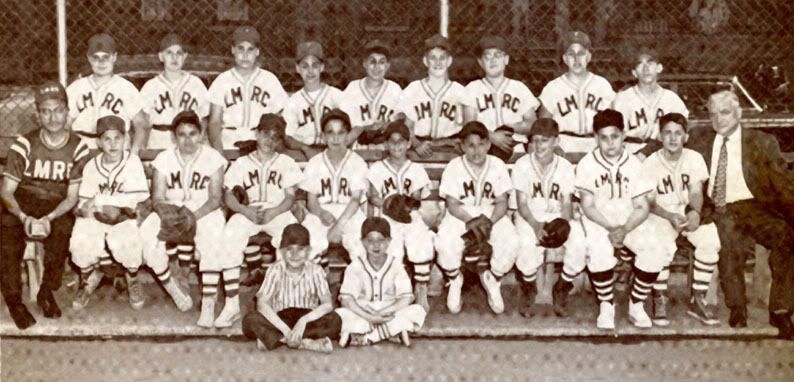
We had our pleasures, too. Baseball, comics, street games, television, and of course the movies. In those days there was only one big screen and the movie houses looked like great palaces. When a new movie opened it would play in just one theater. It was a major deal to go uptown and see a first-run film.
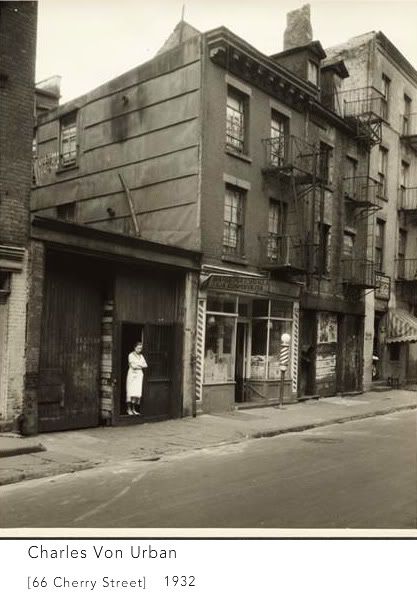
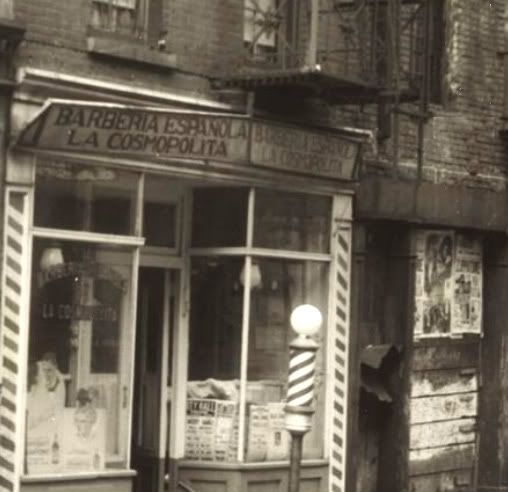
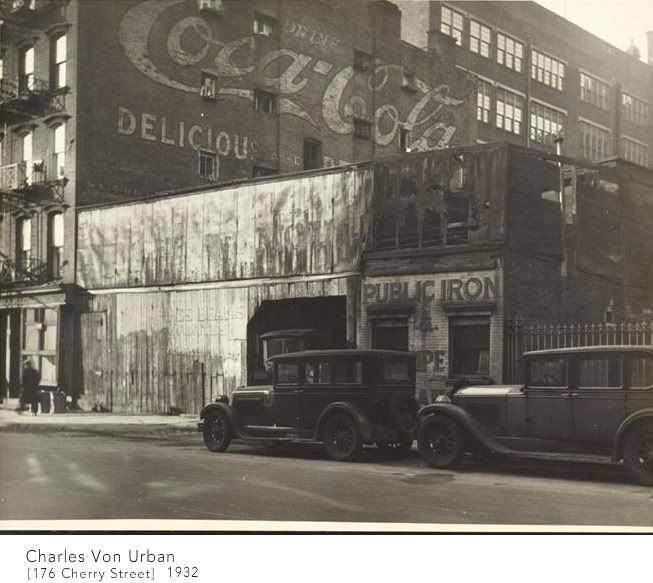
a close up of the above. These buildings would soon be torn down with the construction of Knickerbocker Village, They are just to the west of Market Street.
Earlier on March 25, descendants of Triangle victims marched down the streets of Lower Manhattan, carrying handmade shirtwaists (blouses) with sashes bearing the names of the dead. Mary Alice Del Castillo of Baldwin, N.Y., in Long Island’s Nassau County, bore a shirtwaist with the name of her aunt, Josie Del Castillo.
Another Long Islander, MaryAnn Lupinacci, approached her. “Are you related to Josie?” she asked.
“Yes,” Del Castillo responded.
Lupinacci told Del Castillo she was the niece of Josie’s best friend, Santina Salemi, who also died in the fire. In fact, their names were on the same tombstone. The families had a lot of catching up to do.
As it turns out, Lupinacci’s cousin Loo Miano, of the Astoria section of Queens, had been trying to find out more about the mysterious Josie for years. His mother was named after Salemi, so he felt a close tie to the fire.
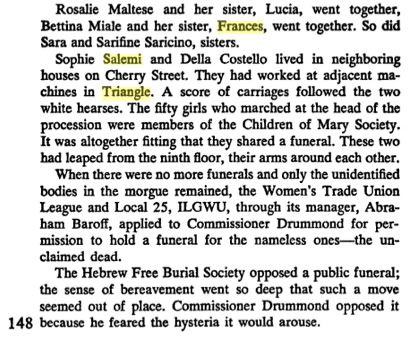
“I did some genealogical research and tried to figure out this name on the grave,” he said. Both came from Cerda, a village in Sicily. After moving to America, Santina and Josie lived on Cherry Street together with Santina’s cousin Rosie Cirrito, who also perished in the fire. Salemi’s sister, Frances Salemi, survived. As the fire raged, she prayed to God for her safety — and promised that if she survived, she would devote her life to God’s work. She later became a nun.
“I was really thrilled,” Del Castillo said. “We didn’t know that much about Josie.” She first learned about her connection to the fire 45 years ago, when her husband’s great-aunt mentioned it. “We will definitely stay in touch.”
those 4 girls were
Rosina Cirrito, 18 years old, 135 Cherry Street, (Rose or Rosie Cirrito)
Santina Salemi, 24 years old, 174 Cherry Street, (Sophie Salemi)
Josie Del Castillo, 21 years old, 155 Cherry Street, (Giuseppina Del Castillo)
Frances Salemi, Sophie's sister, survived the fire.
The above Cherry Street addresses were approximately between Catherine and Market.
from last week's commemoration of the 100th anniversary of the Triangle Fire
100 YEARS AGO, New York City experienced its most devastating workplace tragedy before 9/11. In the Triangle Shirtwaist Factory Fire, 146 immigrant girls, mostly Jewish and Italian, died trying to escape flames that roared through the upper floors of a garment factory near Washington Square. Trapped behind locked doors, many never had a chance to escape. Others jumped out the windows, some hand-in-hand, their hair and clothes aflame. The Triangle Fire became an unparalleled catalyst for social reform. Public outrage over the event galvanized the progressive movement, women's suffrage, and instigated many of the reforms of The New Deal. The Centennial commemoration of the fire presents a unique opportunity for New Yorkers to honor those who lost their lives at Triangle and provides an important moment for the city and the country to reflect on the legacy of "The fire that changed America."
From the Fire a new work created by the Tony nominated composer, Elizabeth Swados, writer/director, Cecilia Rubino, the poet, Paula Finn, and designed by Bonnie Roche-Bronfman, will dramatize the history of the Triangle Shirtwaist Fire and bring the event into the 21st century.
Rich Karney's letter to Nancy's brother Bruce from 3 years ago in May
Bruce,
Please accept my condolences on the passing of Nancy. It came as a shock to me when David called me up when he heard the news. I was and am deeply saddened. Having not seen Nancy for over forty years, the get together in April was so much more meaningful. Nancy and I were close during our years in P.S. 177. Regardless of what she may have said, I never resented having lost the election of Safety Squad Captain to her. I didn’t mind being her lieutenant. Probably not too many people did either. Speaking with her in Tanahey Park and the Chinese restaurant brought back many memories of growing up in Knickerbocker Village. And the pictures she brought were special if not poignant. Discussing with her the fates of the sixth grade girls in the picture she showed is so damn ironic now.
I always felt Nancy was special. Not because she stood out from others but that she had sincerity to others. Not sure if she discussed some of the events I remembered and mentioned to her walking back from the restaurant. They may have not been of historical significance but to me they showed how she treated people, certainly those from our formative years, and made folks feel good if not special.
We became less close once we split after sixth grade, she going to JHS 12 and me to JHS 65. We did regroup at Camp Cummings in the Summer of 1964 and it was nice to spend a few months as teenagers together in a relaxed atmosphere. It was fun times, as I laugh about one deep discussion we had as she explained female monthly encounters. Looking back, she allowed me to be ignorant while maintaining some sense of respect of and for me.
I’m sure it will take some time for you and your family. And please express my sadness to your father too. He might remember me from living in the F building.
It was good to see you last month and so, so special to have seen Nancy.
Richard
A school technology project, circa 2004, where a student from a lower east side school used a primary source to imagine the life of an immigrant attending that same school 80 years in the past.
Born 1912. Russo's record shows his marks in the 7th and 8th grades where he had the following subjects: English, Oral English, Arithmetic/Algebra, Science/Sewing, Music, History, Geography and Shop/Cooking. His marks were mostly in the 70's. He only got a 65 and a 66 in History and Geo9graphy. His official teacher was someone named Tucker. He moved 4 times before he came to PS 20. He went to PS 104, PS 79 and PS 19. He used to live uptown on 84th Street.
A school technology project, circa 2004, where a student from a lower east side school used a primary source to imagine the life of an immigrant attending that same school 80 years in the past.
Born in 1925. Catherine's student card shows that she attended PS 91 before she came to PS 20. She lived on East 4th Street. In the 7th and 8th grade she got separate marks in the subject areas. The subjects were: English, Oral English, Arithmetic/Algebra, History, Geography, Science/Sewing, Music and Shop/Cooking. Her marks weren't too great.
A school technology project, circa 2004, where a student from a lower east side school used a primary source to imagine the life of an immigrant attending that same school 80 years in the past.
Born in 1909. From his record card we see that Peter lived at 313 Bowery all during his elementary school years, which was unusual for those times. People moved a lot. He went to PS 79 for most of that time and transferred to PS 20 in the 7th grade. He repeated 2B in 1918, maybe because he got a C minus the first time. He was out sick for a long time in 1921.
From Boston Town we're bound away,
Heave aweigh (Heave aweigh!) Santy Ano.
Around Cape Horn to Frisco Bay,
We're bound for Californi-o.
So Heave her up and away we'll go,
Heave aweigh (Heave aweigh!) Santy Ano.
Heave her up and away we'll go,
We're bound for Californi-o.
She's a fast clipper ship and a bully crew,
Heave aweigh (Heave aweigh!) Santy Ano.
A down-east Yankee for her captain, too.
We're bound for Californi-o.
So Heave her up and away we'll go,
Heave aweigh (Heave aweigh!) Santy Ano.
Heave her up and away we'll go,
We're bound for Californi-o.
Back in the days of Forty-nine,
Heave aweigh (Heave aweigh!) Santy Ano.
Those were the days of the good old times,
Way out in Californi-o.
So Heave her up and away we'll go,
Heave aweigh (Heave aweigh!) Santy Ano.
Heave her up and away we'll go,
We're bound for Californi-o.
When I leave ship I'll settle down
Heave aweigh (Heave aweigh!) Santy Ano
I'll marry a girl named Sally Brown
Way out in Californi-o
So Heave her up and away we'll go,
Heave aweigh (Heave aweigh!) Santy Ano.
Heave her up and away we'll go,
We're bound for Californi-o.
There's plenty of gold, so I've been told,
Heave aweigh (Heave aweigh!) Santy Ano.
Plenty of gold so I've been told
Way out in Californi-o
So Heave her up and away we'll go,
Heave aweigh (Heave aweigh!) Santy Ano.
Heave her up and away we'll go,
We're bound for Californi-o.
Knickerbocker Village at the 2010 Conference on New York State History, June 4
click on picture above for conference schedule
All copyrights acknowledged. For research and educational purposes only.
June 1974
PS 177: June, 1959, Nancy with Mrs. Jonas
About Knickerbocker Village
I found that a recurring topic on my blog, Pseudo Intellectualism, would be my memories of the wonderful place I grew up in on the Lower East Side, Knickerbocker Village. I lived there from 1952-1964. There has also been an avalanche of new information coming in from my old friends through our group emails. All of this has refreshed our collective minds and I decided to shift my old posts (from the last two years) to this dedicated site as well as add new recollections. Hopefully other lost KVer's can arrive here and feel free to share as well. Note 1: Many posts are an outgrowth of history projects I did with kids while teaching on the LES. Note 2: As this blog has evolved it has also become a view of life in NYC during the 50's and 60's. You can contact me at davidbellel.mac.com.
Stewie Brokowsky R.I.P., photo by Murray Schefflin
Help In Understanding Various Blog Posts, The KV Mind Map: Click On Image Below
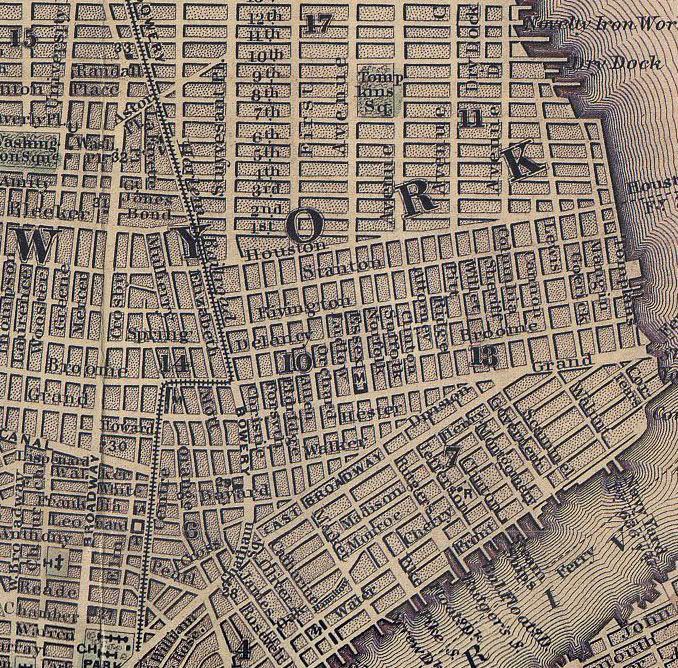
1847 LES Ward Map Section: A Geographic Tool For Locating Blog Posts
Click For A Better View
Deep Thoughts
#1. Annie Dillard talks about her fascination with science and minerals in particular. Then she goes on to details anecdotes concerning various Americans who became obsessed with the possibility of discovering valuable or interesting mineral deposits or rock formations within or close to their home environments. She speaks about men - almost all these scientific minded people are male - who discover veins of coal, copper, bauxite, and so on. She depicts the ordinariness of their fascination and the fact that it tapped into the extraordinary. Like nature had these incredible finds waiting to be unearthed all around. People who could see the worth of what was all around them or, in some cases, beneath them, excavated and found, just beneath the surface of their obsessive preoccupations, depths of riches and fascination. So in exploring the history of KV we go back into what had been the ordinary and find it layered in a criss-cross of historical significance. A transmutation of the lung block, redeemed as a bold social experiment tinged with ambitions as immodest as a revolution and as commonplace as sandwiches - ordinary though it may be but still - the most delicious sandwiches of the twentieth century. Buried beneath the surface of the KV heritage are connections to so may aspects of our culture and NYC's greatness as to be not only unfathomable but irrefutable. Do you know what I'm saying here?
Son Of Salvatore
FAQ's: Click On Image
KV Honorary Members (And Their Corresponding Sponsors)
Tim Russert-Mark
George Carlin-Allan
Paul Newman-David
Pete Seeger-Bob
John F. Kennedy Jr.-Joe
To be is to do - Plato To do is to be - Socrates Do be do be do - Frank Sinatra
Yes. I was thrown out of the Canal theater a number of Saturdays for rolling on the floor, in the aisles laughing. I think one of the movies that prompted my gaiety was "Psycho" - the shower scene. What can I tell you? I guess I wasn't tuned into the mood. At the time. Also saw many rock and roll movies at the Canal, Elvis films and the Murray the K fests. Saturday I often would go there with Joey Maldonado and his cousins. We would load up on candy by the quarter pound from that obscure bakery that was just around the corner on Madison Street, quarter block from Catherine - around the corner from the Brokowsky's fruit store, Gogol's and the pharmacy on the corner. Next to the newstand. Remember? By the bus stop. See what I'm saying? (In your mind, can you see it?) Bakery had golden and tan tile design but couldn't hold a candle to Savoia. No marble floors either.
guest memorist Howie: the first movie I ever went to was at the Tribune Theatre (near City Hall, now by the site of Pace University), a Disney cartoon 'Lady and the Tramp', also remember going there with Ronnie, David and maybe Paul, think it was '62 to see 'Safe at Home' starring Mickey Mantle and Roger Maris....I saw 'The Time Machine" with David at the Canal theatre in 1960 (academy award to George Pal - special effects), we were so taken by the notion of time travel that we proceeded to go home and build a time machine...somehow we got hold of some wood, nails, rope and wheels..after a couple of days the time machine started to take shape although it looked remarkably like a pretty decent scooter so we decided it needed a safe haven and hid it in a pit on Monroe St...one that we were able to climb...on the third day the time machine was stolen from the pit...we never saw it again...probably in the year 3000 by now..
guest memorist Neal Hellman on BLT's (the non Ref Luncheonette variety) A great B.L.T. is a complex eatable symphony. One in which all the parts maintain their individuality, yet at the same time, surrender their tasty nuances in the true spirit of gastronomic gestalt and dwell as one.This equinox I choose Sumano's Bakery Ciabatta bread. Though I was skeptical about it's naked, pale texture, I felt it would toast up well and its many crevices would add some fun places for the mayo to go.With the mayonnaise choice I have to stay with tradition and of course go with Hellmann's though for some reason it's known west of the Mississippi as “best foods”. Please do not waste my time with this hippie safflower oil concoction or some other type of healthy alternative. For when it comes to mayonnaise for my Ultimate B.L.T. there is no east or west, there is only Hellmann's…. case closed. My ingredients are now all together, but the intense work has just begun. For now without the correct timing and the correct application of all the ingredients, my ritual could easily plummet into a spiritual abyss. All ingredients must sit together (as one) at room temperature as I invoke the spirit of all the great B.L.T. makers in all the luncheonettes in the greater metropolitan area of New York. I heat my cast iron skillet (using a Teflon pan would be heresy) to a comfortable medium heat. I lay the bacon down 4 strips per sandwich and as I do the strips greet the metal with a friendly sizzle “hello”. As they are slowly cooking I cut the tomato's, neither too thin or too thick and lay them down ever so gently on a plate to await their glorious marriage. The lettuce has been carefully washed and spun with all traces of ribs removed. The mayonnaise jar is open and waiting to join this eatable canvass. Once the bacon is turned the toast swings into action. It has to be brown all the way but with no traces of crusty darkness.As the toast is finishing I remove the bacon and pat it down with a paper towel. Now it's time to assemble my edible equinox creation. Mayo on both pieces of toast, then the tomato's and I prefer the lettuce between the tomato and the bacon, for I feel it's texturally more secure that way. I don't want an immediate confluence of tomato and bacon; I like the lettuce to work as a buffer. Here's where many folks really go askew: they push the bread down so hard that the bacon is crushed. No, no a thousand times no. One must gently, ever so gently caress the concoction together. After which one will take a sharp knife and make a diagonal cut. A straight cut is what people from small towns in Nebraska and Ohio do. Those of use who are members of the B.L.T. illuminati always make a diagonal cut. The masterpiece will then be placed on a plate and then consumed in a way as to enjoy the warm and crunchy (yet still pliable) bacon, the exploding sensation of a dry farm Molino tomato, the juicy lettuce, the condiment-ing mayonnaise and ever so supportive bread. My first Ultimate B.L.T. goes to my neighbor for her birthday. With that offering I realize now that I am truly invoking the Japanese Equinox celebration of Hign-e. Yes with my ultimate B.L.T. offering I am illustrating the six perfections: perseverance, effort, meditation, wisdom, observance of precepts, and giving.
KV Journeyman
11/13/07: Even standing in the cold rain, the Baroque facades on these buildings are fantastic. Brussels has some of the best architecture in the world, all types, all styles. Standing in the middle of the main town square one is overwhelmed with the magnitude of detail and size.
11/14/07: I am currently in Brugge in NW Belgium. It appears to be a quiet town with all old and small buildings, perhaps pre-Victorian, with a network of canals similar, but without the gondolas and singing rip-off-the-tourist gondoleers. I'll learn more tomorrow as we get a tour prior to dinner.
12/5/07: Just finished a fresh grilled tilapia sandwich while sitting outside looking at the expansive white sands of Clearwater Beach and the far reaches of the Gulf of Mexico, realizing I am flying back to DC tomorrow morning into the remnants of the latest Alberta Clipper to wreak havoc on the Nation's Capitol. Enough to upset the strongest and staunchest among us.
Time Magazine: 10/15/1934
Smack in the middle of the slum-mulligan of Manhattan's lower East Side two barefaced, rectangular apartments rear their bricks twelve stories into the air. Jointly christened Knickerbocker Village, they cover four whole city blocks. Between the two units is a concrete playground, and within each will be a garden. Each of the 1,593 apartments has wooden parquet floors, electric refrigeration, tiled bathrooms, outside windows. The elevators are self-operating. Rentals range from $22.50 for 2½ rooms on the ground floor to $87.50 for a 5½-room penthouse. Average is $12.50 a room. Knickerbocker Village will cost about $9,000,000, and with the exception of Rockefeller Center is the only large structure which Manhattanites have noticed abuilding these last two years. Last week it was ready for occupancy.
Because Knickerbocker Village is also Manhattan's first experiment in government-financed, low-cost housing, RFC's Chairman Jesse H. Jones, East-Sider Alfred E. Smith, many a minor wig gathered in its banner-decked playground to mark the day. Said Al Smith: "I was tempted to swap the Empire State Building." Chairman Jones thumped the tub of slum clearance. Informed that the first of the two units was already 95% rented, while the second unit (to be opened Dec. 1) was 50% rented, he waved an expansive hand at the holiday bunting, declared: "I know of no ... safer investment for public funds than to clear about 500 acres of your slums."*
Whether or not Knickerbocker Village was a fitting inspiration for such official rejoicing was last week a red hot sociological question.
In 1929 Realtor Fred Fillmore French began buying land on the lower East Side. By swearing his 42 brokers to secrecy and using dummy corporations, he managed to get some 15 acres for $5,000,000. Then in 1931 he announced a grandiose scheme for the erection of a $50,000,000 development for junior Wall Street executives. At this point he found that he could not get credit. At the same time Fred F. French Operators, Inc. began passing its dividends on $14,000,000 of preferred stock. The project remained only a scheme with a staggering upkeep in land taxes.
When Congress authorized the RFC to make loans on slum clearance projects, Realtor French picked out the worst block in his holdings and ecstatically presented it to Mr. Jones as a worthy subject for clearance. His choice was "Lung Block," so called because of its high tuberculosis mortality rate. On it lived 650 families. In its backyards were seven jakes. On this fester Mr. French proposed to build a low-cost housing project. Mr. Jones agreed to do business, and RFC lent 85% of the required $9,000.000.
Average cost of "Lung Block" to Knickerbocker Village was high: $3,116,000, or $14 per square foot. The tax assessment was therefore reduced by two-thirds to bring the monthly room rental down to the $12.50 stipulated by the RFC. Because the average rental on "Lung Block" had been about $5 a room, Knickerbocker Village remained a low-cost housing project only in the minds of the white collar workers, who proceeded to fill it.





 Posts
Posts