dunshee-158
from a great book As You Pass By, by Kenneth Holcomb Dunshee
Showing posts with label chatham square. Show all posts
Showing posts with label chatham square. Show all posts
Tuesday, April 6, 2010


Monday, March 22, 2010
Chatham Square: 1905

Some of the informed comments that accompany the picture
1905 was the first year for racing at Belmont Park.
Chatham Square in the Bowery was the heart NYC's popular theater and public amusements in the late 1800s. It got rougher and raunchier, and for most of 20th century was home to derelicts, drunkards, served by many bars and flophouses and famous missions, to feed and save the men that haunted its shadows.
Proctor's 58th Street was a vaudeville house, one of several Proctor Theaters, later part of the Keith's Circuit, then RKO.
I get a kick out of the lion heads gracing the smokestack.
Notice that the horses are running clockwise in the illustration, the way they still run in Europe. Belmont ran clockwise until 1921, when they changed course to counterclockwise, which is the direction all horse racing in the United States is run. The Belmont Stakes was already 38 years old when the new Belmont Park opened to great fanfare in 1905, and is the oldest of the Triple Crown races, inaugurated in 1867, 8 years before the Kentucky Derby. Over a hundred years later a day at Belmont is still a great way to while away the afternoon under the beautiful trees.
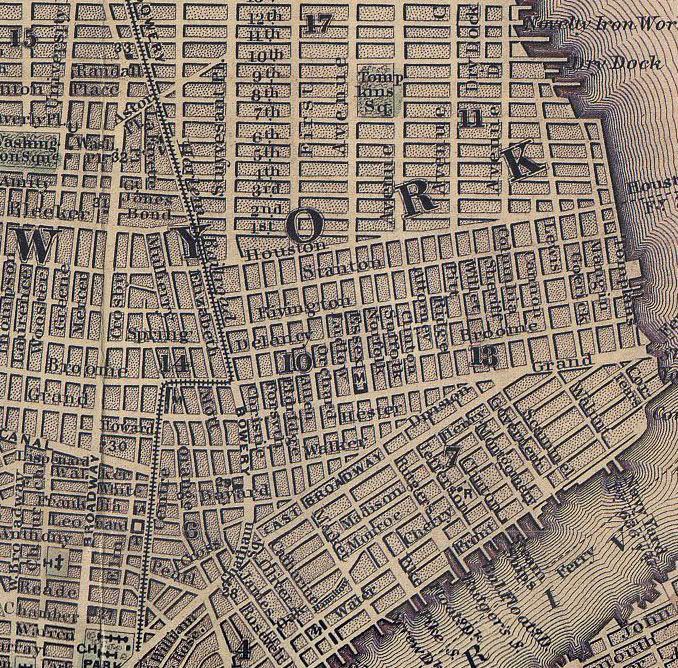
Check out Google Maps street view for Chatham Square. You will be astounded at how many of the buildings are still there. Interesting to note is that even in this picture, many of the buildings look old. I wonder how old some of these "high rises" were in 1905. I have to believe they were already 30 years old, minimum, at the time of this photograph. Also, for you non-New Yorkers, this area is at the edge of Chinatown today. No sign of it in 1905
Saturday, March 20, 2010
Saturday, October 10, 2009
Koster & Bial's Concert Hall: 200 Worth Street, 1892
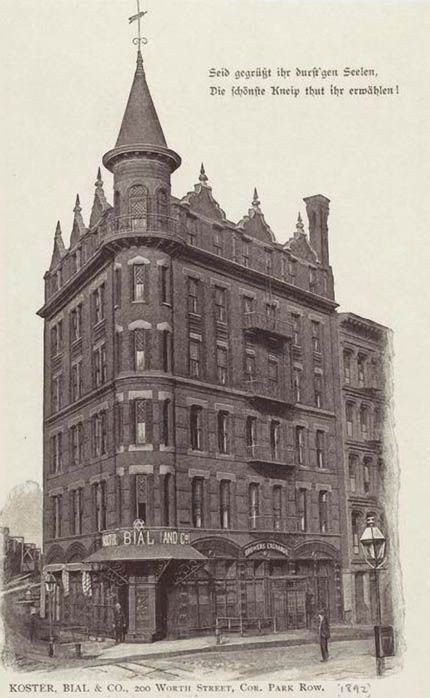 On the site of the Corn Exchange from the previous post. About Koster and Bial from the 14 to 42 Street site
Koster & Bial were both born in Germany in the 1840s and immigrated to the US in the early 1860s. The two men met, apparently for the first time, in 1869 when Koster hired Bial to work for him in his restaurant at Park Row and Worth St. A year later Bial and Koster became partners in a restaurant on the East Side. Soon afterward they opened other restaurants in the area. In 1873 they entered the beer-bottling business, and in 1875 they opened a restaurant in the Tribune Building near City Hall. Their music hall enterprises began in 1879.
from wikipedia
Koster and Bial's Music Hall was an important vaudeville theatre in New York, famous in cinema history as the site of the first public exhibition of the Vitascope on April 23, 1896. It was located at Broadway and Thirty-Fourth Street, where Macy's flagship store now stands.
Although primarily remembered now as the birthplace of the movies as we know them, both it and its predecessor, Koster and Bial's Concert Hall, were major vaudeville venues and an important part of the New York theatrical scene.
Koster and Bial's Music Hall was the successor to Koster and Bial's Concert Hall. That earlier establishment was located on 23rd Street. At that location, Koster and Bial had taken over Bryant's Opera House, a venue for minstrel shows. They offered food and drink along with vaudeville, circumventing a law against serving alcohol in theatres by replacing the curtain with a folding fan.
The last Koster and Bial's Music Hall originated when they moved uptown into the former Manhattan Opera House, a huge theatre built in Herald Square in 1892 by Oscar Hammerstein I in pursuit of his passion for grand opera. Quickly running into financial problems, Hammerstein decided to convert his theatre to a vaudeville format. He offered Koster and Bial a partnership under which he would manage the entertainment and they would manage the food. The new Koster and Bial's Music Hall opened on August 28, 1893 and proved to be very successful. Hammerstein however quarreled with his partners and lawsuits ensued. Ultimately Koster and Bial bought out Hammerstein and operated the theater solely on their own. The theatre finally closed in 1901 and was demolished to make way for Macy's Department Store.
The Corn Exchange: 1919

Prior to 1919 the Corn Exchange, seen in the previous photo was the site of one story shanty music hall and then David Rothschild's Cafe and a Brewer's Academy.
Friday, June 26, 2009
Elizabeth Jennings At Chatham Square
from black history every month
from fox sports network's series of vignettes that chronicle compelling stories of African Americans
from the The New York State Council for the Social StudiesOn July 14, 1854, Elizabeth Jennings and her friend, Sarah Adams, walked to the corner of Pearl and Chatham streets in lower Manhattan. They planned to take a horse-drawn street car along Third Avenue to church..
Instead, they entered into the pages of history. Elizabeth was a young African American woman who taught black children in New York City’s racially segregated public schools. Her father Thomas L. Jennings was a leading local abolitionist. An account of what happened to Elizabeth was presented on July 17 at a protest meeting at the First Colored Congregational Church in New York City. Elizabeth wrote the statement but did not speak because she was recovering from injuries. Peter Ewell, the meeting’s secretary, read Elizabeth’s testimony to the audience. The group passed resolutions protesting what happened to Elizabeth and sent copies to the New York Tribune and Frederick Douglass’ Paper. Both newspapers printed Elizabeth’s account and the resolutions of protest. At the meeting at the First Colored Congregational Church, a Black Legal Rights Association was formed to investigate possible legal action. Elizabeth Jennings decided to sue the street car company. She was represented in court by a young white attorney named Chester A. Arthur, who later became a military officer during the Civil War and a politician. In 1880, Chester A. Arthur was elected Vice-President of the United States and he became president when James Garfield was murdered in 1881. The court case was successful. The judge instructed the jury that transit companies had to respect the rights all respectable people and the jury awarded Elizabeth Jennings money for damages. While she had asked for $500 in her complaint, some members of the jury resisted granting such a large amount because she was “colored.” In the end, Elizabeth Jennings received $225 plus an additional ten percent for legal expenses.

Sunday, May 31, 2009

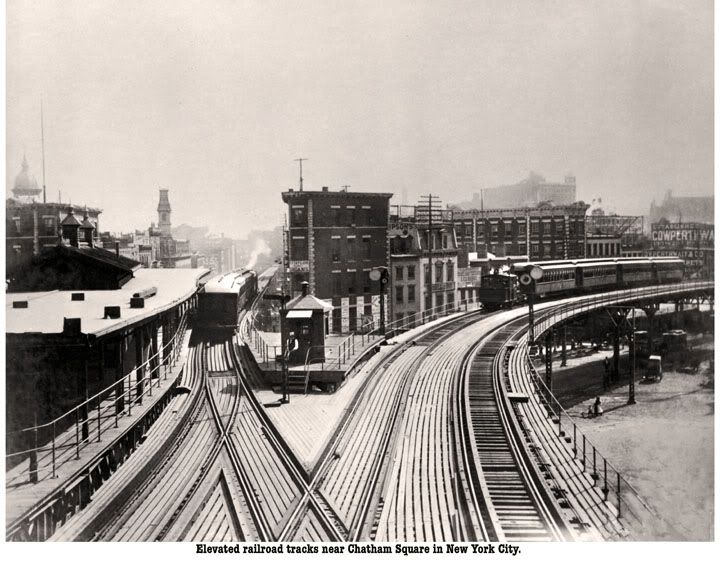
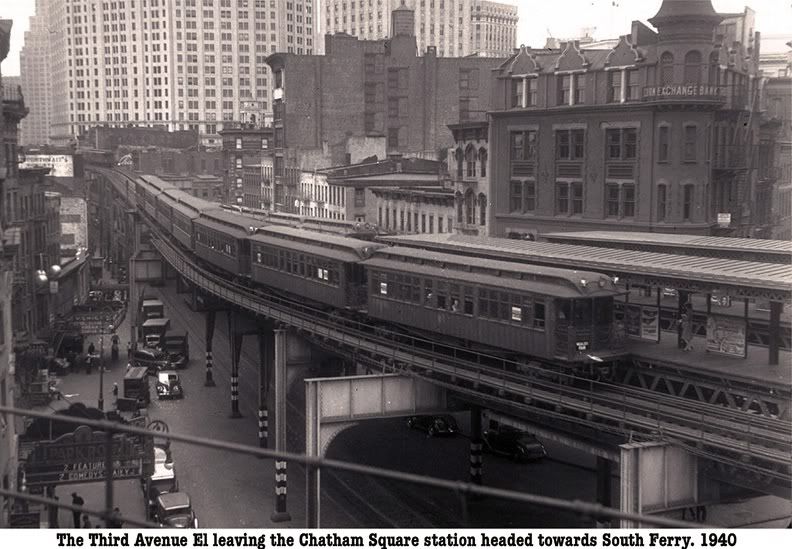
The Debate Over The El 1950
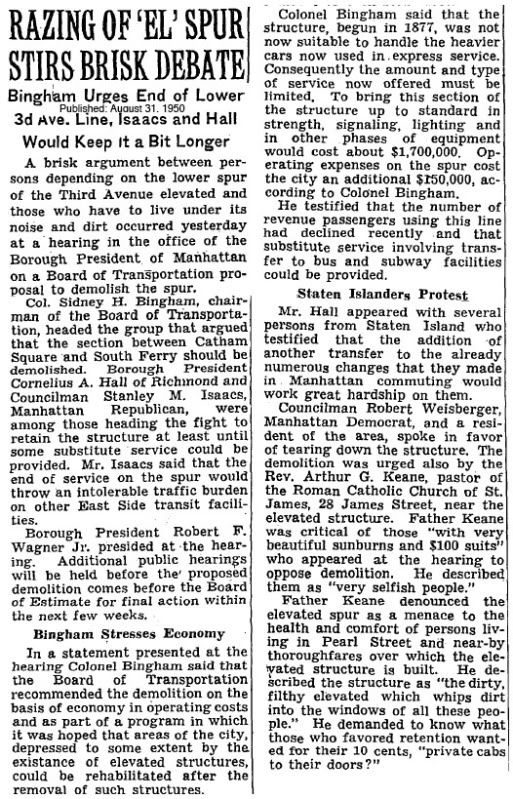
Looks like our Councilman Robert Weisberger, who also lived in KV came down on the correct side of this issue which pitted the upper class that enjoyed the convenience of traveling to Wall Street against the working classes that had the noisy and dirty trains cutting through their neighborhood.
Monday, November 17, 2008
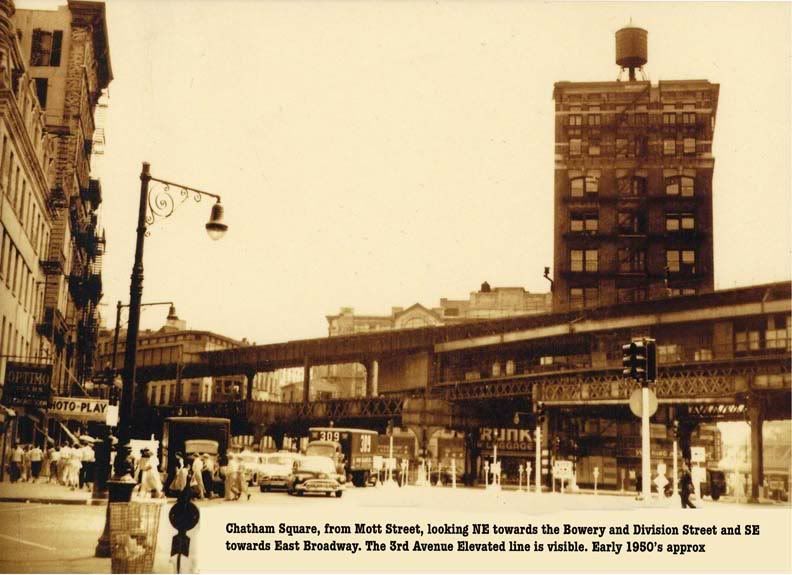
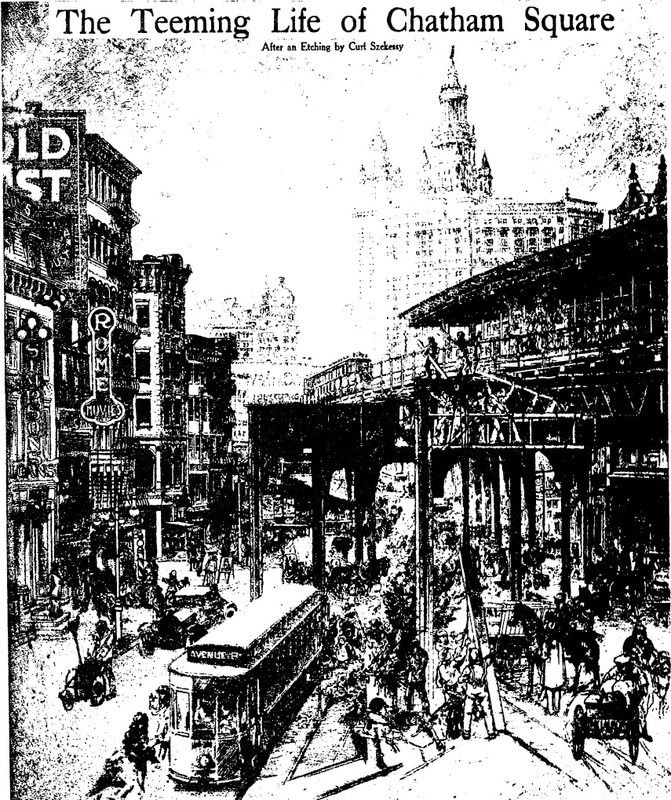
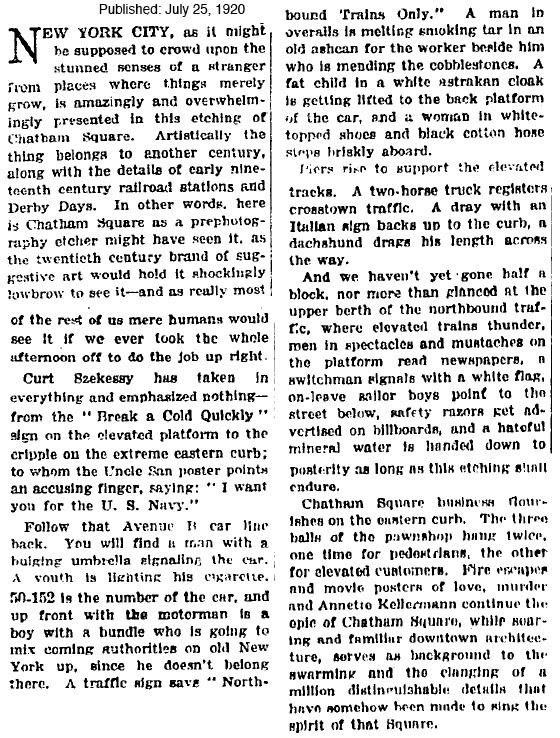
Chatham Square
Since the images in the previous slide show are hard to view, I posted them in this pdf version
Chatham Square
Chatham Square
Get your own at Scribd or explore others:
Thursday, November 13, 2008
Subscribe to:
Posts (Atom)


 Posts
Posts