Showing posts with label the 50's. Show all posts
Showing posts with label the 50's. Show all posts
Thursday, May 13, 2010
A Room With A View: KV In The 50's


Sunday, October 18, 2009
Life Of Riley
from the youtube description
Babs School Election- First Broadcast January 2, 1953
The very first episode of the show. Chester Riley tries to run his daughter Babs school election with disastrous results.
KV Synchronicity: The People's Choice
The loyal KV Yankee Fan Group have been burning the email lanes with updates of their teams' progress. An offshoot was an interesting story of Joe's encounter with Jackie Cooper and the chairman of the board. That led to a story about the old lime house restaurant For me it brought back memories of a tv sit-com of the KV baby boomers.
Tuesday, September 15, 2009
That Wonderful Year: 1959
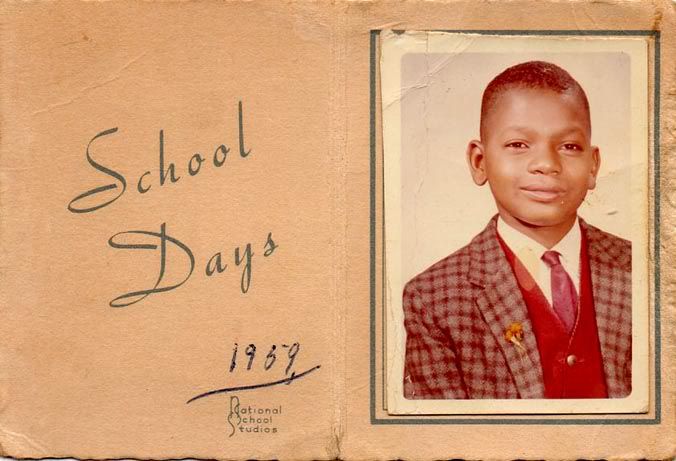
Above Donald Singletary sent along his PS 177 photo from 1959
Below a new book about the year that the author considers a turning point
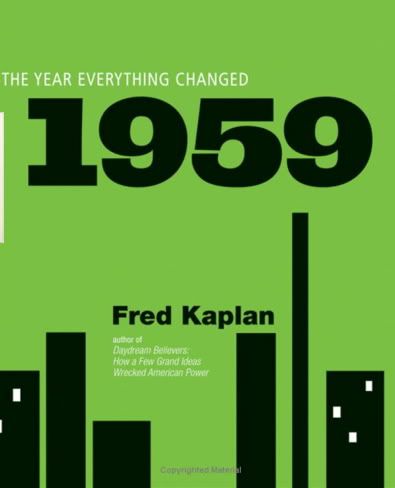 from amazon, an excerpt from reviews
Slate columnist Kaplan takes a contrarian view to the common wisdom that the '60s were the source of the cultural shift from pre-WWII traditions to the individualistic, question-authority world of today. In Kaplan's view, the watershed year in this transformation is 1959. He delves into that year's cultural and political scene, citing Miles Davis and his revolutionary album Kind of Blue; William Burroughs and his equally revolutionary novel, Naked Lunch; and the opening of Frank Lloyd Wright's radically designed Guggenheim Museum in New York City as examples of fundamental breaks with past conventions. Kaplan's case is cemented by three 1959 events that he convincingly argues were catalysts for paradigm changes in relationships between men and women (the pharmaceutical company Searle sought FDA approval for the birth control pill), in how citizens view their government (the first American soldiers were killed in Vietnam) and in communications and information transfer (the microchip was introduced to the world). Kaplan doesn't quite convince that 1959 was “the year when the shockwaves of the new ripped the seams of daily life,” but his writing is lively and filled with often funny anecdotes as he examines some key elements in the transition from the mid to late 20th century. 16 b&w photos. (July) (Publishers Weekly, May 4, 2009)
Tuesday, September 8, 2009
Those Were The Days My Friend: August 4, 1956
from the description:
8mm footage of my family in Detroit for a Yankees/Tigers game. The game was played at Briggs Stadium on 8/4/56. There is game footage as well as clips of Mickey Mantle and Yogi Berra before the game. There is footage of Mickey hitting 2 home runs. This footage is a family treasure. Enjoy.
Thursday, September 3, 2009
How Are You Fixed For Blades?
from the 1950's
Look sharp, feel sharp, be sharp …
And listen mister!
How are you fixed for blades? (do you have many?)
How are you fixed for blades? (you’d better check!)
Please make sure you have enough —
’Cos a worn-out blade makes shaving mighty tough!
How are you fixed for blades? (you’d better look!)
Gillette Blue blades are neat!
Friday, August 28, 2009
A Ted Kennedy Tribute
An Irish lullaby suggested by one KVer in his honor. JFK was mentioned on the KV blog back in October 2008, in regard to his visit to the LES back in 1960 Also John Jr.'s softball playing in Coleman Oval in the late 1980's and early 90's, was mentioned in November of 2008.
As a personal aside from an early baby boomer, I never could understand the appeal of Patti Page. Also not all KVers agree on the legacy of Ted Kennedy. For some pros and cons I'll direct you here
Over in Killarney,
Many years ago,
Me mother sang a song to me
In tones so sweet and low.
Just a simple little ditty,
In her good old Irish way,
And I'd give the world if she could sing
That song to me this day.
Too-ra-loo-ra-loo-ral,
Too-ra-loo-ra-li,
Too-ra-loo-ra-loo-ral,
Hush, now don't you cry!
Too-ra-loo-ra-loo-ral,
Too-ra-loo-ra-li,
Too-ra-loo-ra-loo-ral,
That's an Irish lullaby.
Monday, August 24, 2009
Sixteen Candles
A 2007 performance of Johnny Maestro doing Sixteen Candles
The song peaked at number two on the Billboard Hot 100 charts and number four on the R&B charts in 1958
Happy birthday, happy birthday, baby
Oh, I love you so
Sixteen candles make a lovely light
But not as bright as your eyes tonight
(as your eyes tonight) (Oh)
Blow out the candles, make your wish come true
For I'll be wishing that you love me, too
(that you love me, too)
You're only sixteen (sixteen)
But you're my teenage queen (you're my queen)
You're the prettiest, loveliest girl I've ever seen
(I've ever seen) (OH!)
Sixteen candles in my heart will glow
For ever and ever for I love you so (for I love you so)
You're only sixteen (sixteen)
But you're my teenage queen (you're my queen)
Oh, you're the prettiest, loveliest girl I've ever seen
(I've ever seen) (OH!)
Sixteen candles in my heart will glow
For ever and ever for I love you so
(for I love you so)
For I love you so!!!
Saturday, July 11, 2009
I'm Never Gonna Tell
The flip side of I'm Late
CHORUS
There'll never be anyone else but you for me
Never ever be, just couldn't be, anyone else but you
If I could take my pick of all the girls I've ever known
Then I'd come and pick you out to be my very own
CHORUS
A heart that's true and longs for you is all I have to give
All my love belongs to you as long as I may live
CHORUS
BRIDGE: I never will forget the way you kiss me
And when we're not together, I wonder if you've missed me
'cause I hope and pray the day will come when you belong to me
Then I'm gonna prove to you how true my love can be
CHORUS
Mm, mm, mm, mm
Mm, mm, mm
FADE
Mm, mm, mm
It's Late
It's late (it's late)
We gotta get on home
It's late (it's late)
We've been gone too long
Too bad (too bad)
We shoulda checked our time
Can't phone (can't phone)
We done spent ev'ry dime
It's late (it's late)
We're 'bout to run outta gas
It's late (it's late)
We gotta get home fast
Can't speed (can't speed)
We're in a slow-down zone
Baby, look at that clock, why can't it be wrong?
If we coulda left home at a quarter to nine
Woulda had fun and plenty of time
We got started just a little bit late
Hope this won't be our last date
Look up (look up)
Is that the moon we see?
Can't be (can't be)
Looks like the sun to me
It's late (it's late)
I hate to face your Dad
Too bad (too bad)
I know he's gonna be mad
It's late (it's late)
We gotta get on home
It's late (it's late)
We've been gone too long
(Instrumental)
Look up (look up)
Is that the moon we see?
Can't be (can't be)
Looks like the sun to me
It's late (it's late)
I hate to face your Dad
Too bad (too bad)
I know he's gonna be mad
It's late (it's late)
We gotta get on home
It's late (it's late)
We've been gone too long
Sunday, June 28, 2009
Victory At Sea
I watched this show all time with my father. Richard Rodgers composed the music for the series. It was his 107th birthday today.
Victory at Sea was a documentary TV series about naval warfare during World War II that was originally aired by NBC in the USA in 26 half-hour segments on Sunday afternoons, starting October 26, 1952 and ending May 3, 1953. The series, which won an Emmy in 1954 as best public affairs program, played a major role in establishing historic documentaries as a viable television genre. When it first aired, NBC thought it so important that it had no commercial breaks.
The project was conceived by Henry Salomon, who, while in the U.S. Navy during World War II, was a research assistant to historian Samuel Eliot Morison. Morison was then writing the 15-volume History of United States Naval Operations in World War II. During this period, Salomon learned of the large amounts of film that the warring navies had compiled. Salomon left the Navy in 1948 and eventually discussed his idea of a documentary series with one of his Harvard classmates, Robert Sarnoff, a rising executive at NBC television and the son of David Sarnoff, the chairman of RCA (then the owner of NBC).
NBC approved the project in 1951, with Salomon as producer and a budget of $500,000 (large for that era). His team, made up largely of newsreel veterans, scoured naval archives around the world, and received complete cooperation from the U.S. Navy, which recognized the publicity value. Salomon's team compiled 60 million feet (18,300 km) of film, which was edited to about 61,000 feet for broadcast.
After the original run, NBC syndicated it to local stations, where it proved successful financially through the mid-1960s. NBC also marketed the series overseas; by 1964, it had aired in 40 foreign markets. NBC created a feature-length motion picture condensation and made a distribution deal with United Artists; the film debuted in mid-1954; NBC aired the movie twice in the 1960s.
Salomon also signed Richard Rodgers, fresh off several hit Broadway musicals, to compose the musical score. Rodgers contributed 12 "themes"- short piano compositions a minute or two in length; these may be examined in the Rodgers Collection at the Library of Congress.[citation needed] Robert Russell Bennett did the scoring, transforming Rodgers's themes to fit a variety of moods, and composing much more original material than Rodgers, as may be observed in Bennett's inked scores, microfilmed at the Library of Congress.[citation needed] Nonetheless, Bennett received credit only for arranging the score and conducting NBC Symphony Orchestra members on the soundtrack recording sessions, and many writers still refer erroneously to "Rodgers's thirteen-hour score."[citation needed] Rodgers recorded excerpts from the music with the New York Philharmonic Orchestra for Columbia Records, but it was Bennett who made the more familiar RCA recordings with the Symphony of the Air, an orchestra created in the fall of 1954 from former NBC Symphony members, identified on the albums as the RCA Victor Symphony Orchestra.
The movements and approximate timings in the RCA Symphony performance are as follows; 1. The Song of the High Seas - 5:03 2. The Pacific Boils Over - 5:45 3. Fire on the Waters - 5:58 4. Guadalcanal March - 3:08 5. Pelelieu - 3:43 6. Theme of the Fast Carriers - 6:49 7. Hard Work and Horseplay - 3:44 8. Mare Nostrum - 4:31 9. Beneath the Southern Cross - 4:06 10.Mediterranean Mosaic - 5:03 11.Allies on the March - 5:26 12.D-Day - 5:54 13.The Sound of Victory - 6:15 14.Victory at Sea - 6:11
Saturday, June 27, 2009
The Kirby Stone 4
In 1958, The Kirby Stone Four released their biggest hit, "Baubles, Bangles And Beads", on the Columbia label. This song, originally from the musical 'Kismet' earned a Grammy Award nomination, and was so closely associated with the group that they re-recorded it on two other occasions - firstly in 1964 on the Warner Bros Records label, and again in 1966, with The Tokens on the BT Puppy Records label, under the name 'The U.S. Double Quartet'.
The Kirby Stone Four were an American vocal ensemble popular in the 1950s and early 1960s.. Kirby Stone founded the group in the years after World War II and began playing clubs in the New York area. They won slots on local television, including The Ed Sullivan Show, and soon after signed to Columbia Records. Several LPs followed, including Baubles, Bangles and Beads; their version of the song "Baubles, Bangles and Beads" became a hit in the U.S. in 1958, reaching #25 on the Billboard Hot 100. The song was also nominated for a Grammy award. On the strength of the single, the album reached #13 on the Billboard 200.
Among the backing musicians that played on Kirby Stone Four albums were Jimmy Carroll's orchestra, the Kai Winding Quartet, Alvino Rey, Shelly Manne, and Al Klink. Their style, which melded swing jazz, vocalese, and early rock & roll was referred to as "The Go Sound". They made many appearances on U.S. television shows such as The Judy Garland Show into the mid-1960s. By that time their sound had faded from popularity, and in 1966 they recorded a rock & roll album with The Tokens as the United States Double Quartet. During this time Stone directed several TV variety shows.
btw I think I found Herbert Stone in the 1920 census. Unfortunately he can't qualify as a who's almost who. He was living up in East Harlem.
Sunday, June 21, 2009
Duck And Cover
I'm sure the dog tags was related to the fear of nuclear war in the 50's and 60's
Duck and Cover was a suggested method of personal protection against the effects of a nuclear weapon which the United States government taught to generations of United States school children from the late 1940s into the 1980s. This was supposed to protect them in the event of an unexpected nuclear attack which, they were told, could come at any time without warning. Immediately after they saw a flash they had to stop what they were doing and get on the ground under some cover—such as a table, or at least next to a wall—and assume the fetal position, lying face-down and covering their heads with their hands. Similar instructions were given in 1964 in the United Kingdom by Civil Defence Information Bulletin No. 5. and, in the 1980s, by the Protect and Survive series.
Proponents argued that thousands could be saved through this precaution, without which people would instead run to windows to find the source of the big flash. During this time a shock wave would cause a glass implosion, shredding onlookers.
Similarly, "Drop, Cover and Hold On" is taught in areas prone to earthquakes. Schools in some tornado-prone areas of the United States also practice tornado drills that involve children squatting and covering the backs of their heads.
The United States' monopoly on nuclear weapons was broken in 1949 when the Soviet Union tested its first nuclear device, and many in the government and public perceived that the United States was more vulnerable than it had ever been before. Duck-and-cover exercises quickly became a part of Civil Defense drills that every American citizen, from children to the elderly, practiced to be ready in the event of nuclear war. In 1950, during the first big Civil Defense push of the Cold War; the movie Duck and Cover was produced (by the Federal Civil Defense Administration) for school showings in 1951. At the time, it was believed the main dangers of a Hiroshima-type nuclear blast were from heat and blast damage: radioactive fallout itself was not clearly identified until 1954, after the Castle Bravo nuclear-weapon test in the Marshall Islands caused sickness and death in Japanese fishermen on the Lucky Dragon fishing vessel.
The advice to "duck and cover" holds well in many situations where structural destabilization or debris may be expected, such as during an earthquake or tornado. At a sufficient distance from a nuclear explosion, the shock wave would produce similar results and ducking and covering would perhaps prove adequate. It would protect the face (particularly the eyes) from the intense heat of a detonation. It would also offer some protection from flying glass and other small, but dangerous, debris. However, within a considerable radius—depending on the explosion's height and yield—ducking and covering would offer negligible protection against the intense heat, shock waves, and radiation following a nuclear explosion. People in this range would have little opportunity to duck and cover before being killed by the blast. The technique offers no protection against fallout. However, the technique assumes that after the initial blast, a person who ducks and covers will move to a more sheltered area. It is a first response only.
In U.S. Army basic training in the 1970s, soldiers were taught to fall immediately down, covering face and hands and using their bodies to shield their weapons from the heat of the blast.
The exercises of civil defense are now seen as having less practical use than psychological use: to keep the danger of nuclear war high on the public mind, while also attempting to assure the American people that something could be done to defend against nuclear attack.
These messages, including children's songs, were used to educate the young public in case of nuclear attack.
Ducking and covering does have certain applications in other, more natural disasters. In states prone to tornadoes, school children are urged to 'duck and cover' against a solid inner wall of a school, if time does not permit seeking better shelter—such as a storm cellar—during a tornado warning. The tactic is also widely practiced in schools in states along the West Coast of the United States, where earthquakes are commonplace. Ducking and covering in either scenario would theoretically afford significant protection from falling or flying debris.
In an earthquake, people are encouraged to "drop, cover, and hold on": to get underneath a piece of furniture, cover their heads and hold onto the furniture. This advice also encourages people not to run out of a shaking building, because a large majority of earthquake injuries are due to broken bones from people falling and tripping during shaking. While it is unlikely that "drop, cover and hold on" will protect against a building collapse, buildings built in earthquake-prone areas in the United States are usually built to earthquake "Life Safety" codes[citation needed], and a building collapse (even during an earthquake) is rare. "Drop, cover and hold on" may not be appropriate for all locations or building types, but many experts agree it is the appropriate emergency response to an earthquake in the United States.
Sunday, June 14, 2009
From Rags To Riches: Yanks 15 Mets 0
Charted at # 1 in 1953
I know I'd go from rags to riches
If you would only say you care
And though my pocket may be empty
I'd be a millionaire
My clothes may still be torn and tattered
But in my heart I'd be a king
Your love is all that ever mattered
It's everything
So open your arms and you'll open the door
To ev'ry treasure that I'm hopin' for
Hold me and kiss me and tell me you're mine ever more
Must I forever be a beggar
Whose golden dreams will not come true?
Or will I go from rags to riches?
My fate is up to you
Must I forever be a beggar
Whose golden dreams will not come true?
Or will I go from rags to riches?
My fate is up to you
Wednesday, June 3, 2009
McGuire Sisters
PBS was fund raising (isn't everybody these days)and they had this 50's special on. Contrast the music swing era with this dreck (mostly, I actually liked the McGuire Sisters) What was I thinking? What was going on? Was it the McCarthy era that made the music so void of character and meaning. No wonder rock and roll, to my chagrin, eventually triumphed.
Subscribe to:
Posts (Atom)


 Posts
Posts