#chalkles handball court: where stickball was played at Coleman Oval pic.twitter.com/wqGlxTNQAw
— kvillage (@kvillage) May 8, 2014
Showing posts with label then and now. Show all posts
Showing posts with label then and now. Show all posts
Friday, May 9, 2014
#chalkles Stickball at the Handball Courts of Coleman Oval


#chalkles 270 Madison Street: Arnold Rothstein 1880 Pt 2
#chalkles A long view of the chalking of Rothstein's 1880 home at 270 Madison St. pic.twitter.com/Ks1VHuPI2q
— kvillage (@kvillage) May 6, 2014#chalkles 270 Madison Street: Arnold Rothstein 1880
#chalkles
Arnold Rothstein's bio mistakenly has him living at 270 Madison Ave. in 1880.
It was here instead pic.twitter.com/bldibeWWY4
— kvillage (@kvillage) May 6, 2014Saturday, November 26, 2011
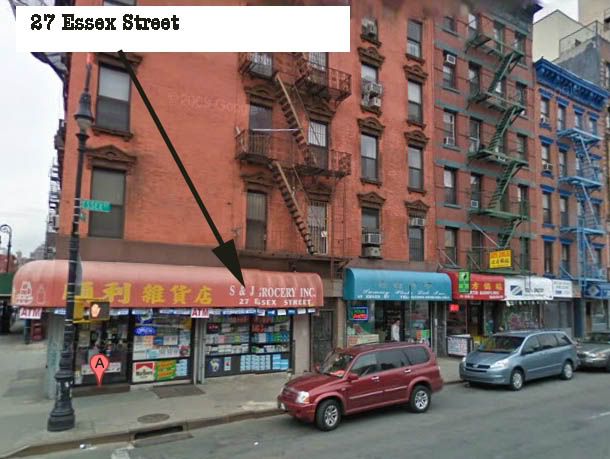
27 Essex Street: Then And Now

An article in the New York Times gives some background. The men demanded that they be able to work during daylight hours, mainly for reasons of safety, and the Sanitation Department, which employed them, refused to grant this demand. A snide letter to the editor gives one person's reaction: The reason for the cleaners' strike Is plain to one who's smart; Like most of us they want to choose Their hours a la carte. The city hired strikebreakers and the work stoppage was soon brought to an end. Times letter writers saw the conflict as a test of power between the Teamsters Union and city government. Some supported the union and some supported government, but most simply wanted their ashes collected and the streets cleared of accumulating trash. LC's photos are from its Bain News Service collection. The garbage trucks of the day consisted of one man, one horse, one cart. The city operated more than 20,000 of them. I appreciate the dignity of the horses shown in the photos: alert, patient, and strong. The images seem to show a police force intent on preserving order without taking sides. In them the faces of strikebreakers show a lack of confidence, maybe just nervousness, maybe fear. The faces of the crowds in the street show everything from anger, to interest in the spectacle unfolding before them, to the well-known New Yorker's seen-it-all aloofness.What I gleamed from David Ziskind's One Thousand Strikes The workers were striking for a 48 hour week and relief from annoying regulations and arbitrary discipline. When any driver was found with garbage containing ashes, even though they may have been mixed by householders, the driver was fined several days pay.
Thursday, April 21, 2011
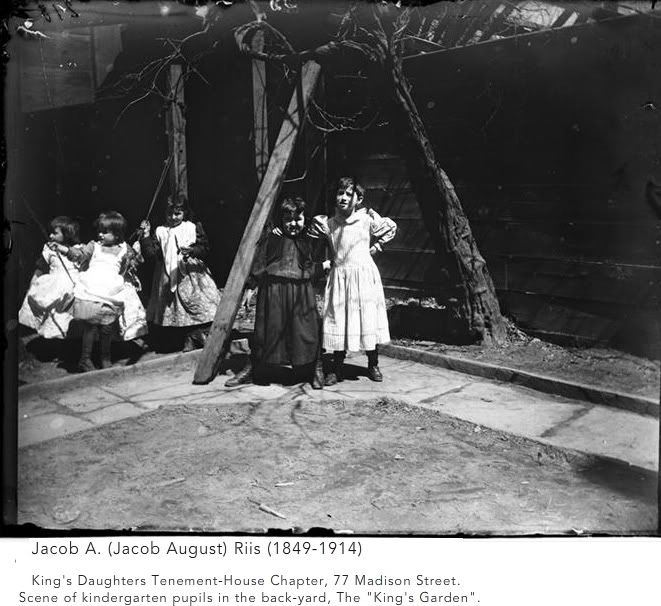
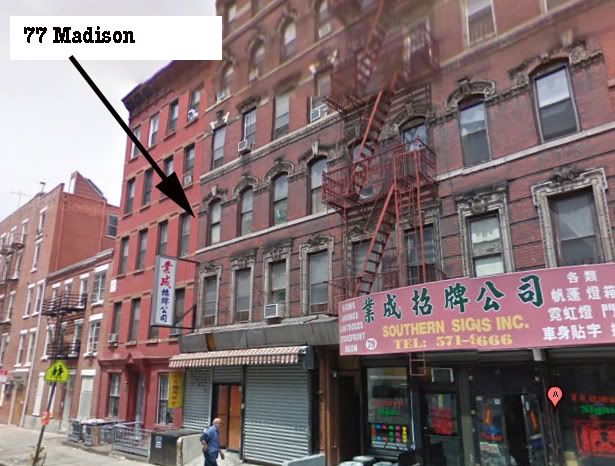
77 Madison Street: Then And Now
106 Madison Street: Then And Now
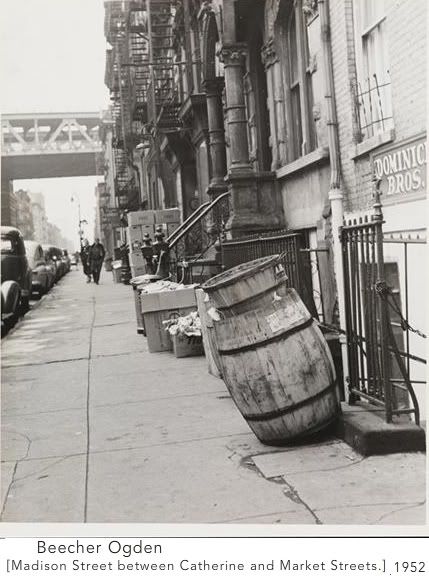
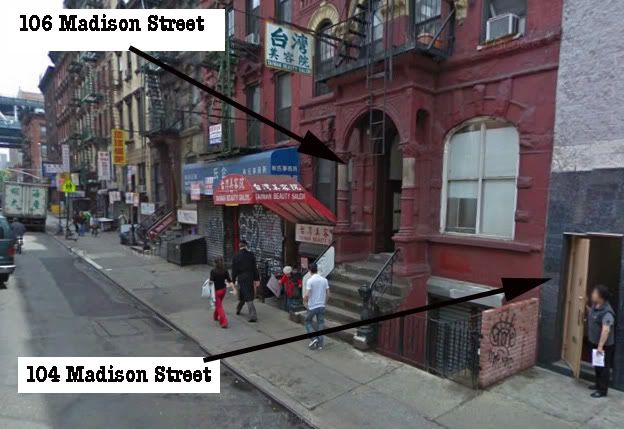
Wednesday, April 20, 2011
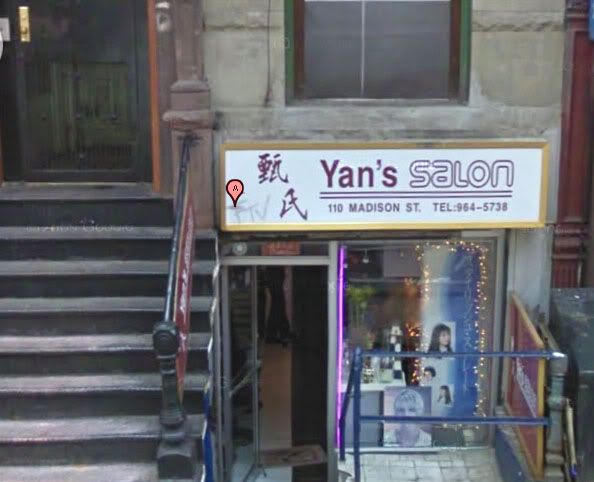
110 Madison Street: Then And Now
the image from the mcny collection


I remember Nunzio and his wife. The seating arrangements in the place were unique. Tables lined on a ledge approx three feet elevated from the floor of the most of the place. And a bar separating the table areas from the floor so you couldn't slide off your seat and kerplunk. The pizza has never been equaled. Forget about fancy schmancy anything. Brick oven, with each brick dismantled from equal parts of Canaan, Zion, Shangri-la and Arcadia. Not to mention Elysium and Utopia.
Son of Seth
I-E-10
Sunday, July 18, 2010
Tuesday, April 13, 2010
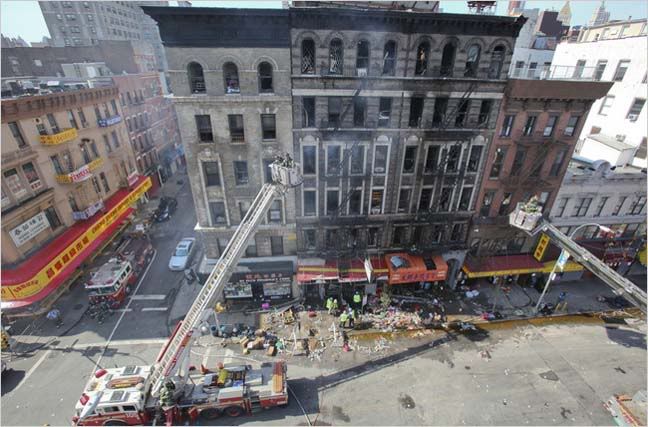
Grand Street Fire: April 11, 2010
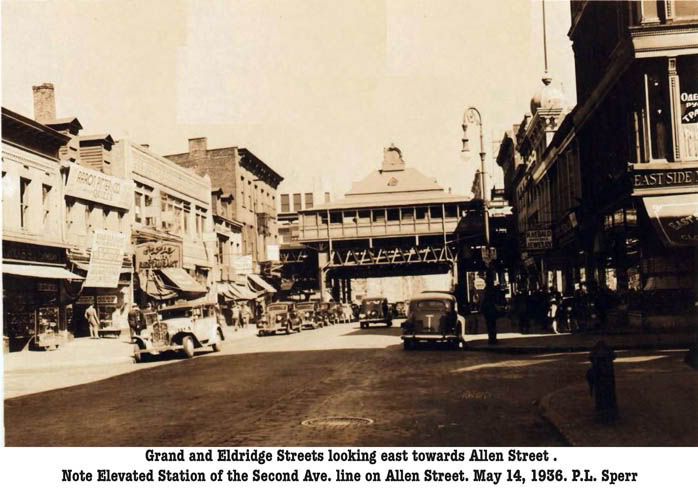
Directly below, looking south at the buildings affected by the fire. Eldridge Street is on the left. That building on the left is the same as the building on the corner right of the 1936 photo. For that photo the view is looking east on Grand


172 Henry Street
172 Henry Street
A lower east side elementary school student asked me to research the building he currently lives in. A while ago I took some photos of some of the interesting architectural elements of 172 Henry and the surrounding buildings.
A lower east side elementary school student asked me to research the building he currently lives in. A while ago I took some photos of some of the interesting architectural elements of 172 Henry and the surrounding buildings.
Monday, April 5, 2010
Saturday, April 3, 2010


Saturday, March 20, 2010
Chinatown Comics: Johny Hiro
In KV we might have read Davy Crockett in 1955, now they might read Johnny Hiro
Johnny Hiro2
about Johnny Hiro from comics worth reading
Johnny Hiro2
about Johnny Hiro from comics worth reading
Johnny is a busboy whose girlfriend Mayumi is kidnapped by Godzilla in the first story in this book. While racing to her rescue, Johnny’s mind flashes back to previous times he’d faced great injury. It’s that playful awareness that makes this more than just another slacker-starring action tale. Nothing happens as expected, but even in the weirdest event, there’s a sense of reality that stems from the core of the characters. Fighting giant monsters is punctuated with concern over getting back the apartment security deposit, for example.
The art is wonderful, thin linework with shading for depth and detail for verisimilitude. It’s active and has a great sense of motion, plus a strong sense of place, capturing the craziness of New York City. A lot of it is a love letter to the city and all that can happen there.
Another story in this volume features Johnny having to steal a lobster to get ahead at work. The chase scenes allow for lots of dynamite action leavened with philosophy, plus occasional commentary by Alton Brown, which tickled me immensely. Johnny and Mayumi also go to the opera, which is interrupted by a samurai attack in the men’s room, and then he’s sent to fix a messed-up order from the fishmonger. Finally, he and Mayumi go to court (only it’s Night Court run by Judge Judy) against their landlord.
Not only did I get amazing cartooning and fun, playful adventure, I even learned some things in terms of how to think about life. You should read this.
Sunday, March 14, 2010
16 Henry Street: Then And Now
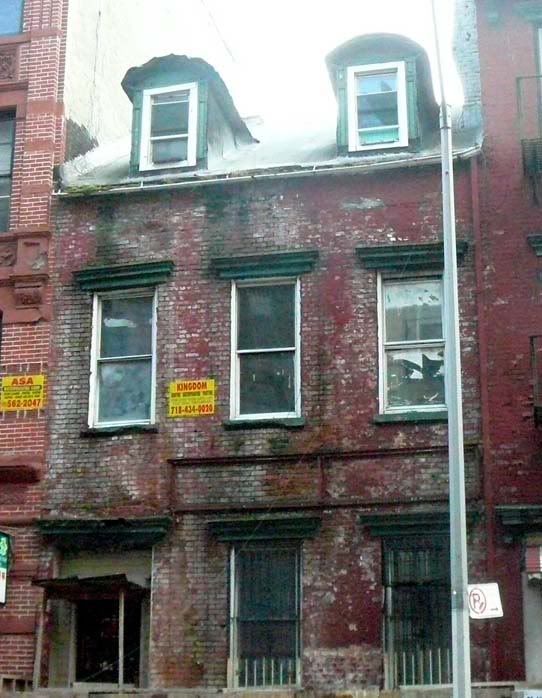

It really should be "then and Then" since 16 Henry Street looks like it hasn't changed.
Correction: The pic of the house is of 24 Henry Street, which, as of May, 2012, is slated to be demolished.
Sunday, February 7, 2010
Saturday, January 30, 2010
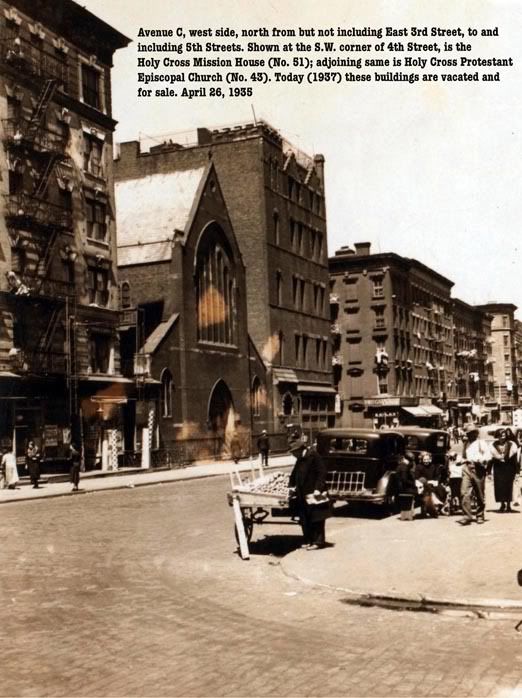
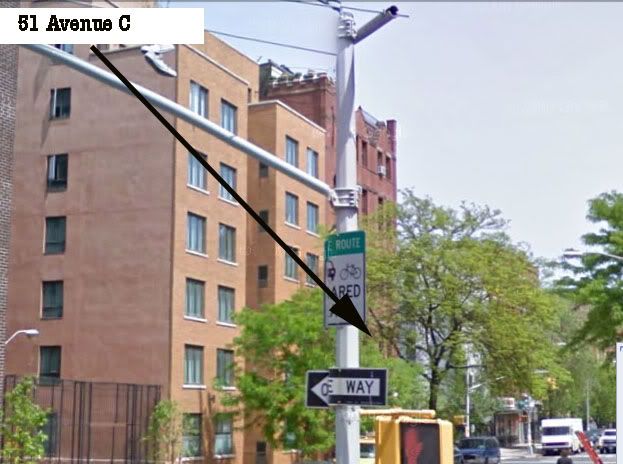
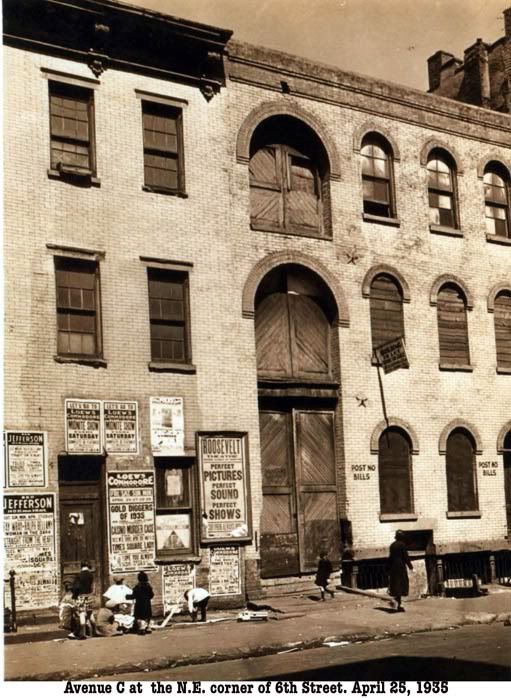
Posted Bills Ave. C and 6th Street: Then And Now
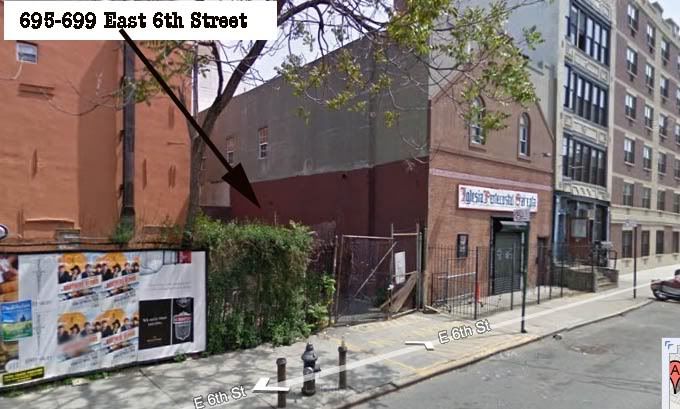
Below, the theaters advertise are the Roosevelt, Jefferson and Commodore
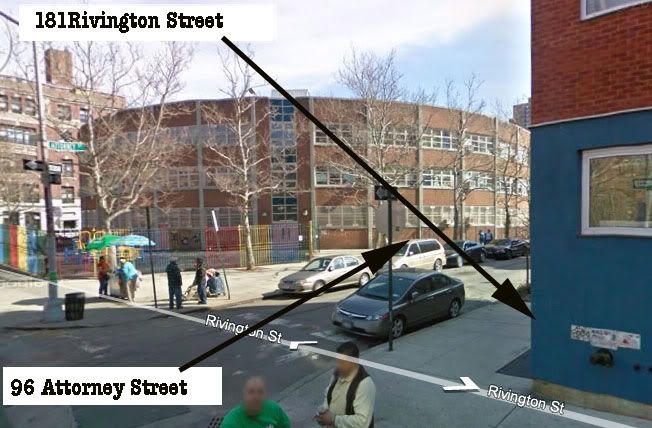
Harry Scheurman: 96 Attorney Street
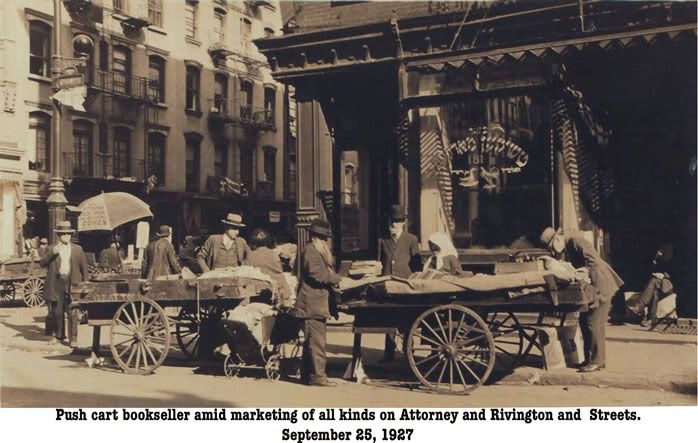
Harry's address was 96 Attorney Street, between Delancey and Rivington. The site is now occupied by PS 142.
above from NYPL Digital Gallery, The New York Public Library
LES Movie Theaters
East Village Now Then 2
I've been hanging out a lot in the 11th and 17th Ward working on local history project for first and second graders. In putting together some then and now photos it's obvious how much movie theaters were so much a part of our lives back in the 1920's and 30's.
I've been hanging out a lot in the 11th and 17th Ward working on local history project for first and second graders. In putting together some then and now photos it's obvious how much movie theaters were so much a part of our lives back in the 1920's and 30's.
Sunday, January 10, 2010
Subscribe to:
Posts (Atom)


 Posts
Posts