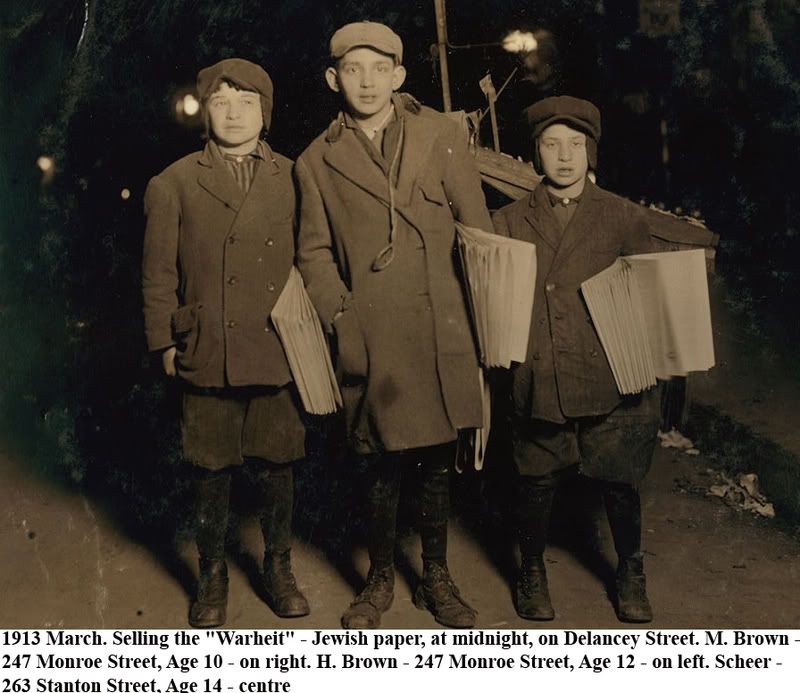
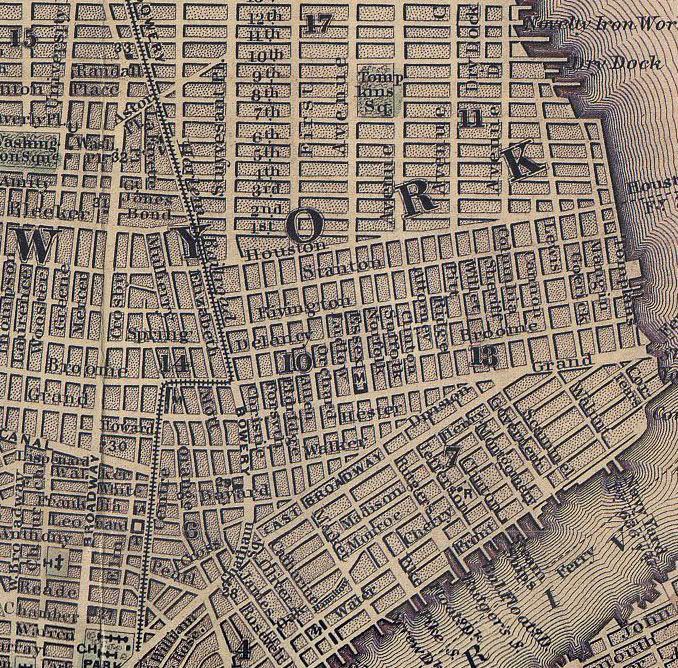
The Brown brothers lived in Ward 7, young Mr. Sheer lived in Ward 13. If they were n Delancey Street, not knowing the exact address, they were either in Ward 10 or Ward 13

Weekend Edition Saturday, March 6, 1999 · Brooke gets a tour of Coney Island from author Kevin Baker. His latest book, Dreamland (Harper Collins), is set in turn of the century New York City and features an extensive cast of characters.
Apaches of New York, By Alfred H. Lewis, Published by Ayer Publishing, 1912
ISBN 0836940881, 9780836940886, 272 pages, Key words and phrases Hip Sing Tongs, Jackeen, Paul Kelly, stuss, Crazy Butch, Pell Street, N_gger, Johnny Rice, Chick Tricker, Lobster Kid, Jack Sirocco, Chinatown, Monk Eastman, youse, white devils,
Slimmy, Tammany Hall, little Bow Kum, Johnny Spanish, Chinaman
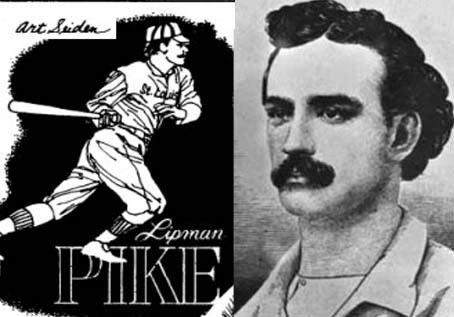
one of the stars of 19th century baseball in the United States. He was the first player to be revealed as a professional (meaning he was paid money to play), as well as the first Jewish ballplayer
Filmmaker Franklin Abrams has put together a great site called Monk 1903 which has just recently gone up. I met with Franklin last week in Manhattan, and besides being a fine fellow, has some very interesting plans in the near future with regards to keeping the spirit of Monk Eastman and New York's early 20th century Jewish criminal history alive and well and continually reaching a new audience.
The site will also serve as the future home for "Our Gotham", a upcoming bi-monthly webisode series depicting Monk Eastman and his loyal cronies, Joseph Brown and Lollie Meyers as they are plucked from life as they know it, 1903 Gotham and are thrown in the modern day reality of what is 2008 New York.
Abram's first short is up now on his site and youtube; an imagined scene between a down and out Eastman, fresh from his release from Blackwells Island Prison, and Big Jack Zelig in early 1912.
As a side note, Big Jack Zelig's great great nephew, Jan Lefkowitz, portrays his infamous great uncle in this scene, and the family resemblance is rather spooky.
The Starker's author Rose Keefe, provides the introduction and background.
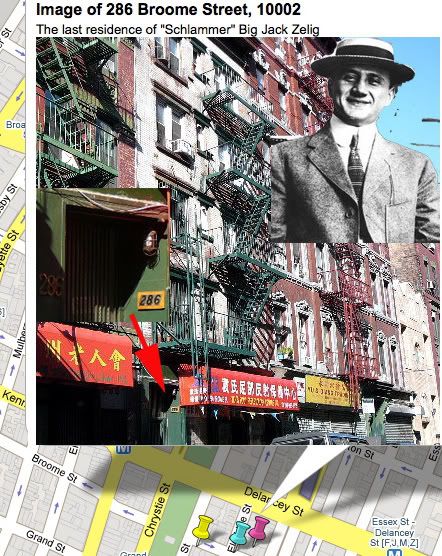
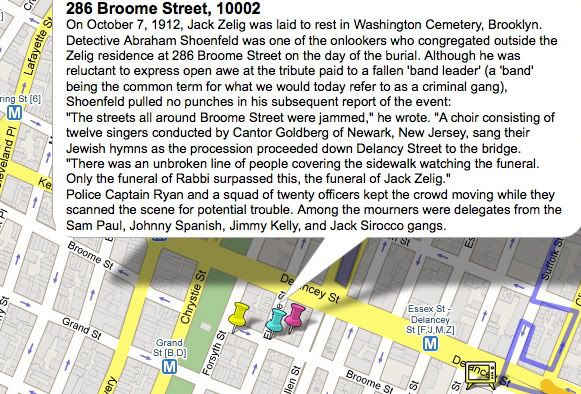
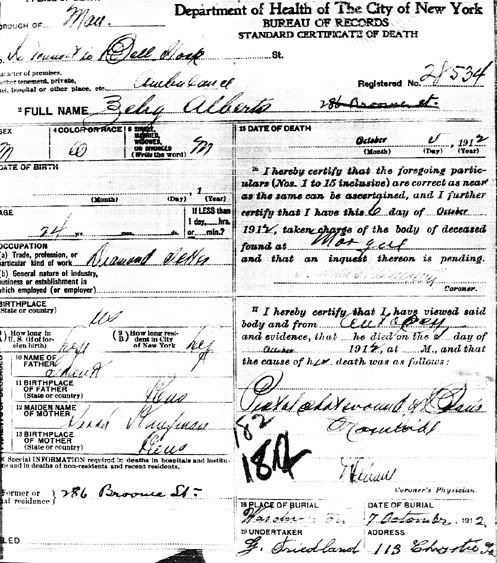
Sunday, October 5 will mark the 96th anniversary of the death of Big Jack Zelig, so I thought it would be rather appropriate to plug Rose Keefe's The Starker, Big Jack Zelig, The Becker - Rosethal Case, And The Advent Of The Jewish Gangster, which has finally been released, and I must say it has been worth the wait.
I'm currently only halfway through but felt the urge to spread the word in the meantime...Keefe's book expands on what has really been in essence a supporting subplot of the entire Herman Rosenthal / Charles Becker affair. The Starker now brings Zelig to the forefront, with great new insights and information on his early days leading up to his guiding the scattered Eastman gang back on track after a life changing and violent incident in Chicago; his utter disdain for gamblers and drugs; his actual involvement in the Rosenthal case; and to that fateful trolley ride in October of 1912. Zelig Lefkowitz’s legacy remains a rare one. Not only had he the outmost respect from his gang, but also was considered as a patriarchal figure by the Jewish community of the Lower East Side at the time, the only leading Jewish mobster to do so. Zelig vowed to protect his neighborhood from menacing Italians who preyed on weak willed business owners, tauntingly pulled on old men’s beards hovering outside of Shuls, solicited young women into the snares of prostitution, and generally bullied the Jewish immigrant populace. Zelig kept his promise with vigor and affirmative force. Under Zelig’s command, his gang single-handedly extinguished outside oppression experienced by Jews on the streets from the roving band of Italian hoodlums, petty thieves, and pimps. Zelig was hero to most of the people whose old world distrusts of law enforcement and authority had carried over with them to the new land. They had Big Jack as their own protector instead. Even legitimate businessmen who knew of Zelig’s illegal interests couldn’t help but be impressed. They had created their own East Side Golem in a way.
Nationally known scholar Ron Arons tells the true story of Jewish gangsters and other shady characters who served time “up the [Hudson] river” and the NY Jewish community’s response. Ron did not choose the book’s topic. Instead, it was beshert (the Jewish equivalent of the English word ‘fate,’ literally, ‘meant to be’).
Years ago Arons learned that one of his ancestors served a ‘stretch’ at the famous prison. Ron first wrote a manuscript about his criminal ancestor and his ancestor’s father, a rabbi who also found trouble, only to be told by the publishing world that “it did not need another memoir.” Thinking creatively out of the box one day, Ron decided to research and write a book about every Jew who was ever behind bars at the Big House. Little did Arons understand the enormity of the topic he would undertake, which until now has not been covered with any intellectual rigor. The result: a 350-page book providing biographies of more than a dozen famous gangsters and lesser-known criminals and painting a broad canvas of Jewish criminality in New York City.
Six For Five, the blog, is intended as companion piece for a work in progress book of the same name and anecdotes related to the main theme of the material. All comments, questions, historical corrections are most welcomed.


 Posts
All Comments
Posts
All Comments