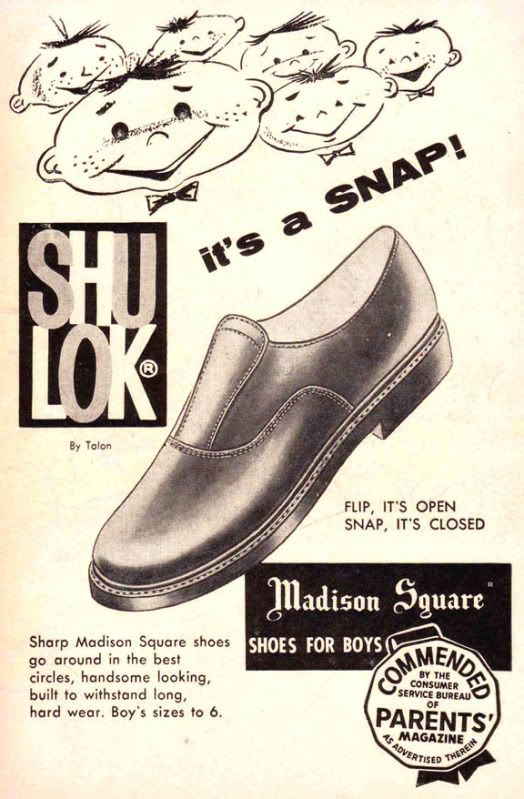
I found an image of these in, as it often happens, when I was searching for something else. I seem to recall getting them at Laskys. Boy Did I love those shoes. It was great for the double knot challenged. Evidently they are a hot item now

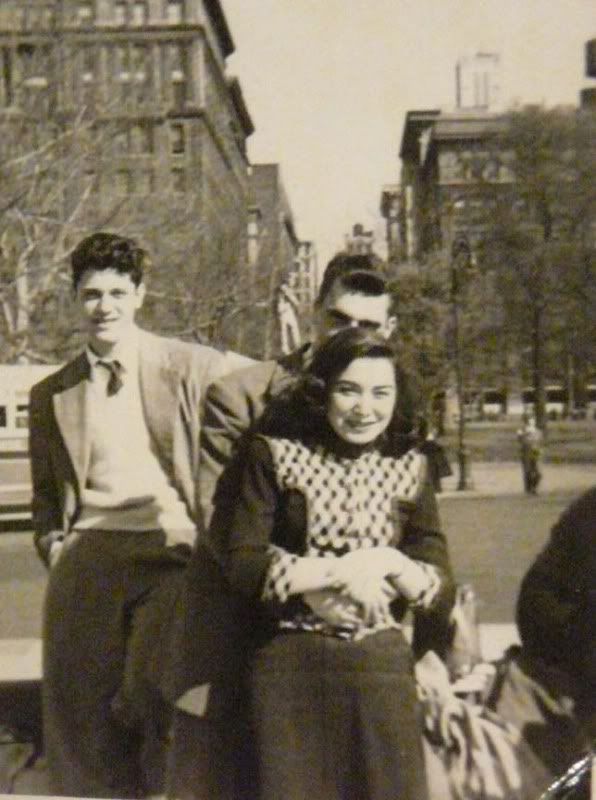
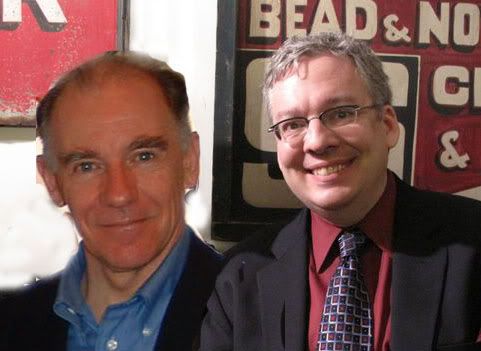
New York's magnificent gift to the storyteller is a four-century history as exciting as that of any place on earth.It is a place echoing with stories, from old Manhattan's Indian trails and Dutch settlements to the dramatic construction of the Empire State Building and the tale of John Lennon's Dakota. During the American Revolutionary War, New York was the British Headquarters; New Yorkers organized the canals and the railroads that opened up the American West. In the Civil War, astoundingly, the city almost seceded from the Union. From the terrible Draft Riots, the Blizzard of '88, the Great Crash of ’29, to the tragedy of 9/11, New York has so often been centre stage.Larger-than-life historical characters abound in this story: Stuyvesant, the Dutchman who defended New Amsterdam, Lord Cornbury the transvestite English Governor, Washington whose presidency began in New York, Ben Franklin who tried to keep America British, Lincoln, who made one of his greatest speeches in the city, the titanic JP Morgan, Tammany Hall's Fernando Wood and Boss Tweed, legendary socialites like Mrs Astor and Mrs Vanderbilt, memorable city figures like La Guardia, Robert Moses, and Mayor Koch.But above all, for me, this novel is a tale of ordinary people - local Indians, Dutch settlers, English merchants, African slaves, German shopkeepers, Irish labourers, Jews and Italians arriving through Ellis Island, Puerto Ricans, Guatemalans, and Chinese, inkeepers and gangsters, society ladies and sweatshop workers. These scores of fictional characters were frequently suggested to me by the lives, or fragments of lives, of real people, sometimes nameless people, that I discovered in my research and who moved me. And those people were just a tiny sampling of the millions who came through New York to America, in search of freedom - and usually found it.

Saxophonist/flutist Frank Wess, a longtime featured soloist with the Count Basie Orchestra for more than a decade, brings his powerful solo voice and his well-known arrangements to the stage as he joins forces with the talented students of the William Paterson University Jazz Orchestra.
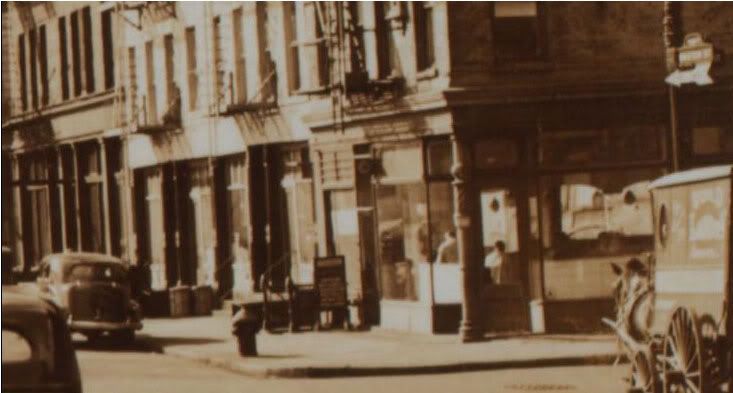
LIVES;Bar, None, By Madison Smartt Bell, Published: Sunday, March 3, 1996
The Spring Lounge, one of the last two neighborhood bars in Little Italy (aside from private social clubs), is up for sale, which makes me scared. For years I've used the place as a rendezvous-resting place and portable office; it was also a virtual residence for a character in my first novel. The Spring Lounge isn't the only neighborhood bar I've used to shelter both myself and people who populate my books, but lately it seems as if they've all been going down like birds shot off a wire.
For sure, there is no shortage of bars in Manhattan, but the new ones are too bright, have too much glass. The bartenders are so brisk they ought to be serving double lattes instead of the waters of Lethe. In fact, you don't have to go thirsty half so long if what you want is chichi coffee -- soon enough there'll be a Starbucks on every corner, but how much enlightenment is all this caffeine producing? Coffee or booze, there's almost no one left to drink it but the gentry, and the trouble with those sorts of clients is they're too much like oneself.
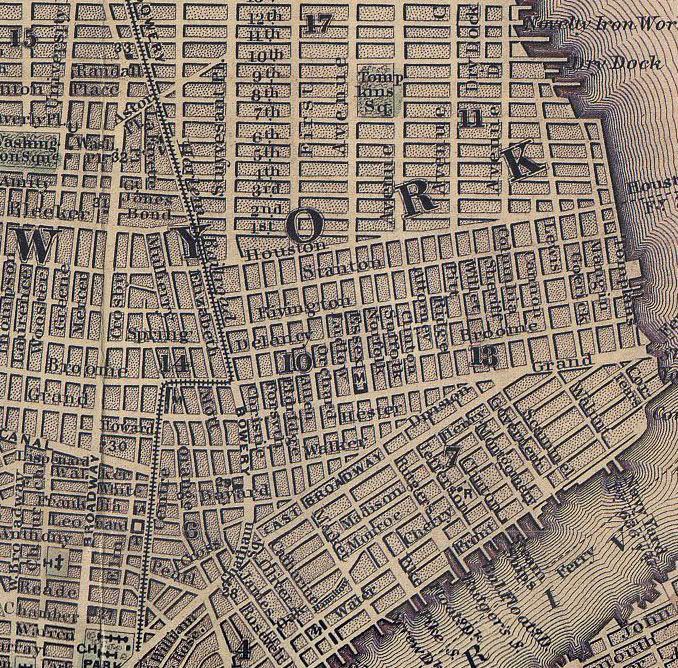
The first bar I ever entered in Manhattan was at the corner of Houston Street and the Bowery. There was a blizzard; I was 20 years old, shuffling down from Chelsea in leaky cowboy boots in search of a Greenwich Village that had long ceased to exist outside of my imagination. Nothing was open and no one was on the street, no one interested in wading through knee-deep snow except for me and of course the homeless, then known as winos. When Bleecker Street ran out, I turned right and followed the winos to where they were going. Like most of the Bowery bars I later patronized, this one didn't seem to require a name. The tables and chairs were legless, which didn't matter, as the customers were sleeping in stacks on the floor, the bottommost snuffling in pools of filthy water from melted snow. There was also a bathtub-size pool table, where I was able to earn some money. I was the youngest person there by at least 20 years, but no one objected to my presence. I felt oddly at home; it was not exactly a welcoming place, but entirely uncritical. You could stay there as long as you liked. There are no bars left on the Bowery now. The last one closed at the end of 1993, foreshadowing within several weeks the death of Charles Bukowski. A nice coincidence.
Because I lived in Brooklyn, I used Manhattan bars as staging areas, and Maruffi's, on Baxter Street at the corner of Columbus Park, was a good one for sorties into either SoHo or TriBeCa. Because of its proximity to the Tombs, Maruffi's was a place where many cops unwound, and the first time I went there, they were relaxing by means of a large general fistfight. One officer (out of uniform) came over to the only table left standing, where I and my young lady companion demurely sat behind small, stout glasses of bourbon, to apologize; his friends, he said, were "a little excited." One of his friends clubbed him over the head with a shoe, and our officer roared like a bear, knocked him down, then jumped on the bar and lowered his pants to moon the entire assembly. When he had rebuttoned, he came over and apologized to us again with even more formal courtesy. But Maruffi's has been closed for years; its space is now a second-floor dining room for the restaurant next door.
Besides the cop bars, there were others in Chinatown that I will not name because they were almost exclusively the resorts of criminals -- Chinese criminals, but the occasional white guy might be tolerated. These venues were in basements and tended to be more or less unmarked. You could drink Tsing Tao beer and Chinese vodka there and count on meeting no one that you knew. Occasionally these places would be swept clean by opposing gangsters with Kalishnikovs, but such celebrations were acceptably rare. The phones were good: a good bar phone must be adequately secluded from the noisemakers, yet near enough to the counter that you can watch your coat. No more bars like these in Chinatown. Since the last of them was boarded up for tax evasion, I wonder how the cops and criminals know how to find one another.
I used to "live" in Maruffi's, when I lived across the street on White Street, and after. At least 2, 3 nights a week. Forlini's was more of a restaurant. Maruffi's was a man's bar. Very few women ventured in. I played on their bar softball team in the mid 60's.

ECKSTEIN--Herbert, died peacefully at home in Great Neck at the age of 87 on October 27, 2009. Beloved husband of Nadine for 56 years; devoted father of Kenneth, Linda and Myra Mogilner; cherished father-in-law of Ruthann Eckstein and Dr. Alon Mogilner; adored grandfather of Max, Sam, Shoshana, Josh, Zack, Joey and Gabi; much loved brother of David, Eugene and Barbara Shostak. During his lifetime he was proprietor of H. Eckstein & Sons, a dry goods store and Lower East Side institution. He will be sorely missed.
Trendiness Among the Tenements; Descendants Return to a Remade Lower East Side
By JOSEPH BERGER
H. Eckstein & Sons was not quite as much a fixture of the Lower East Side as Guss's Pickles or Yonah Schimmel Knish Bakery. Still, Brenda Zimmer spent much of her life there, haggling with customers in the cramped and hectic clothing store on Orchard Street that her family owned, hanging on until a greatly weakened Eckstein's finally shut its doors in 1998.
Yet when she told friends a few years ago that her daughter, Amy, was moving into one of the neighborhood's storied tenements, ''they looked a little shocked,'' she said.
''Everybody spent their lives trying to get out of there, and my daughter is trying to come back,'' Mrs. Zimmer said, recalling her friends' puzzlement and suggesting more than a little of her own.
The rapid changes in a neighborhood famous as the squalid foothold for immigrants just off the boat have produced more than a few such expressions of astonishment.
There are still many people around who were glad to escape the neighborhood when the old life seemed to be seeping out of it more than a half-century ago. Some of them are now wonderstruck as their adventurous children and grandchildren are returning.
On a recent stroll from Hester Street to Houston Street with Amy, Mrs. Zimmer seemed tickled that her daughter, a 28-year-old Yale graduate and freelance writer, had actually settled a few blocks from where Amy's grandfather was born and where Mrs. Zimmer worked full time for 15 years. Sure, only a handful of the wholesale and retail stores that sold hosiery, linens, lingerie, and handbags were still around, and even many of the bodegas of a more recent era of migration were gone. But the neighborhood had once again quickened to life, something closer to the bustle of the days when the walk-up tenements were teeming and the dowdy stores drew shoppers from all over for their Sunday bargains.
''Now it's exciting; it's prestigious to live there,'' Mrs. Zimmer, a high-spirited woman, observed.
Dry-goods shops are being replaced by restaurants with $30 entrees; by boutiques where the tastefully spaced wares are fashionably retro but the prices are decidedly nouveau; by galleries like Fusion-Arts Museum, which exhibits a robotlike ''fusion golem'' made of motorized hardware; by cafes where young people peck at laptops while sipping lattes; and even by one shop, Toys in Babeland, that, to Mrs. Zimmer's embarrassed amusement, sells sex toys.
''A very unusual store,'' Mrs. Zimmer observed, gathering up her dignity. ''Colorful.''


 Posts
All Comments
Posts
All Comments